Cheng Yi-Ju, Wu Ran, Cheng Ming-Liang, Du Juan, Hu Xi-Wei, Yu Lei, Zhao Xue-Ke, Yao Yu-Mei, Long Qi-Zhong, Zhu Li-Li, Zhu Juan-Juan, Huang Ni-Wen, Liu Hua-Juan, Hu Ya-Xin, Wan Fang
Department of Respiratory Medicine, The Affiliated Hospital of Guizhou Medical University, Guiyang, Guizhou, China.
Department of Respiratory Medicine, The Affiliated Baiyun Hospital of Guizhou Medical University, Guiyang, Guizhou, China.
Oncotarget. 2017 May 9;8(19):32228-32236. doi: 10.18632/oncotarget.12951.
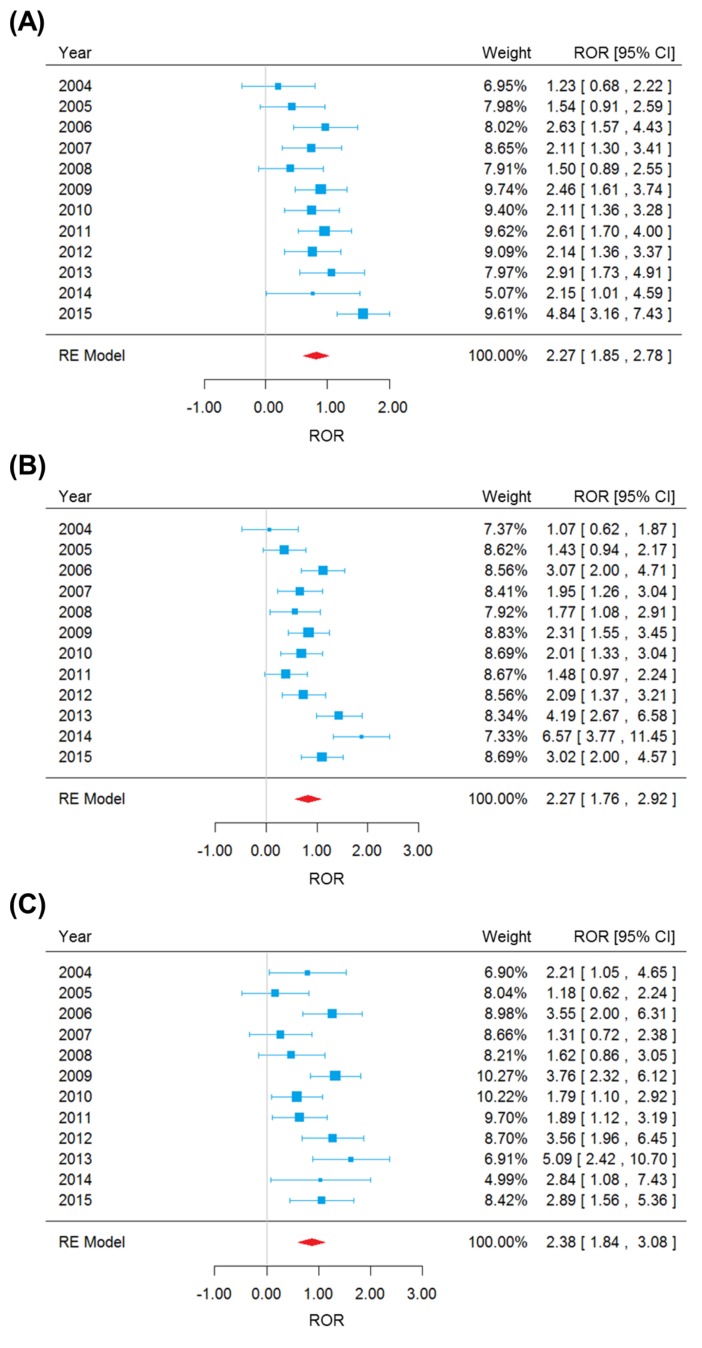
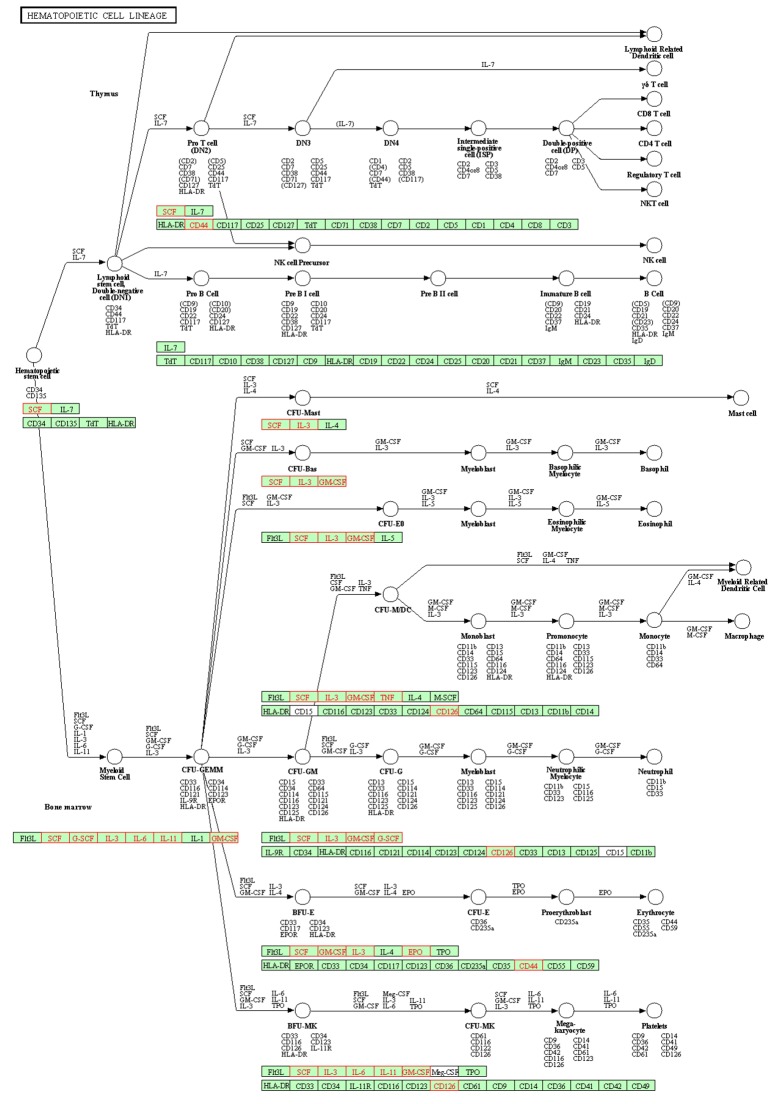
In order to clarify the risk of hematotoxicity of carboplatin, we inspected 19901 case reports of non-small cell lung cancer patients that were submitted to the FDA Adverse Event Reporting System (FAERS) between January 2004 and December 2015. These comprised 3907 cases which were treated with carboplatin and 15994 cases which were treated with other therapies in the absence of carboplatin. By comparison, carboplatin cases were significantly more likely to report anemia (OR = 2.27, 95% CI 1.85-2.78, P = 5.04×10⁻¹⁵), neutropenia (OR = 2.27, 95% CI 1.76-2.92, P = 2.39×10⁻¹⁰), and thrombocytopenia (OR = 2.38, 95% CI 1.84-3.08, P = 5.60×10⁻¹¹). We further explored published evidences and found 205 human genes interacting with carboplatin. Functional analysis corroborated that these genes were significantly enriched in the biochemical pathway of hematopoietic cell lineage (adjusted P = 6.02×10⁻¹¹). This indicated that carboplatin could profoundly affect the development of blood cells. Given the early awareness of the hematologic risks, great caution should be exercised in prescribing carboplatin to non-small cell lung cancer patients. And functional enrichment analysis on carboplatin-related genes warranted subsequent research with regard to the underlying toxicological mechanisms.
为了阐明卡铂的血液毒性风险,我们查阅了2004年1月至2015年12月期间提交给美国食品药品监督管理局不良事件报告系统(FAERS)的19901例非小细胞肺癌患者的病例报告。其中包括3907例接受卡铂治疗的病例和15994例未使用卡铂而接受其他治疗的病例。相比之下,卡铂治疗的病例更有可能报告贫血(比值比[OR]=2.27,95%置信区间[CI]1.85-2.78,P=5.04×10⁻¹⁵)、中性粒细胞减少(OR=2.27,95%CI 1.76-2.92,P=2.39×10⁻¹⁰)和血小板减少(OR=2.38,95%CI 1.84-3.08,P=5.60×10⁻¹¹)。我们进一步查阅已发表的证据,发现205个人类基因与卡铂相互作用。功能分析证实这些基因在造血细胞谱系的生化途径中显著富集(校正P=6.02×10⁻¹¹)。这表明卡铂可深刻影响血细胞的发育。鉴于对血液学风险的早期认识,在给非小细胞肺癌患者开卡铂处方时应格外谨慎。对卡铂相关基因的功能富集分析值得后续对潜在毒理学机制进行研究。