Mayer Arnulf, Zahnreich Sebastian, Brieger Jürgen, Vaupel Peter, Schmidberger Heinz
Department of Radiation Oncology and Radiotherapy, University Medical Center, Mainz 55131, Germany.
Department of Otolaryngology, Head and Neck Surgery, University Medical Center, Mainz 55131, Germany.
Br J Cancer. 2016 Nov 22;115(11):1351-1358. doi: 10.1038/bjc.2016.336. Epub 2016 Nov 1.
The receptor for the epidermal growth factor (EGFR) is widely considered to be one of the central drivers of oncogenesis in squamous cell carcinomas of the head and neck region (HNSCC). Inhibition of EGFR using monoclonal antibodies is established both in the curative and the palliative setting in this disease. HNSCCs are known to contain abundant hypoxic tissue areas and hypoxia has been shown to be involved in the (down)regulation of EGFR membrane expression.
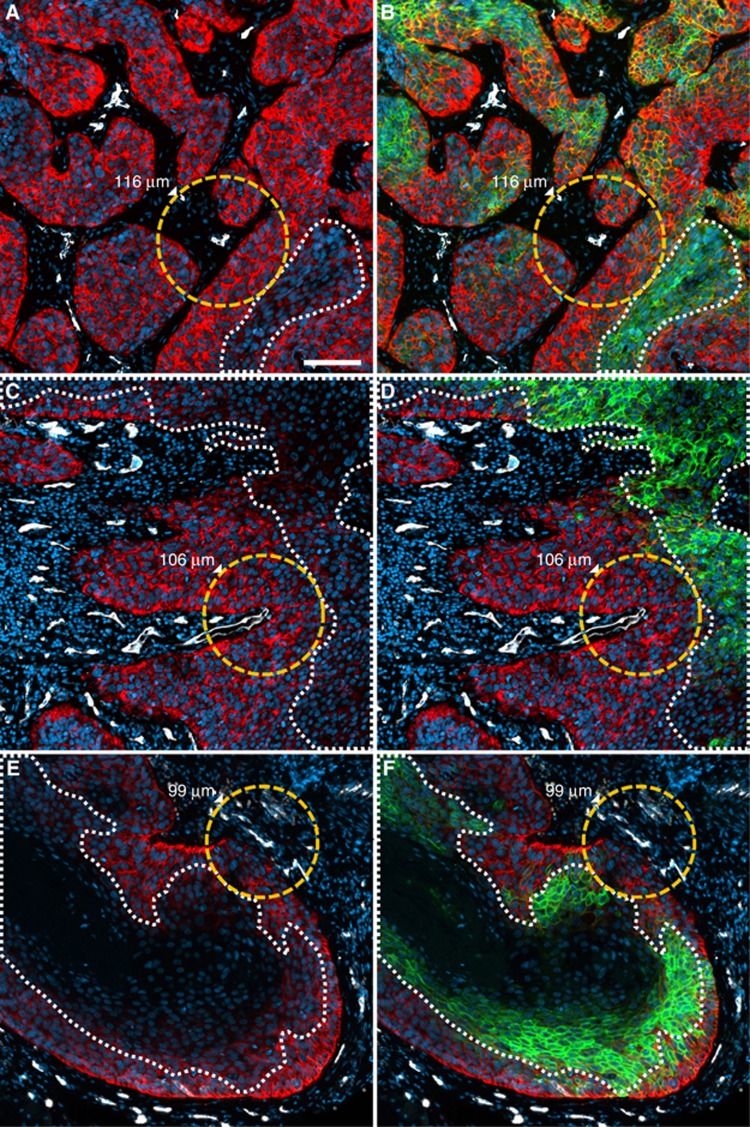
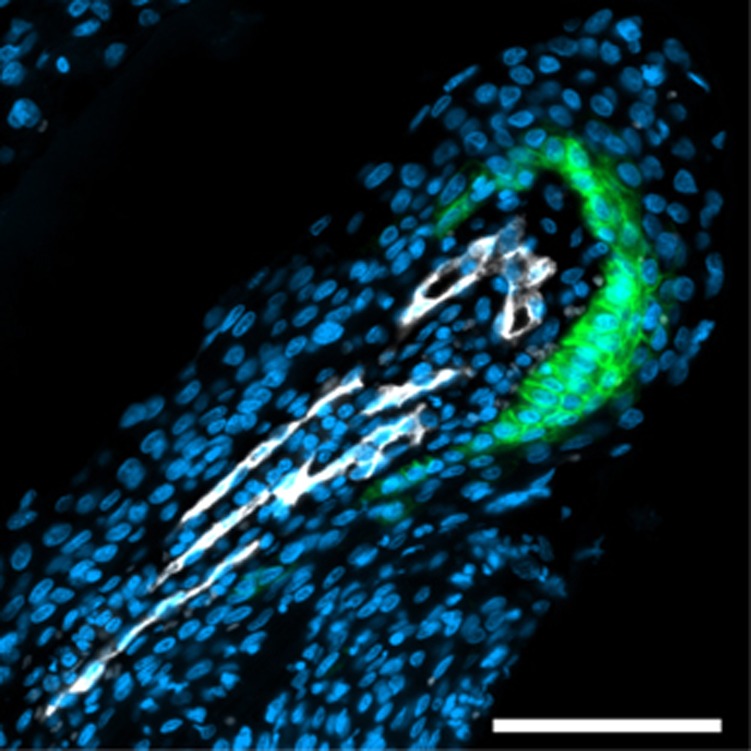
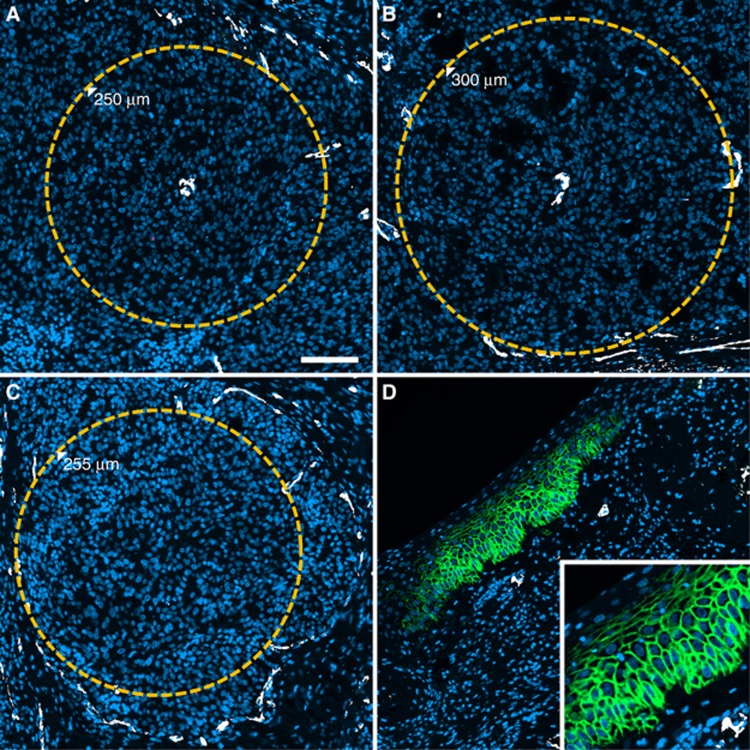
A novel method for multiplex immunofluorescence and single-cell segmentation (via DAPI-stained nuclei) was established, to study the expression of EGFR, the endogenous hypoxia marker CA IX, and intratumoural diffusion distances from microvessels (using CD34 staining) in 58 human HNSCCs and 9 normal/cancer adjacent tissues.
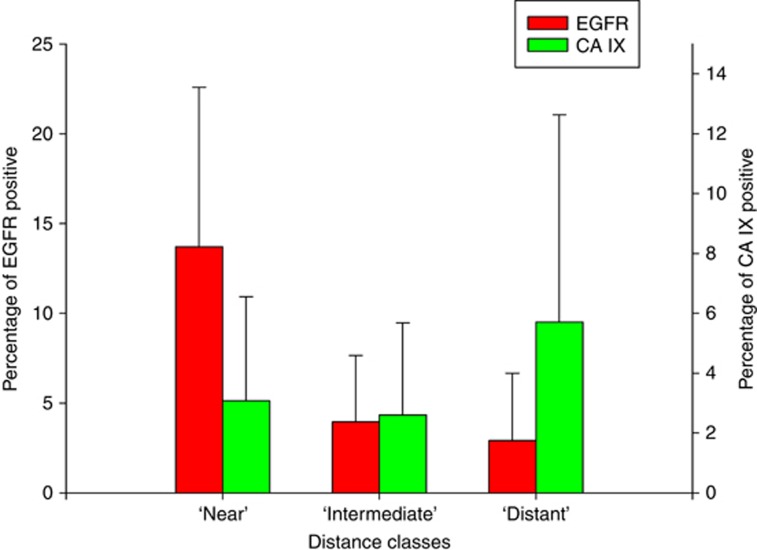
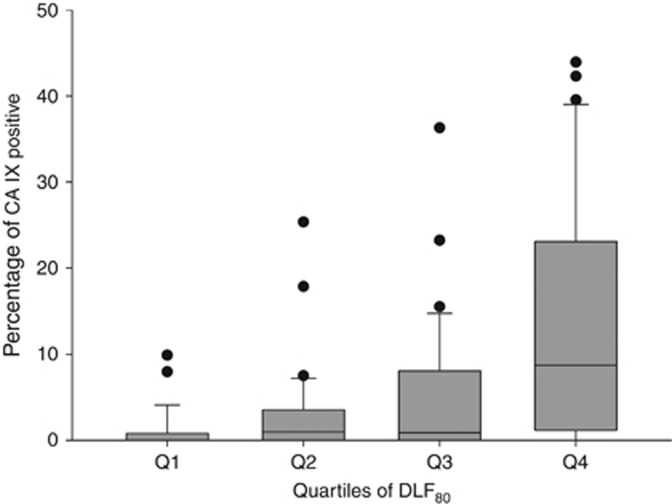
EGFR was found to be significantly downregulated with increasing distance from tumour microvessels, whereas the opposite was true for CA IX. Larger diffusion-limited areas were correlated with higher expression of CA IX.
The hypoxic tumour microenvironment may have a major role in mediating resistance against anti-EGFR strategies by downregulating EGFR molecules on tumour cells.
表皮生长因子(EGFR)受体被广泛认为是头颈部鳞状细胞癌(HNSCC)肿瘤发生的主要驱动因素之一。在该疾病的根治性和姑息性治疗中,使用单克隆抗体抑制EGFR已得到确立。已知HNSCC含有大量缺氧组织区域,并且缺氧已被证明与EGFR膜表达的(下调)调节有关。
建立了一种用于多重免疫荧光和单细胞分割(通过DAPI染色的细胞核)的新方法,以研究58例人类HNSCC和9例正常/癌旁组织中EGFR、内源性缺氧标志物CA IX的表达以及肿瘤内微血管的扩散距离(使用CD34染色)。
发现EGFR随着与肿瘤微血管距离的增加而显著下调,而CA IX则相反。更大的扩散受限区域与CA IX的更高表达相关。
缺氧肿瘤微环境可能通过下调肿瘤细胞上的EGFR分子在介导对抗EGFR策略的耐药性方面发挥主要作用。