Aldrich Amy, Bosch Megan E, Fallet Rachel, Odvody Jessica, Burkovetskaya Maria, Rama Rao Kakulavarapu V, Cooper Jonathan D, Drack Arlene V, Kielian Tammy
Department of Pathology and Microbiology, University of Nebraska Medical Center, Omaha, NE.
Department of Pharmacology and Experimental Neuroscience, University of Nebraska Medical Center, Omaha, NE.
Ann Neurol. 2016 Dec;80(6):909-923. doi: 10.1002/ana.24815. Epub 2016 Nov 23.
Juvenile neuronal ceroid lipofuscinosis (JNCL), or juvenile Batten disease, is a pediatric lysosomal storage disease caused by autosomal recessive mutations in CLN3, typified by blindness, seizures, progressive cognitive and motor decline, and premature death. Currently, there is no treatment for JNCL that slows disease progression, which highlights the need to explore novel strategies to extend the survival and quality of life of afflicted children. Cyclic adenosine monophosphate (cAMP) is a second messenger with pleiotropic effects, including regulating neuroinflammation and neuronal survival. Here we investigated whether 3 phosphodiesterase-4 (PDE4) inhibitors (rolipram, roflumilast, and PF-06266047) could mitigate behavioral deficits and cell-specific pathology in the Cln3 mouse model of JNCL.
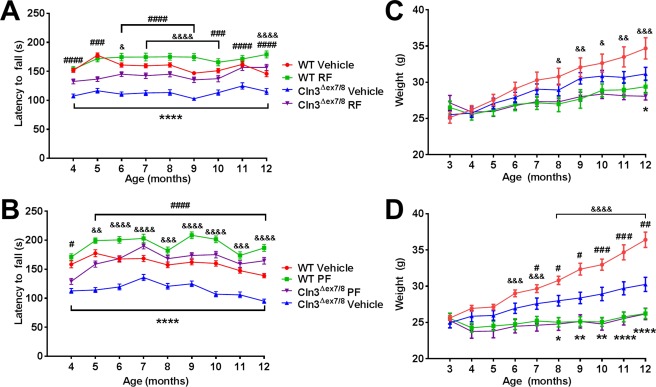
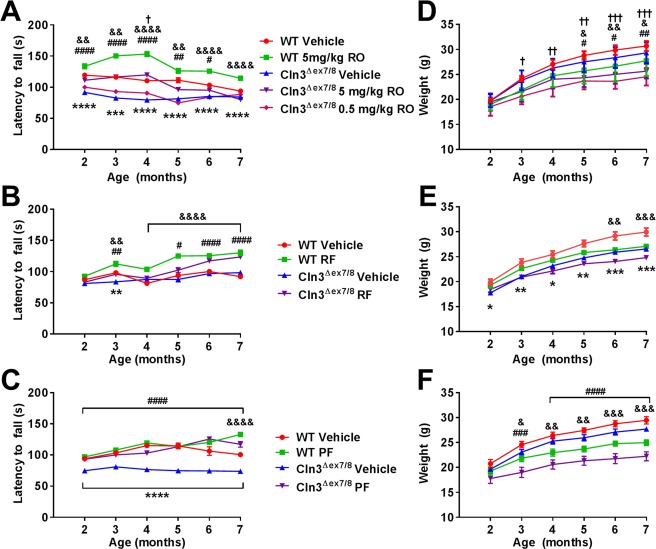
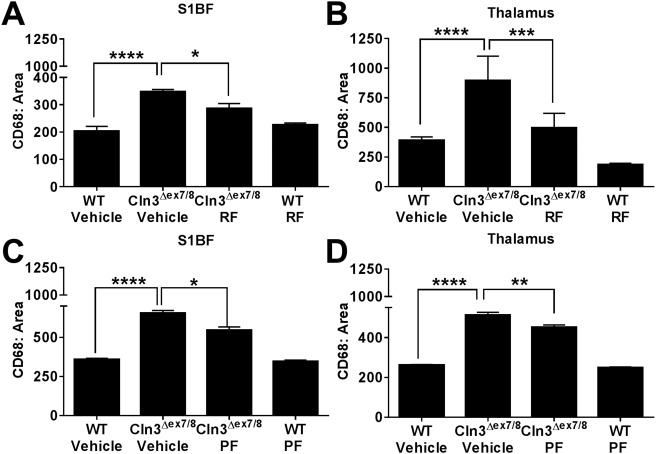
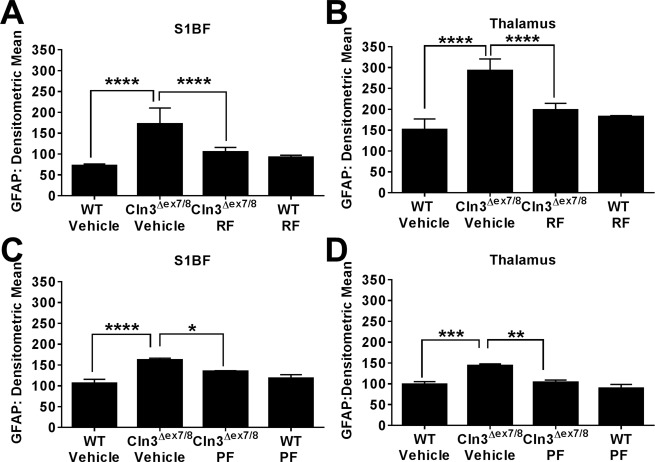
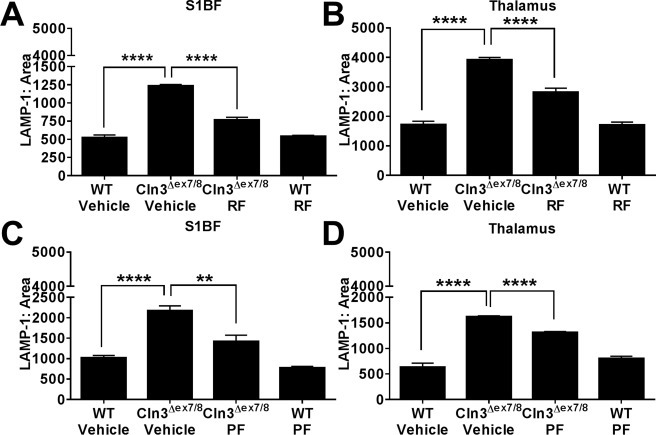
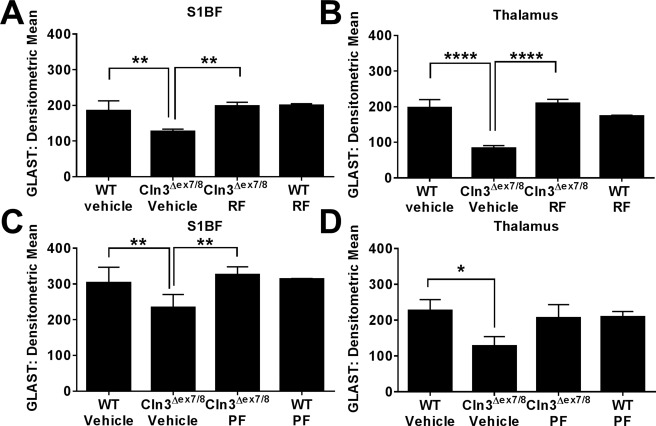
In a randomized, blinded study, wild-type (WT) and Cln3 mice received PDE4 inhibitors daily beginning at 1 or 3 months of age and continuing for 6 to 9 months, with motor deficits assessed by accelerating rotarod testing. The effect of PDE4 inhibitors on cAMP levels, astrocyte and microglial activation (glial fibrillary acidic protein and CD68, respectively), lysosomal pathology (lysosomal-associated membrane protein 1), and astrocyte glutamate transporter expression (glutamate/aspartate transporter) were also examined in WT and Cln3 animals.
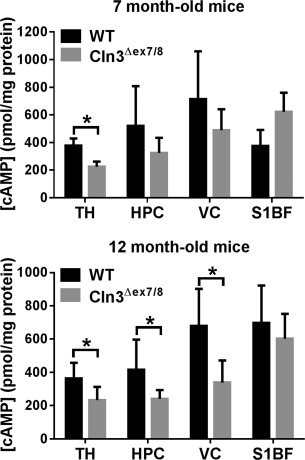
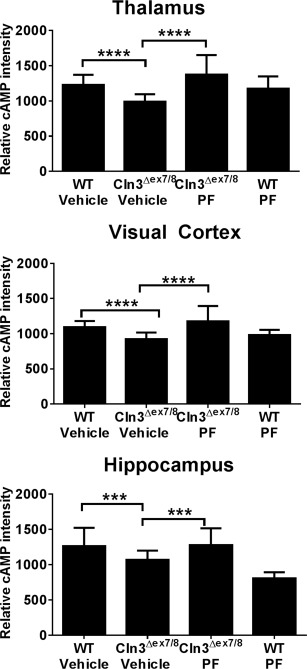
cAMP levels were significantly reduced in the Cln3 brain, and were restored by PF-06266047. PDE4 inhibitors significantly improved motor function in Cln3 mice, attenuated glial activation and lysosomal pathology, and restored glutamate transporter expression to levels observed in WT animals, with no evidence of toxicity as revealed by blood chemistry analysis.
These studies reveal neuroprotective effects for PDE4 inhibitors in Cln3 mice and support their therapeutic potential in JNCL patients. Ann Neurol 2016;80:909-923.
青少年神经元蜡样脂褐质沉积症(JNCL),又称青少年型巴顿病,是一种儿科溶酶体贮积病,由CLN3基因的常染色体隐性突变引起,典型症状包括失明、癫痫发作、进行性认知和运动功能衰退以及过早死亡。目前,尚无治疗方法能够减缓JNCL的疾病进展,这凸显了探索新策略以延长患病儿童生存期和提高其生活质量的必要性。环磷酸腺苷(cAMP)是一种具有多种效应的第二信使,包括调节神经炎症和神经元存活。在此,我们研究了3种磷酸二酯酶4(PDE4)抑制剂(咯利普兰、罗氟司特和PF - 06266047)是否能够减轻JNCL的Cln3小鼠模型中的行为缺陷和细胞特异性病理变化。
在一项随机、盲法研究中,野生型(WT)和Cln3小鼠从1或3月龄开始每日接受PDE4抑制剂治疗,持续6至9个月,通过加速转棒试验评估运动缺陷。还在WT和Cln3动物中检测了PDE4抑制剂对cAMP水平、星形胶质细胞和小胶质细胞激活(分别为胶质纤维酸性蛋白和CD68)、溶酶体病理(溶酶体相关膜蛋白1)以及星形胶质细胞谷氨酸转运体表达(谷氨酸/天冬氨酸转运体)的影响。
Cln3小鼠脑内的cAMP水平显著降低,而PF - 06266047可使其恢复。PDE4抑制剂显著改善了Cln3小鼠的运动功能,减轻了胶质细胞激活和溶酶体病理变化,并将谷氨酸转运体表达恢复至WT动物中的观察水平,血液化学分析未显示出毒性迹象。
这些研究揭示了PDE4抑制剂对Cln3小鼠的神经保护作用,并支持其在JNCL患者中的治疗潜力。《神经病学纪事》2016年;80:909 - 923。