Ono Shintaro, Okano Tsubasa, Hoshino Akihiro, Yanagimachi Masakatsu, Hamamoto Kazuko, Nakazawa Yozo, Imamura Toshihiko, Onuma Masaei, Niizuma Hidetaka, Sasahara Yoji, Tsujimoto Hiroshi, Wada Taizo, Kunisaki Reiko, Takagi Masatoshi, Imai Kohsuke, Morio Tomohiro, Kanegane Hirokazu
Department of Pediatrics and Developmental Biology, Graduate School of Medical and Dental Sciences, Tokyo Medical and Dental University, 1-5-45 Yushima, Bunkyo-ku, Tokyo, 113-8519, Japan.
Department of Pediatrics, Yokohama City University Graduate School of Medicine, Yokohama, Japan.
J Clin Immunol. 2017 Jan;37(1):85-91. doi: 10.1007/s10875-016-0348-4. Epub 2016 Nov 4.
X-linked inhibitor of apoptosis protein (XIAP) deficiency is a rare immunodeficiency that is characterized by recurrent hemophagocytic lymphohistiocytosis (HLH) and splenomegaly and sometimes associated with refractory inflammatory bowel disease (IBD). Although hematopoietic stem cell transplantation (HSCT) is the only curative therapy, the outcomes of HSCT for XIAP deficiency remain unsatisfactory compared with those for SLAM-associated protein deficiency and familial HLH.
To investigate the outcomes and adverse events of HSCT for patients with XIAP deficiency, a national survey was conducted.
A spreadsheet questionnaire was sent to physicians who had provided HSCT treatment for patients with XIAP deficiency in Japan.
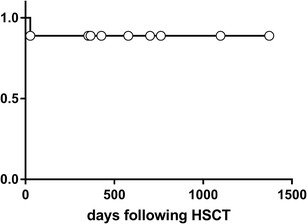
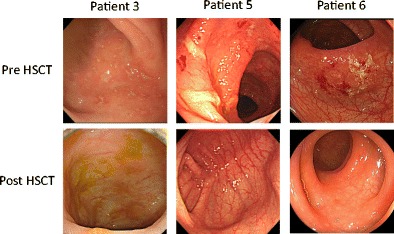
Up to the end of September 2016, 10 patients with XIAP deficiency had undergone HSCT in Japan, 9 of whom (90%) had survived. All surviving patients had received a fludarabine-based reduced intensity conditioning (RIC) regimen. Although 5 patients developed post-HSCT HLH, 4 of them survived after etoposide administration. In addition, the IBD associated with XIAP deficiency improved remarkably after HSCT in all affected cases.
The RIC regimen and HLH control might be important factors for successful HSCT outcomes, with improved IBD, in patients with XIAP deficiency.
X连锁凋亡抑制蛋白(XIAP)缺乏症是一种罕见的免疫缺陷病,其特征为反复发生噬血细胞性淋巴组织细胞增生症(HLH)和脾肿大,有时还与难治性炎症性肠病(IBD)相关。尽管造血干细胞移植(HSCT)是唯一的治愈性疗法,但与信号淋巴细胞激活分子相关蛋白缺乏症和家族性HLH相比,XIAP缺乏症患者HSCT的疗效仍不尽人意。
为了调查XIAP缺乏症患者HSCT的疗效和不良事件,开展了一项全国性调查。
向在日本为XIAP缺乏症患者提供HSCT治疗的医生发送了一份电子表格调查问卷。
截至2016年9月底,日本有10例XIAP缺乏症患者接受了HSCT,其中9例(90%)存活。所有存活患者均接受了基于氟达拉滨的减低强度预处理(RIC)方案。尽管5例患者在HSCT后发生了HLH,但其中4例在给予依托泊苷后存活。此外,所有受累病例中与XIAP缺乏症相关的IBD在HSCT后均有显著改善。
RIC方案和HLH控制可能是XIAP缺乏症患者HSCT取得成功疗效并改善IBD的重要因素。