Hidaka Masaaki, Eguchi Susumu, Takatsuki Mitsuhisa, Soyama Akihiko, Ono Shinichiro, Adachi Tomohiko, Natsuda Koji, Kugiyama Tota, Hara Takanobu, Okada Satomi, Imamura Hajime, Miuma Satoshi, Miyaaki Hisamitsu
Department of Surgery, Nagasaki University Graduate School of Biomedical Sciences, Nagasaki Japan.
Department of Gastroenterology and Hepatology, Nagasaki University Graduate School of Biomedical Sciences, Nagasaki Japan.
Transplant Direct. 2016 Jul 22;2(8):e94. doi: 10.1097/TXD.0000000000000608. eCollection 2016 Aug.
There have been no previous reports how Kupffer cells affect the outcome of living donor liver transplantation (LDLT) with an elderly donor. The aim of this study was to elucidate the influence of Kupffer cells on LDLT.
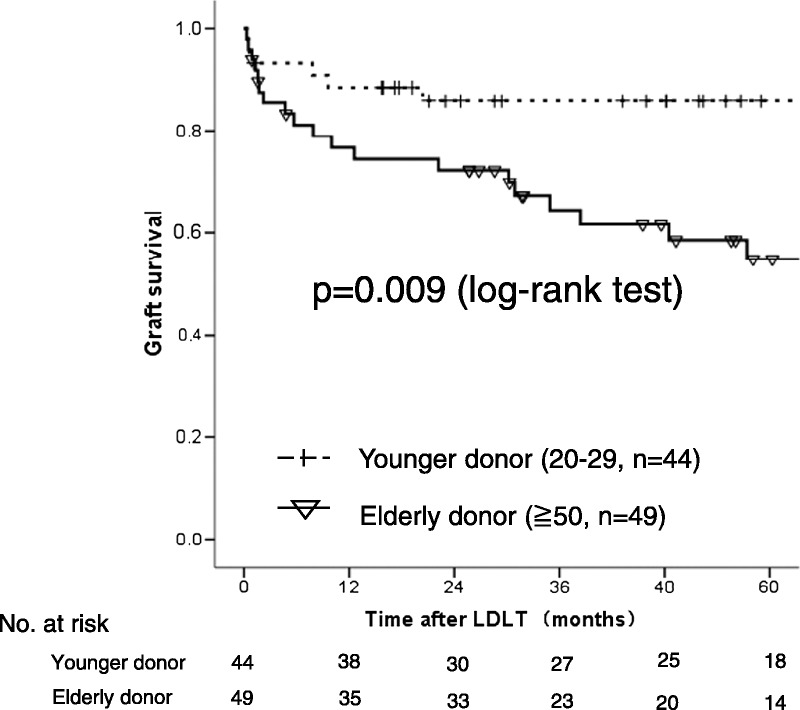
A total of 161 adult recipients underwent LDLT. The graft survival, prognostic factors for survival, and graft failure after LDLT were examined between cases with a young donor (<50, n = 112) and an elderly donor (≥50, N = 49). The Kupffer cells, represented by CD68-positive cell in the graft, were examined in the young and elderly donors.
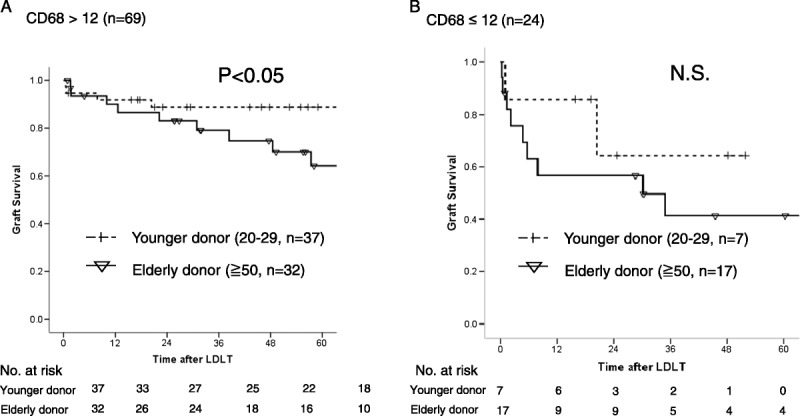
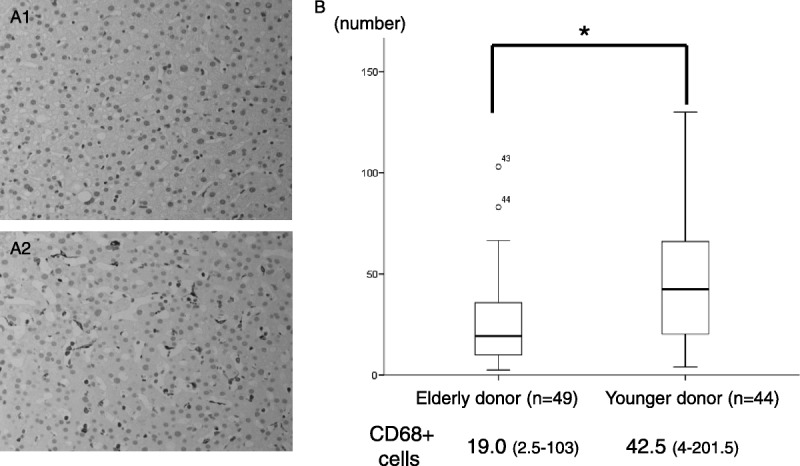
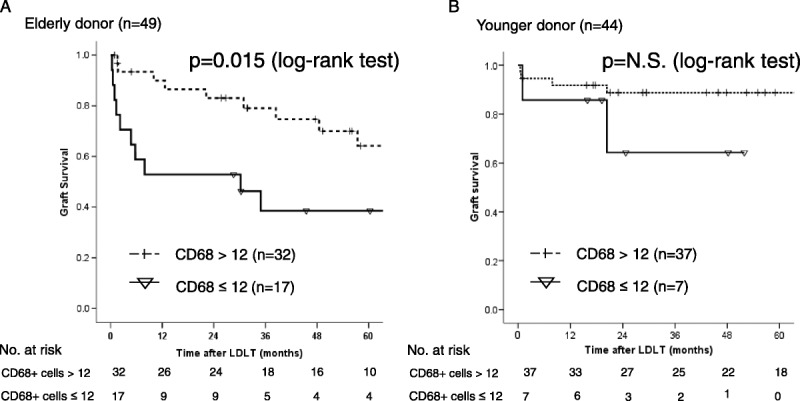
In a multivariable analysis, a donor older than 50 years, sepsis, and diabetes mellitus were significant predictors of graft failure after LDLT. The CD68 in younger donors was significantly more expressed than that in elderly donors. The group with a less number of CD68-positive cells in the graft had a significantly poor survival in the elderly donor group and prognostic factor for graft failure.
The worse outcome of LDLT with elderly donors might be related to the lower number of Kupffer cells in the graft, which can lead to impaired recovery of the liver function and may predispose patients to infectious diseases after LDLT.
此前尚无关于库普弗细胞如何影响老年供体活体肝移植(LDLT)结果的报道。本研究的目的是阐明库普弗细胞对LDLT的影响。
共有161例成年受者接受了LDLT。在年轻供体(<50岁,n = 112)和老年供体(≥50岁,N = 49)的病例之间,检查了LDLT后的移植物存活情况、生存的预后因素和移植物失败情况。在年轻和老年供体中检查了以移植物中CD68阳性细胞为代表的库普弗细胞。
在多变量分析中,50岁以上的供体、脓毒症和糖尿病是LDLT后移植物失败的重要预测因素。年轻供体中的CD68表达明显高于老年供体。移植物中CD68阳性细胞数量较少的组在老年供体组中的生存率明显较差,且是移植物失败的预后因素。
老年供体LDLT结果较差可能与移植物中库普弗细胞数量较少有关,这可能导致肝功能恢复受损,并可能使患者在LDLT后易患传染病。