Gneo Luciana, Ruggeri Pierdomenico, Cappabianca Lucia, Farina Antonietta Rosella, Di Ianni Natalia, Mackay Andrew Reay
Department of Applied Clinical and Biotechnological Sciences, University of L'Aquila, L'Aquila 67100, Italy.
Oncotarget. 2016 Dec 6;7(49):80820-80841. doi: 10.18632/oncotarget.13098.
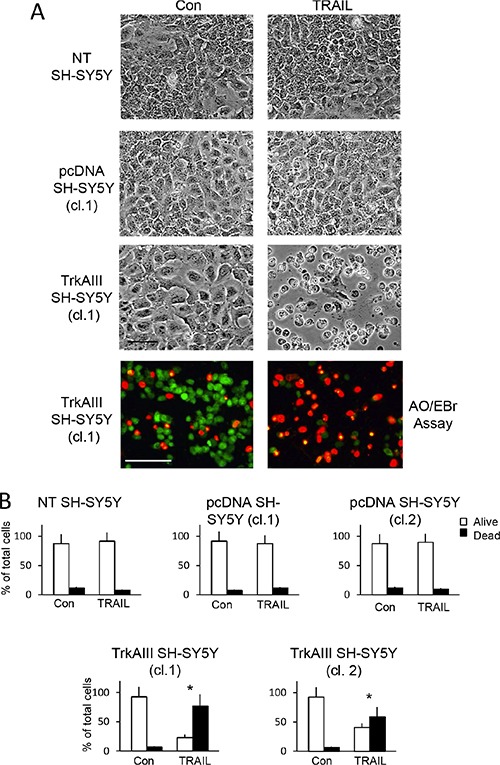
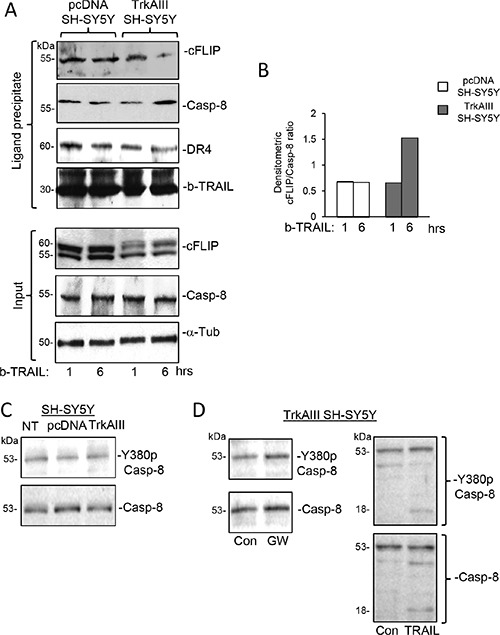
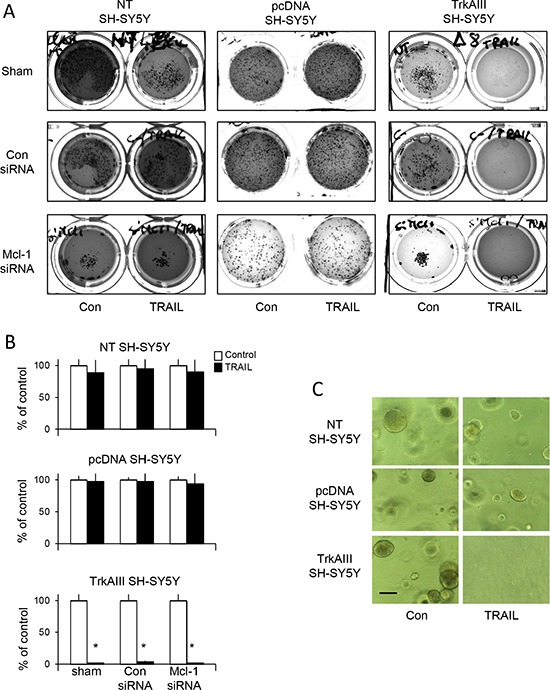
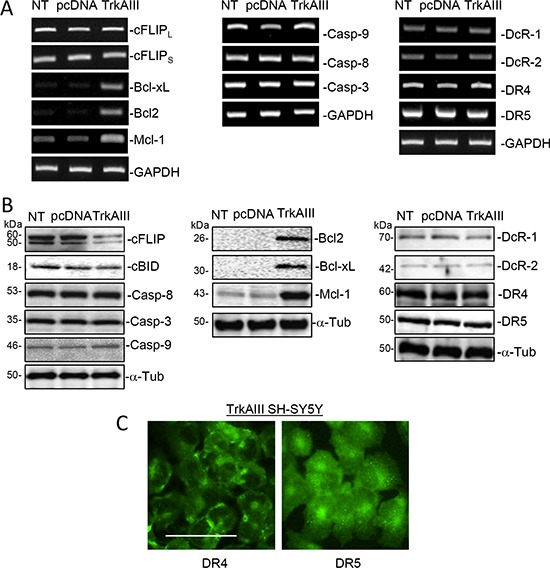
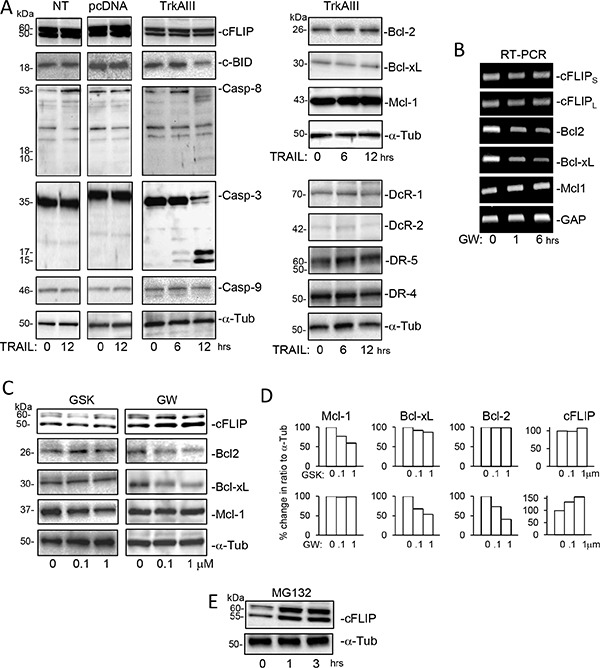
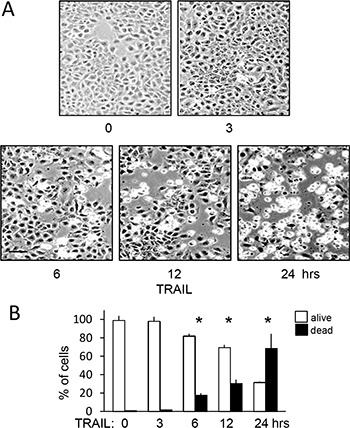
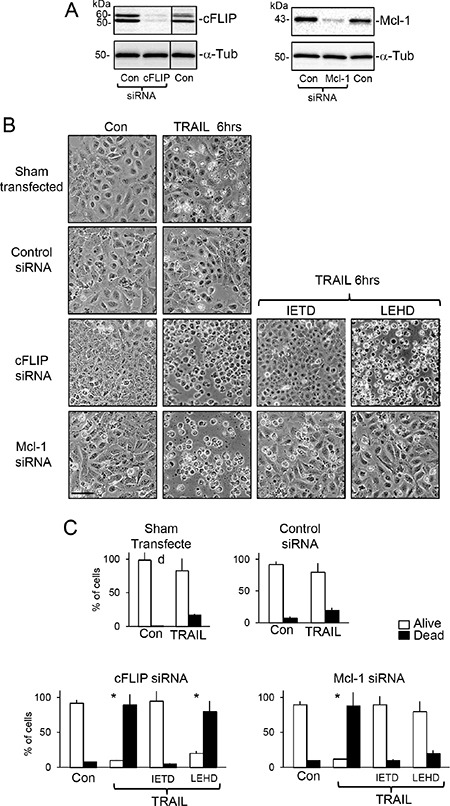
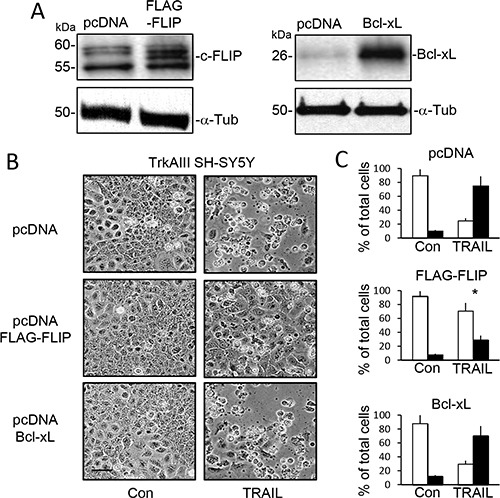
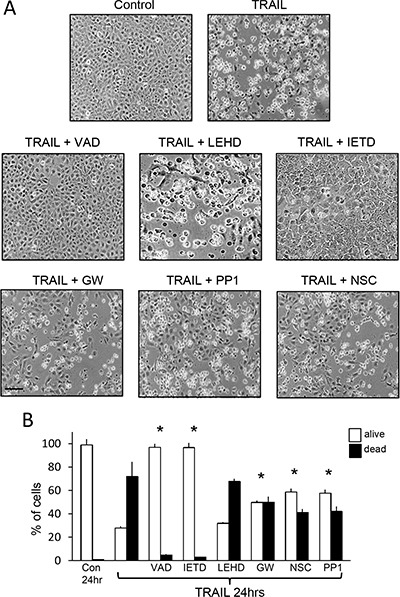
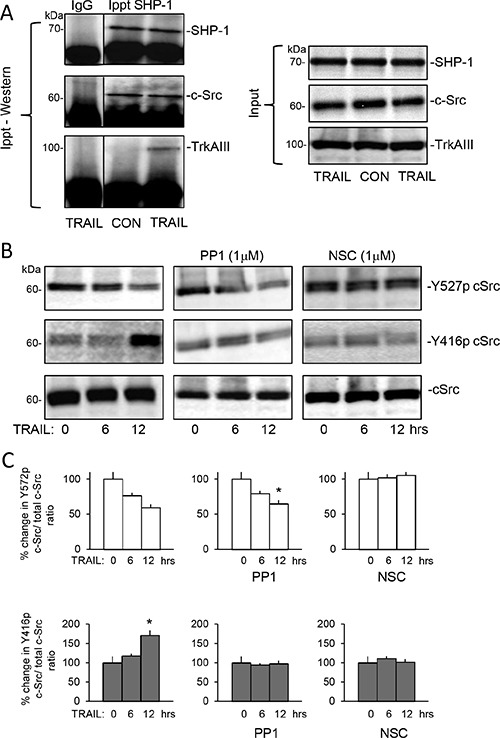
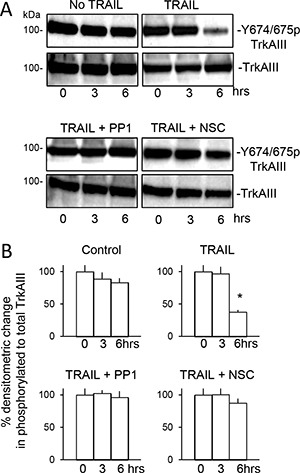
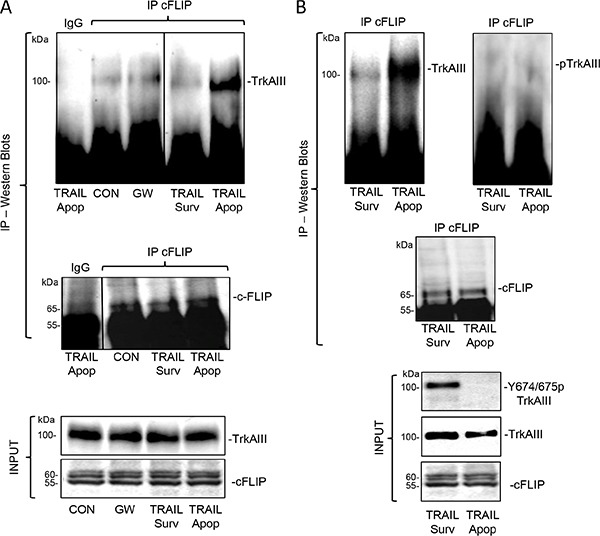
TrkAIII expression in neuroblastoma (NB) associates with advanced stage disease, worse prognosis, post therapeutic relapse, and in NB models TrkAIII exhibits oncogenic activity and promotes chemotherapeutic-resistance. Here, we report a potential therapeutic "Achilles heel" for the TrkAIII oncoprotein in a SH-SY5Y NB model that is characterised by one-way TRAIL-induced, pro-apoptotic crosstalk between the TRAIL receptor signaling pathway and TrkAIII that results in the delayed induction of apoptosis. In TrkAIII SH-SY5Y cells, blocked in the intrinsic apoptosis pathway by elevated constitutive Bcl-2, Bcl-xL and Mcl-1 expression, TRAIL induced delayed caspase-dependent apoptosis via the extrinsic pathway and completely abrogated tumourigenic capacity in vitro. This effect was initiated by TRAIL-induced SHP-dependent c-Src activation, the induction of TrkAIII/SHP-1/c-Src complexing leading to SHP-mediated TrkAIII de-phosphorylation, subsequent induction of complexing between de-phosphorylated TrkAIII and cFLIP associated with a time-dependent increase the caspase-8 to cFLIP ratio at activated death receptors, resulting in delayed caspase cleavage and caspase-dependent apoptosis. We also confirm rate-limiting roles for c-FLIP and Mcl-1 in regulating the sensitivity of TrkAIII SH-SY5Y cells to TRAIL-induced apoptosis via the extrinsic and intrinsic pathways, respectively. Our study unveils a novel mechanism for the TRAIL-induced apoptosis of TrkAIII expressing NB cells that depends upon SHP/Src-mediated crosstalk between the TRAIL-receptor signaling pathway and TrkAIII, and supports a novel potential pro-apoptotic therapeutic use for TRAIL in TrkAIII expressing NB.
神经营母细胞瘤(NB)中的TrkAIII表达与疾病晚期、预后较差、治疗后复发相关,并且在NB模型中,TrkAIII表现出致癌活性并促进化疗耐药性。在此,我们报道了在SH-SY5Y NB模型中TrkAIII癌蛋白的一种潜在治疗“阿喀琉斯之踵”,其特征是TRAIL诱导的单向、促凋亡的TRAIL受体信号通路与TrkAIII之间的串扰,导致凋亡的延迟诱导。在TrkAIII SH-SY5Y细胞中,由于组成型Bcl-2、Bcl-xL和Mcl-1表达升高而被阻断在内在凋亡途径中,TRAIL通过外在途径诱导延迟的半胱天冬酶依赖性凋亡,并在体外完全消除致瘤能力。这种效应由TRAIL诱导的SHP依赖性c-Src激活引发,诱导TrkAIII/SHP-1/c-Src复合,导致SHP介导的TrkAIII去磷酸化,随后诱导去磷酸化的TrkAIII与cFLIP之间的复合,与活化死亡受体处半胱天冬酶-8与cFLIP比率的时间依赖性增加相关,导致半胱天冬酶切割延迟和半胱天冬酶依赖性凋亡。我们还证实了c-FLIP和Mcl-1分别在通过外在和内在途径调节TrkAIII SH-SY5Y细胞对TRAIL诱导凋亡的敏感性方面的限速作用。我们的研究揭示了TRAIL诱导表达TrkAIII的NB细胞凋亡的一种新机制,该机制依赖于SHP/Src介导的TRAIL受体信号通路与TrkAIII之间的串扰,并支持TRAIL在表达TrkAIII的NB中的一种新的潜在促凋亡治疗用途。