Rutkowski Timothy P, Schroeder Jason P, Gafford Georgette M, Warren Stephen T, Weinshenker David, Caspary Tamara, Mulle Jennifer G
Department of Human Genetics, Emory University School of Medicine, Atlanta, Georgia.
Department of Epidemiology, Rollins School of Public Health, Emory University, Atlanta, Georgia.
J Neurosci Res. 2017 May;95(5):1144-1160. doi: 10.1002/jnr.23970. Epub 2016 Nov 8.
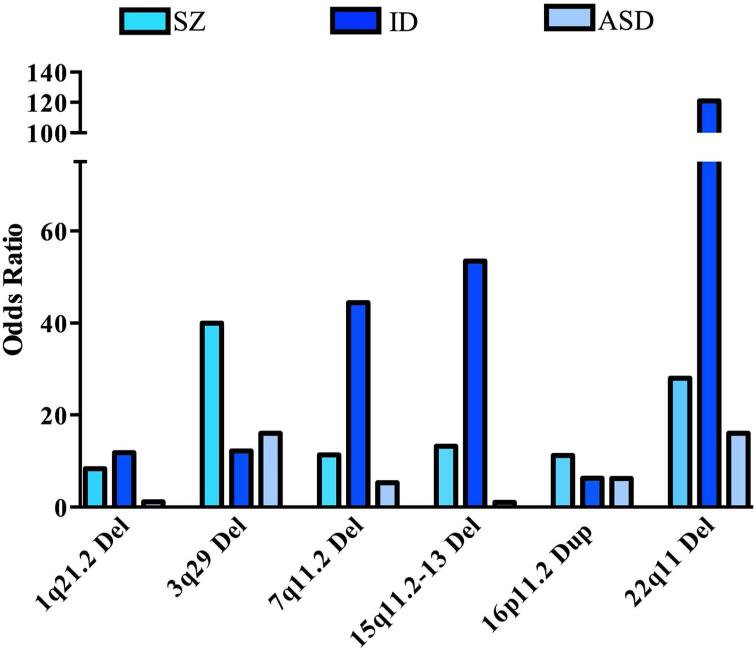
Recent studies show that the complex genetic architecture of schizophrenia (SZ) is driven in part by polygenic components, or the cumulative effect of variants of small effect in many genes, as well as rare single-locus variants with large effect sizes. Here we discuss genetic aberrations known as copy number variants (CNVs), which fall in the latter category and are associated with a high risk for SZ and other neuropsychiatric disorders. We briefly review recurrent CNVs associated with SZ, and then highlight one CNV in particular, a recurrent 1.6-Mb deletion on chromosome 3q29, which is estimated to confer a 40-fold increased risk for SZ. Additionally, we describe the use of genetic mouse models, behavioral tools, and patient-derived induced pluripotent stem cells as a means to study CNVs in the hope of gaining mechanistic insight into their respective disorders. Taken together, the genomic data connecting CNVs with a multitude of human neuropsychiatric disease, our current technical ability to model such chromosomal anomalies in mouse, and the existence of precise behavioral measures of endophenotypes argue that the time is ripe for systematic dissection of the genetic mechanisms underlying such disease. © 2016 Wiley Periodicals, Inc.
近期研究表明,精神分裂症(SZ)复杂的遗传结构部分由多基因成分驱动,即许多基因中效应较小的变异的累积效应,以及效应大小较大的罕见单基因座变异。在此,我们讨论被称为拷贝数变异(CNV)的遗传畸变,其属于后一类,且与SZ及其他神经精神疾病的高风险相关。我们简要回顾与SZ相关的复发性CNV,然后特别强调一种CNV,即3号染色体q29区域上一个1.6兆碱基的复发性缺失,据估计该缺失会使SZ风险增加40倍。此外,我们描述了利用基因小鼠模型、行为学工具以及患者来源的诱导多能干细胞作为研究CNV的手段,以期深入了解其各自相关疾病的发病机制。综合来看,将CNV与多种人类神经精神疾病联系起来的基因组数据、我们目前在小鼠中模拟此类染色体异常的技术能力,以及内表型精确行为测量方法的存在,表明对这类疾病潜在遗传机制进行系统剖析的时机已经成熟。© 2016威利期刊公司