Yu Wen, Cao De-Dong, Li Qiu-Bai, Mei Hui-Ling, Hu Yu, Guo Tao
Department of Pediatrics, Tongji Hospital, Tongji Medical College, Huazhong University of Science and Technology, Wuhan, China.
Department of Oncology, Remmin Hospital of Wuhan University, Wuhan, Hubei, China.
Oncotarget. 2016 Dec 27;7(52):86075-86086. doi: 10.18632/oncotarget.13342.
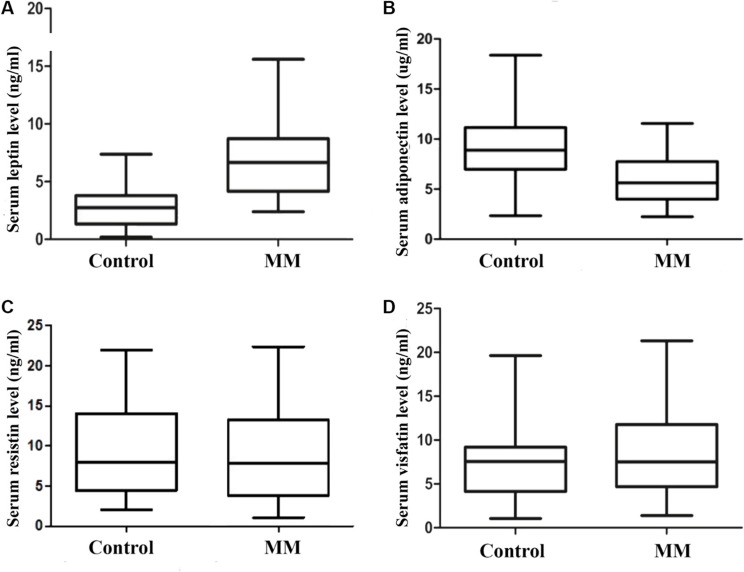
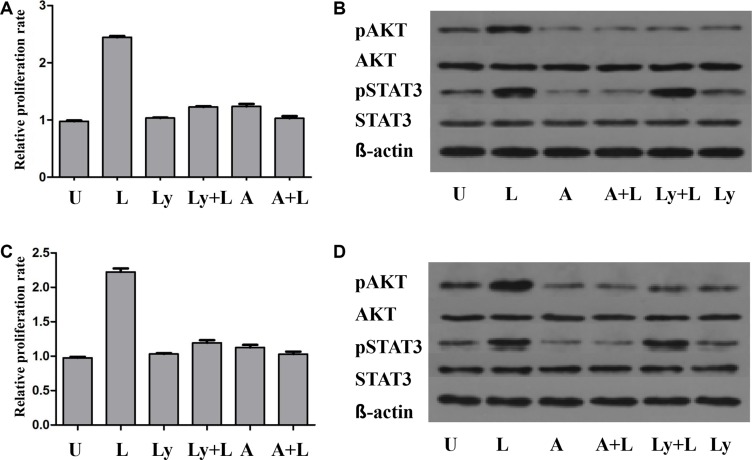
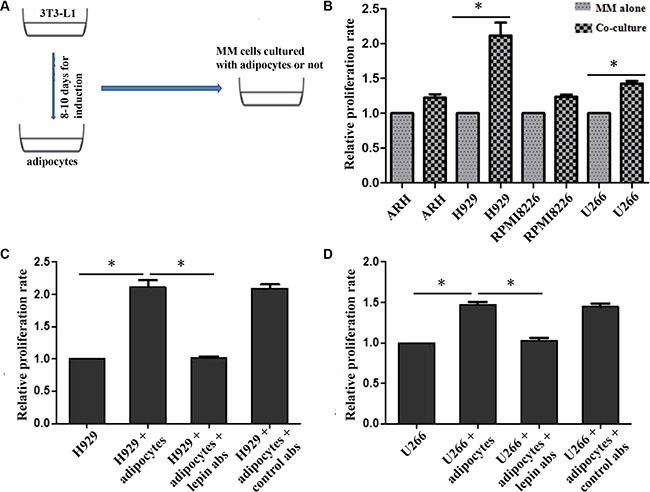
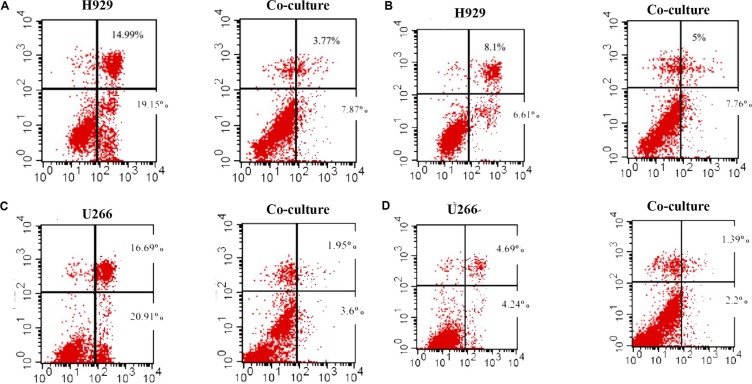
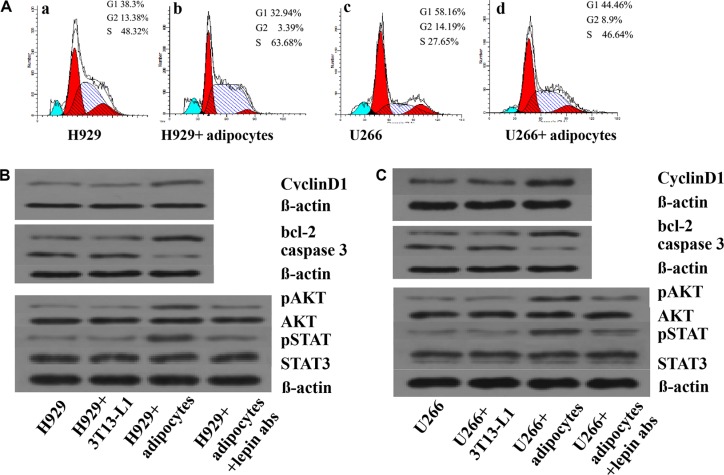
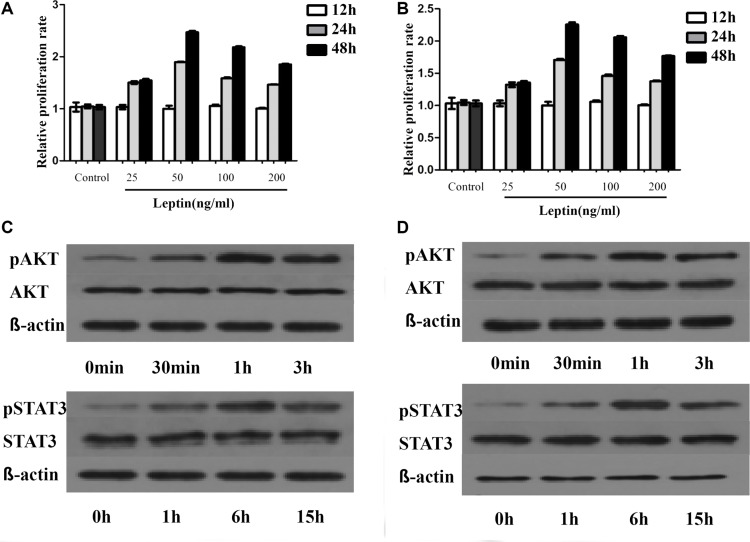
Accumulating evidences have shown that adipokines secreted from adipocytes contributes to tumor development, especially leptin. However, underlying mechanisms remain unclear. This study aims to explore the effect of leptin on development and chemoresistance in multiple myeloma cells and the potential mechanism. Analysis of levels of adipokines including leptin and adiponectin in 28 multiple myeloma patients identified significantly higher leptin compared with 28 normal controls(P < 0.05), and leptin level was positively correlated with clinical stage, IgG, ER, and ß2MG. Next, by using co-culture system of myeloma and adipocytes, and pharmacologic enhancement of leptin, we found that increased growth of myeloma cells and reduced toxicity of bortezomib were best observed at 50 ng/ml of leptin, along with increased expression of cyclinD1, Bcl-2 and decreased caspase-3 expression. We also found that phosphorylated AKT and STAT3 but not the proteins expression reached peak after 1h and 6h treatment of leptin, respectively. By using AG490, an agent blocking the phosphorylation of AKT and ERK, the proliferation of myeloma cells was inhibited, as well as the phosphorylation of AKT and STAT3, even adding leptin. Taken together, our study demonstrated that up-regulated leptin could stimulate proliferation of myeloma and reduce the anti-tumor effect of chemotherapy possibly via activating AKT and STAT3 pathways, and leptin might be one of the potential therapeutic targets for treating myeloma.
越来越多的证据表明,脂肪细胞分泌的脂肪因子,尤其是瘦素,有助于肿瘤的发展。然而,其潜在机制仍不清楚。本研究旨在探讨瘦素对多发性骨髓瘤细胞发育和化疗耐药性的影响及其潜在机制。对28例多发性骨髓瘤患者的瘦素和脂联素等脂肪因子水平进行分析,发现与28例正常对照相比,瘦素水平显著升高(P<0.05),且瘦素水平与临床分期、IgG、ER和β2MG呈正相关。接下来,通过使用骨髓瘤细胞与脂肪细胞的共培养系统以及瘦素的药理学增强作用,我们发现在50 ng/ml瘦素水平时,骨髓瘤细胞生长增加以及硼替佐米的毒性降低最为明显,同时细胞周期蛋白D1、Bcl-2表达增加,caspase-3表达降低。我们还发现,瘦素处理1小时和6小时后,磷酸化的AKT和STAT3分别达到峰值,但蛋白表达无变化。使用AG490(一种阻断AKT和ERK磷酸化的药物),即使添加瘦素,骨髓瘤细胞的增殖以及AKT和STAT3的磷酸化也受到抑制。综上所述,我们的研究表明,上调的瘦素可能通过激活AKT和STAT3途径刺激骨髓瘤增殖并降低化疗的抗肿瘤作用,瘦素可能是治疗骨髓瘤的潜在治疗靶点之一。