Holtyn August F, Tiruveedhula V V N Phani Babu, Stephen Michael Rajesh, Cook James M, Weerts Elise M
Johns Hopkins University School of Medicine, Division of Behavioral Biology, 5510 Nathan Shock Dr, Baltimore, MD 21224, USA.
University of Wisconsin-Milwaukee, Department of Chemistry & Biochemistry, 3210 N Cramer St, Milwaukee, WI 53201, USA.
Drug Alcohol Depend. 2017 Jan 1;170:25-31. doi: 10.1016/j.drugalcdep.2016.10.036. Epub 2016 Nov 4.
The major inhibitory neurotransmitter, gamma-aminobutyric acid (GABA), modulates many of the behavioral effects of alcohol, including sedation, tolerance, and withdrawal. The α1 subunit of the benzodiazepine GABA receptor is the most widely expressed alpha subunit in the brain, and has been implicated in the reinforcing- and abuse-related effects of alcohol. The aim of the present study was to examine whether treatment with a benzodiazepine GABA α1-preferring ligand, 3-isopropoxy-β-carboline hydrochloride (3-ISOPBC), selectively decreases alcohol seeking and consumption.
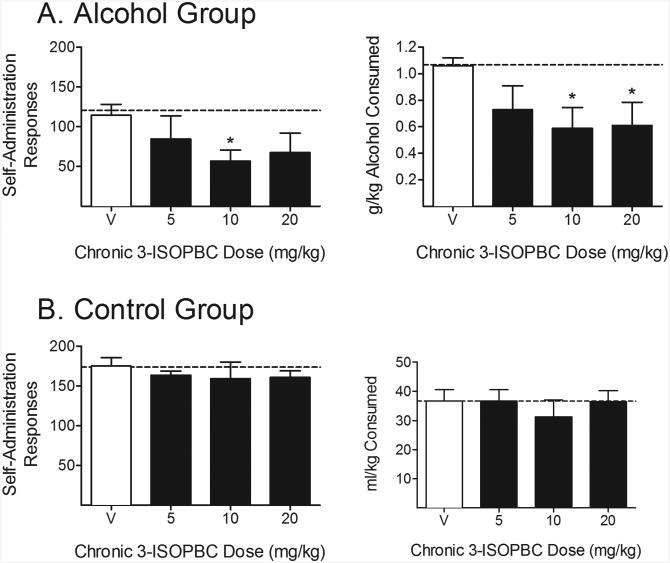
Eight baboons self-administered alcohol (4% w/v; n=5; alcohol group) or a non-alcoholic beverage (n=3; control group) in Component 3 of a chained schedule of reinforcement. Responses in Component 2 provided indices of motivation to drink (seeking). Doses of 3-ISOPBC (5.0-30.0mg/kg) and vehicle were administered before drinking sessions under both acute and chronic (5day) conditions.
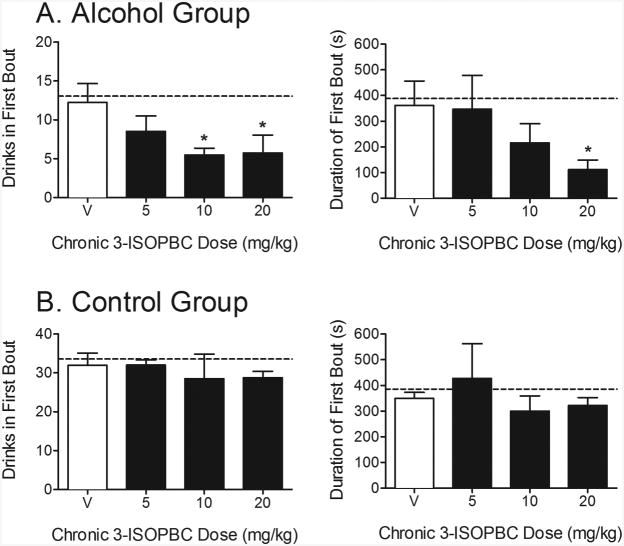
Chronic, and not acute, administration of 3-ISOPBC significantly decreased self-administration responses, g/kg alcohol consumed, and the number of drinks in and duration of the first drinking bout in the alcohol group. In the control group, chronic administration of 3-ISOPBC did not significantly decrease any of these measures at any of the doses.
The GABA α1-preferring ligand 3-ISOPBC may have therapeutic potential in the treatment of alcohol use disorder due to its ability to selectively reduce alcohol use.
主要抑制性神经递质γ-氨基丁酸(GABA)调节酒精的许多行为效应,包括镇静、耐受性和戒断反应。苯二氮䓬GABA受体的α1亚基是大脑中表达最广泛的α亚基,并且与酒精的强化和成瘾相关效应有关。本研究的目的是检验用一种优先作用于苯二氮䓬GABAα1的配体3-异丙氧基-β-咔啉盐酸盐(3-ISOPBC)进行治疗是否能选择性地减少酒精觅求行为和酒精消耗。
8只狒狒在链式强化程序的第3部分中自行摄入酒精(4%w/v;n=5;酒精组)或非酒精饮料(n=3;对照组)。第2部分中的反应提供了饮酒动机(觅求)的指标。在急性和慢性(5天)条件下,在饮酒时段前给予3-ISOPBC(5.0 - 30.0mg/kg)剂量和赋形剂。
3-ISOPBC的慢性给药而非急性给药显著降低了酒精组的自行给药反应、每千克体重酒精消耗量、首次饮酒回合中的饮酒量和持续时间。在对照组中,3-ISOPBC的慢性给药在任何剂量下均未显著降低这些指标中的任何一项。
优先作用于GABAα1的配体3-ISOPBC可能因其能够选择性减少酒精使用而在酒精使用障碍的治疗中具有治疗潜力。