Zhao Jihui, Piao Xianghua, Shi Xiaoqin, Si Aiyong, Zhang Yongtai, Feng Nianping
School of Pharmacy, Shanghai University of Traditional Chinese Medicine, Shanghai 201203, China.
Molecules. 2016 Nov 17;21(11):1549. doi: 10.3390/molecules21111549.
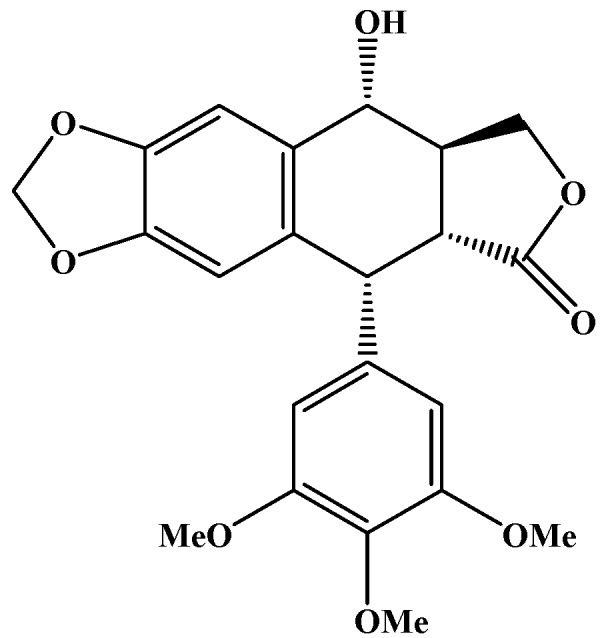
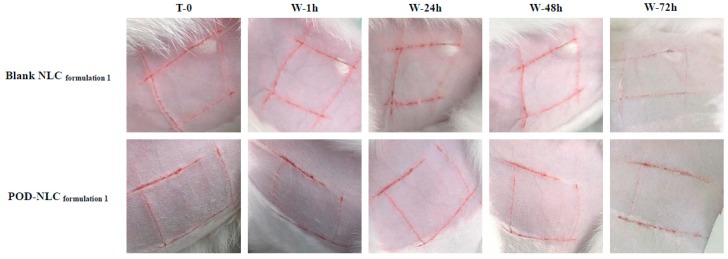
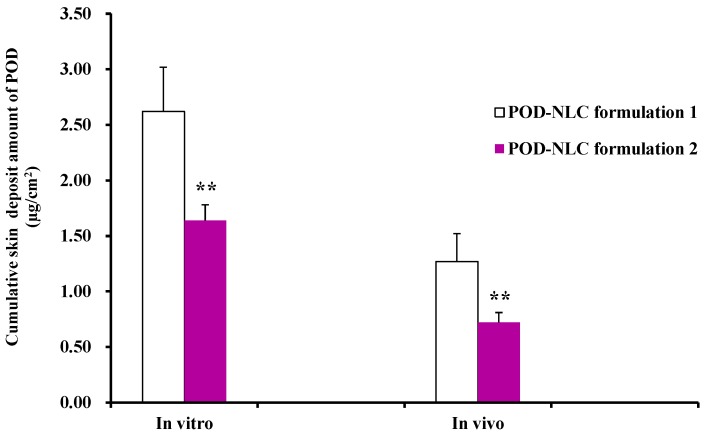
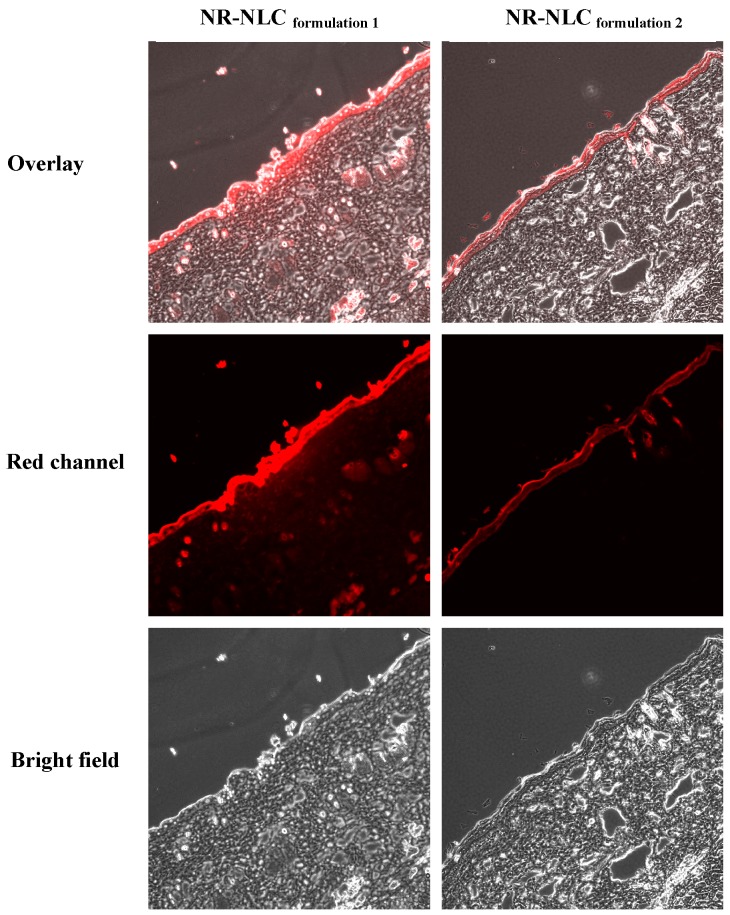
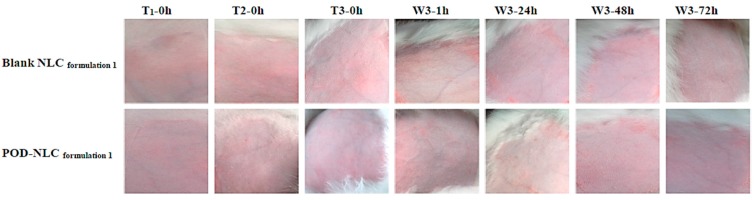
Nanostructured lipid carriers (NLC) exhibit high skin targeting efficiency and good safety. They are promising vehicles for topical drug delivery. This study aims to increase the skin distribution of podophyllotoxin (POD) by incorporating it into NLCs. Two kinds of POD-loaded NLCs (POD-NLCs)-POD-NLC and POD-NLC-were prepared and characterized. Their skin targeting efficiencies were compared by conducting in vitro and in vivo experiments. Obviously smaller mean particle size was observed for POD-NLC (106 nm) than POD-NLC (219 nm), whereas relatively low POD loadings (less than 0.5%) were observed for both POD-NLC (0.33%) and POD-NLC (0.49%). Significantly higher in vitro and in vivo rat skin deposit amounts of POD ( ˂ 0.01) were detected after the topical application of POD-NLC compared to POD-NLC. To visualize the skin distribution behavior of hydrophobic active pharmaceutical ingredients (APIs) when NLCs were used as carriers, POD was replaced with Nile red (NR-a hydrophobic fluorescent probe), and the distribution behavior of NR-NLC and NR-NLC in rat skin in vivo was observed using confocal laser scanning microscopy (CLSM). Higher fluorescent intensity was observed in rat skin after the topical application of NR-NLC than NR-NLC, suggesting that higher skin targeting efficiency might be obtained when NLCs with smaller mean particle size were used as carriers for hydrophobic APIs. This result was in accordance with those of skin distribution evaluation experiments of POD-NLCs. Skin irritation property of POD-NLC was investigated and no irritation was observed in intact or damaged rabbit skin, suggesting it is safe for topical use. Our results validated the safety of NLCs when applied topically. More importantly, mean particle size might be an important parameter for formulation optimization when NLCs are used as carriers for hydrophobic APIs for topical application, considering that their loading is relatively low.
纳米结构脂质载体(NLC)具有高皮肤靶向效率和良好的安全性。它们是用于局部给药的有前景的载体。本研究旨在通过将鬼臼毒素(POD)包封于NLC中来增加其在皮肤中的分布。制备并表征了两种载POD的NLC(POD-NLC)——POD-NLC和POD-NLC。通过体外和体内实验比较了它们的皮肤靶向效率。明显观察到POD-NLC(106nm)的平均粒径比POD-NLC(219nm)小得多,而POD-NLC(0.33%)和POD-NLC(0.49%)的POD载量都相对较低(小于0.5%)。与POD-NLC相比,局部应用POD-NLC后检测到大鼠皮肤中POD的体外和体内沉积量显著更高(˂0.01)。为了可视化当NLC用作载体时疏水性活性药物成分(API)在皮肤中的分布行为,用尼罗红(NR——一种疏水性荧光探针)替代POD,并使用共聚焦激光扫描显微镜(CLSM)观察NR-NLC和NR-NLC在大鼠皮肤中的体内分布行为。局部应用NR-NLC后大鼠皮肤中观察到的荧光强度高于NR-NLC,表明当平均粒径较小的NLC用作疏水性API的载体时可能获得更高的皮肤靶向效率。该结果与POD-NLC的皮肤分布评估实验结果一致。研究了POD-NLC的皮肤刺激性,在完整或受损的兔皮肤中均未观察到刺激,表明其局部使用是安全的。我们的结果验证了NLC局部应用时的安全性。更重要的是,考虑到它们的载量相对较低,当NLC用作局部应用的疏水性API的载体时,平均粒径可能是制剂优化的一个重要参数。