Gao Shangfeng, Wang Jie, Zhang Tong, Liu Guangping, Jin Lei, Ji Daofei, Wang Peng, Meng Qingming, Zhu Yufu, Yu Rutong
Institute of Nervous System Diseases, Xuzhou Medical University, 84 West Huai-Hai Road, Xuzhou 221002, Jiangsu, China.
Brain Hospital, Affiliated Hospital of Xuzhou Medical University, 99 West Huai-Hai Road, Xuzhou 221002, Jiangsu, China.
Int J Mol Sci. 2016 Nov 18;17(11):1859. doi: 10.3390/ijms17111859.
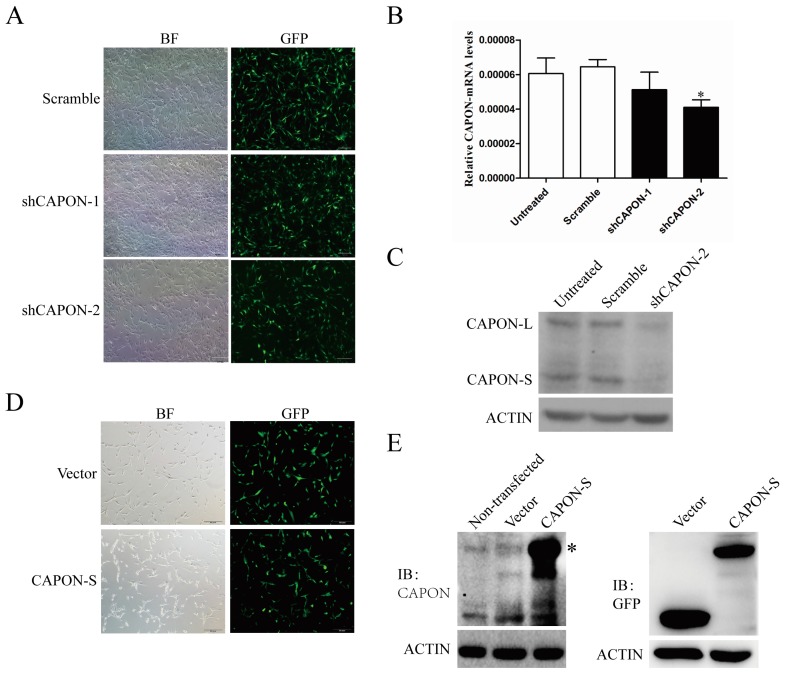
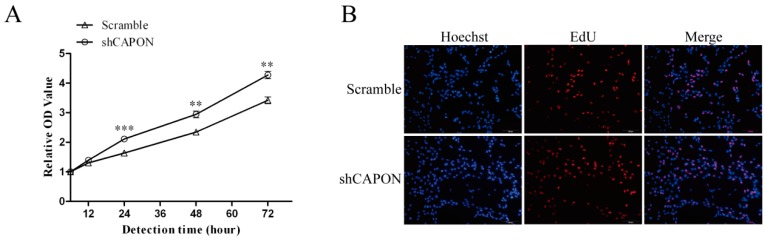
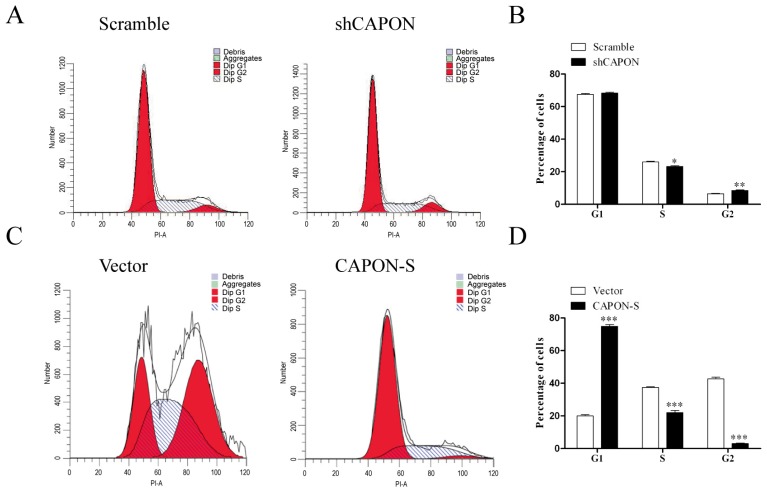
CAPON is an adapter protein for nitric oxide synthase 1 (NOS1). CAPON has two isoforms in the human brain: CAPON-L (long form of CAPON) and CAPON-S (short form of CAPON). Recent studies have indicated the involvement of CAPON in tumorigenesis beyond its classical role in NOS1 activity regulation. In this study, we found that the protein levels of CAPON-S, but not than CAPON-L, were significantly decreased in glioma tissues. Therefore, we established lentivirus-mediated stable cell lines with CAPON-S overexpression or down-regulation, and investigated the role of CAPON-S in the proliferation of glioma cells by using CCK8, EdU, and flow cytometry assays. Overexpression of CAPON-S reduced the cell variability and the percentage of EdU-positive cells, and arrested the cells in the G1 phase in glioma cells. Silencing of CAPON by short-hairpin RNA showed the opposite effects. Furthermore, an intracellular signaling array revealed that overexpression of CAPON-S resulted in a remarkable reduction in the phosphorylation of Akt and S6 ribosomal protein in glioma cells, which was further confirmed by Western blot. These findings suggest that CAPON may function as a tumor suppressor in human brain glioma and that the inactivation of the Akt signaling pathway caused by CAPON-S overexpression may provide insight into the underlying mechanism of CAPON in glioma cell proliferation.
CAPON是一氧化氮合酶1(NOS1)的衔接蛋白。在人类大脑中,CAPON有两种亚型:CAPON-L(CAPON的长形式)和CAPON-S(CAPON的短形式)。最近的研究表明,CAPON除了在调节NOS1活性方面的经典作用外,还参与肿瘤发生。在本研究中,我们发现胶质瘤组织中CAPON-S的蛋白水平显著降低,而CAPON-L没有。因此,我们建立了慢病毒介导的CAPON-S过表达或下调的稳定细胞系,并通过CCK8、EdU和流式细胞术检测研究了CAPON-S在胶质瘤细胞增殖中的作用。CAPON-S的过表达降低了细胞变异性和EdU阳性细胞的百分比,并使胶质瘤细胞停滞在G1期。短发夹RNA沉默CAPON则显示出相反的效果。此外,细胞内信号转导阵列显示,CAPON-S的过表达导致胶质瘤细胞中Akt和S6核糖体蛋白的磷酸化显著降低,蛋白质免疫印迹法进一步证实了这一点。这些发现表明,CAPON可能在人脑胶质瘤中发挥肿瘤抑制作用,CAPON-S过表达导致的Akt信号通路失活可能为CAPON在胶质瘤细胞增殖中的潜在机制提供线索。