Bellingham M, Fowler P A, MacDonald E S, Mandon-Pepin B, Cotinot C, Rhind S, Sharpe R M, Evans N P
Institute of Biodiversity, Animal Health and Comparative Medicine, University of Glasgow, Glasgow, UK.
Division of Applied Medicine, Centre for Reproductive Endocrinology and Medicine, Institute of Medical Sciences, University of Aberdeen, Aberdeen, UK.
J Neuroendocrinol. 2016 Dec;28(12). doi: 10.1111/jne.12444.
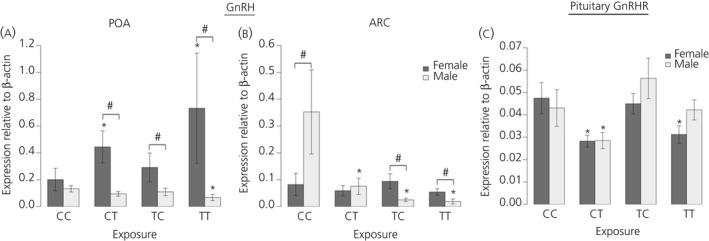
We have shown that continuous maternal exposure to the complex mixture of environmental chemicals (ECs) found in human biosolids (sewage sludge), disrupts mRNA expression of genes crucial for development and long-term regulation of hypothalamic-pituitary gonadal (HPG) function in sheep. The present study investigated whether exposure to ECs only during preconceptional period or only during pregnancy perturbed key regulatory genes within the hypothalamus and pituitary gland and whether these effects were different from chronic (life-long) exposure to biosolid ECs. The findings demonstrate that the timing and duration of maternal EC exposure influences the subsequent effects on the foetal neuroendocrine system in a sex-specific manner. Maternal exposure prior to conception, or during pregnancy only, altered the expression of key foetal neuroendocrine regulatory systems such as gonadotrophin-releasing hormone and kisspeptin to a greater extent than when maternal exposure was 'life-long'. Furthermore, hypothalamic gene expression was affected to a greater extent in males than in females and, following EC exposure, male foetuses expressed more 'female-like' mRNA levels for some key neuroendocrine genes. This is the first study to show that 'real-life' maternal exposure to low levels of a complex cocktail of chemicals prior to conception can subsequently affect the developing foetal neuroendocrine system. These findings demonstrate that the developing neuroendocrine system is sensitive to EC mixtures in a sex-dimorphic manner likely to predispose to reproductive dysfunction in later life.
我们已经表明,母体持续暴露于人类生物固体(污水污泥)中发现的环境化学物质(ECs)复杂混合物中,会破坏绵羊下丘脑 - 垂体 - 性腺(HPG)功能发育和长期调节所必需的基因的mRNA表达。本研究调查了仅在孕前或仅在孕期暴露于ECs是否会扰乱下丘脑和垂体中的关键调节基因,以及这些影响是否与长期(终生)暴露于生物固体ECs不同。研究结果表明,母体EC暴露的时间和持续时间以性别特异性方式影响对胎儿神经内分泌系统的后续作用。孕前或仅在孕期的母体暴露,比母体“终生”暴露时,更大程度地改变了关键胎儿神经内分泌调节系统(如促性腺激素释放激素和亲吻素)的表达。此外,下丘脑基因表达在雄性中比在雌性中受到的影响更大,并且在EC暴露后,雄性胎儿某些关键神经内分泌基因的mRNA水平表现出更多“雌性样”特征。这是第一项表明孕前母体“实际生活中”暴露于低水平化学物质混合物会随后影响发育中的胎儿神经内分泌系统的研究。这些发现表明,发育中的神经内分泌系统对EC混合物具有性别二态性敏感性,这可能会使个体在以后的生活中易患生殖功能障碍。