Ulrich Susanne, Holle Rolf, Wacker Margarethe, Stark Renee, Icks Andrea, Thorand Barbara, Peters Annette, Laxy Michael
Institute of Health Economics and Health Care Management, Helmholtz Zentrum München, German Research Center for Environmental Health, Neuherberg, Germany.
Institute for Medical Informatics, Biometrics and Epidemiology, Ludwig-Maximilians-Universität München, Munich, Germany.
BMJ Open. 2016 Nov 21;6(11):e012527. doi: 10.1136/bmjopen-2016-012527.
To examine the impact of type 2 diabetes on direct and indirect costs and to describe the effect of relevant diabetes-related factors, such as type of treatment or glycaemic control on direct costs.
Bottom-up excess cost analysis from a societal perspective based on population-based survey data.
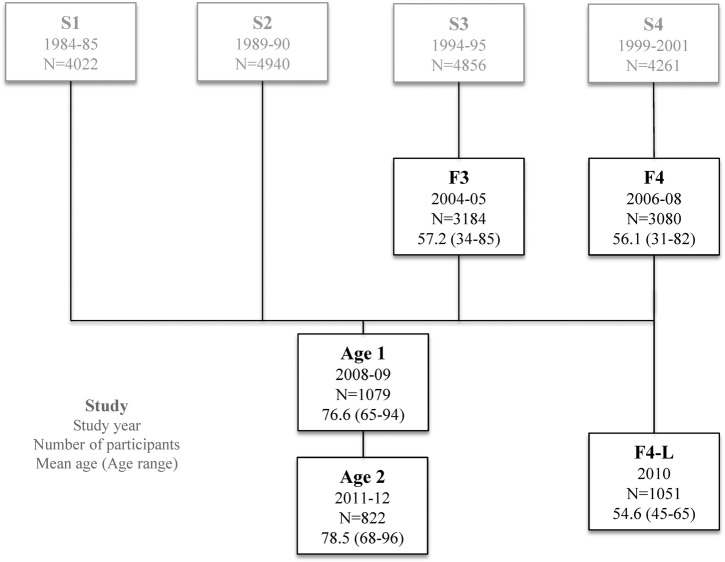
9160 observations from 6803 individuals aged 31-96 years (9.6% with type 2 diabetes) from the population-based KORA (Cooperative Health Research in the Region of Augsburg) studies in Southern Germany.
Healthcare usage, productivity losses, and resulting direct and indirect costs.
Information on diabetes status, biomedical/sociodemographic variables, medical history and on healthcare usage and productivity losses was assessed in standardised interviews and examinations. Healthcare usage and productivity losses were costed with reference to unit prices and excess costs of type 2 diabetes were calculated using generalised linear models.
Individuals with type 2 diabetes had 1.81 (95% CI 1.56 to 2.11) times higher direct (€3352 vs €1849) and 2.07 (1.51 to 2.84) times higher indirect (€4103 vs €1981) annual costs than those without diabetes. Cardiovascular complications, a long diabetes duration and treatment with insulin were significantly associated with increased direct costs; however, glycaemic control was only weakly insignificantly associated with costs.
This study illustrates the substantial direct and indirect societal cost burden of type 2 diabetes in Germany. Strong effort is needed to optimise care to avoid progression of the disease and costly complications.
研究2型糖尿病对直接成本和间接成本的影响,并描述相关糖尿病相关因素,如治疗类型或血糖控制对直接成本的影响。
基于人群调查数据,从社会角度进行自下而上的超额成本分析。
来自德国南部基于人群的KORA(奥格斯堡地区合作健康研究)研究的6803名年龄在31 - 96岁的个体的9160份观察数据(9.6%患有2型糖尿病)。
医疗保健使用情况、生产力损失以及由此产生的直接和间接成本。
在标准化访谈和检查中评估有关糖尿病状况、生物医学/社会人口统计学变量、病史以及医疗保健使用情况和生产力损失的信息。根据单位价格计算医疗保健使用情况和生产力损失的成本,并使用广义线性模型计算2型糖尿病的超额成本。
2型糖尿病患者的直接年度成本(3352欧元对1849欧元)比无糖尿病患者高1.81倍(95%置信区间1.56至2.11),间接年度成本(4103欧元对1981欧元)高2.07倍(1.51至2.84)。心血管并发症、糖尿病病程长以及胰岛素治疗与直接成本增加显著相关;然而,血糖控制与成本仅存在微弱的不显著关联。
本研究表明德国2型糖尿病的直接和间接社会成本负担巨大。需要大力努力优化护理,以避免疾病进展和昂贵的并发症。