Rose Destanie R, Careaga Milo, Van de Water Judy, McAllister Kim, Bauman Melissa D, Ashwood Paul
Department of Medical Microbiology and Immunology, University of California Davis; CA, USA; MIND Institute, University of California, Davis, CA, USA.
MIND Institute, University of California, Davis, CA, USA; Division of Rheumatology, Allergy and Clinical Immunology, University of California, Davis, CA, USA.
Brain Behav Immun. 2017 Jul;63:60-70. doi: 10.1016/j.bbi.2016.11.020. Epub 2016 Nov 19.
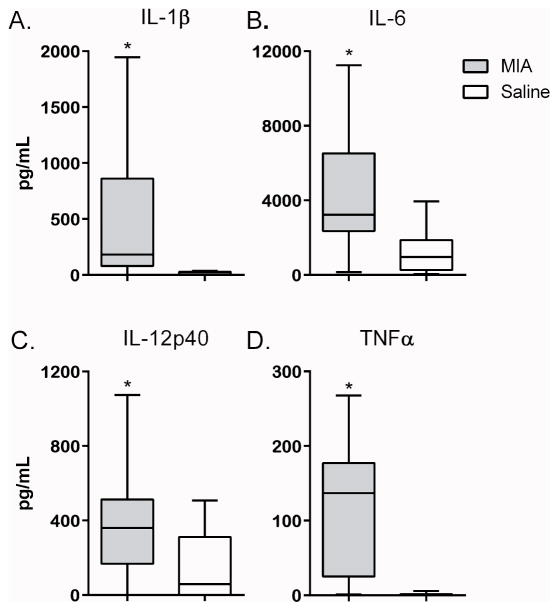
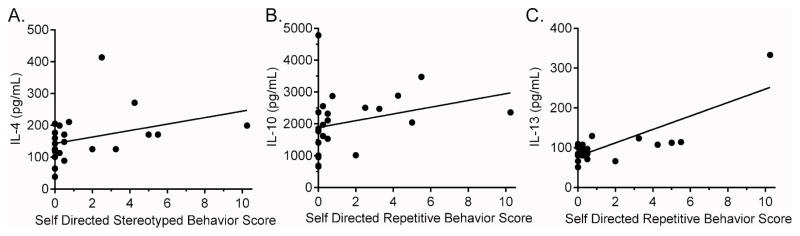
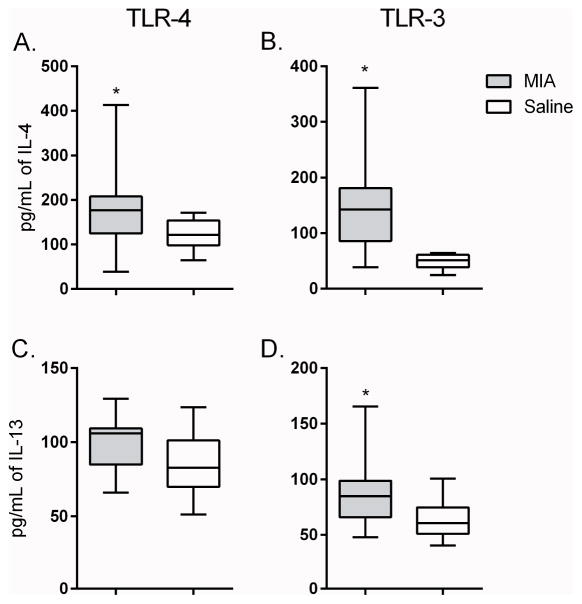
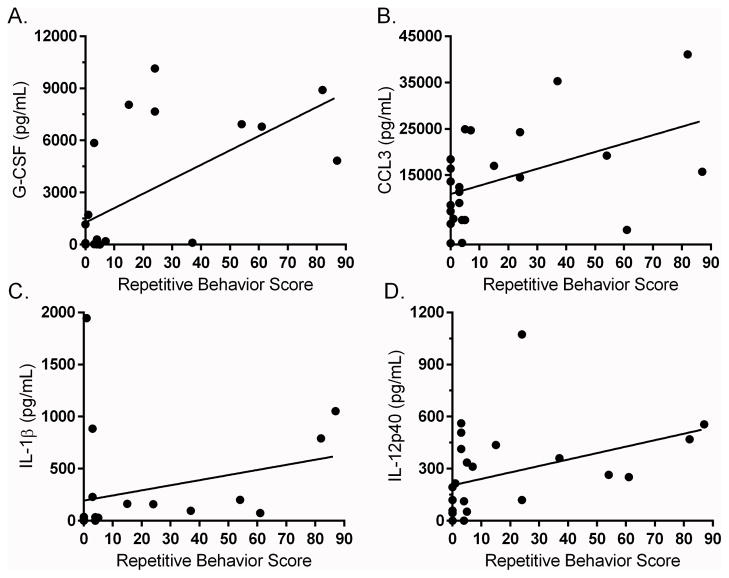
Infection during pregnancy can lead to activation of the maternal immune system and has been associated with an increased risk of having an offspring later diagnosed with a neurodevelopmental disorders (NDD) such as autism spectrum disorder (ASD) or schizophrenia (SZ). Most maternal immune activation (MIA) studies to date have been in rodents and usually involve the use of lipopolysaccharide (LPS) or polyinosinic:polycytidylic acid (poly I:C). However, since NDD are based on behavioral changes, a model of MIA in non-human primates could potentially provide data that helps illuminate complex behavioral and immune outputs in human NDD. In this study twenty-one pregnant rhesus macaques were either given three injections over 72 hours of poly I:C-LC, a double stranded RNA analog (viral mimic), or saline as a control. Injections were given near the end of the first trimester or near the end of the second trimester to determine if there were differences in immune output due to the timing of MIA.An additional three non-treated animals were used as controls. The offspring were followed until 4 years of age, with blood collected at the end of their first (year 1) and fourth (year 4) years to assess dynamic cellular immune function. Induced responses from peripheral immune cells were measured using multiplex assays.At one year of age, MIA exposed offspring displayed elevated production of innate inflammatory cytokines including: interleukin (IL)-1β, IL-6, IL-12p40, and tumor necrosis factor (TNF)α at baseline and following stimulation. At four years of age, the MIA exposed offspring continued to display elevated IL-1β, and there was also a pattern of an increased production of T-cell helper type (T)-2 cytokines, IL-4 and IL-13. Throughout this time period, the offspring of MIA treated dams exhibited altered behavioral phenotypes including increased stereotyped behaviors. During the first two years, stereotyped behaviors were associated with innate cytokine production. Self-directed behaviors were associated with T2 cytokine production at year 4. Data from this study suggests long-term behavioral and immune activation was present in offspring following MIA. This novel non-human primate model of MIA may provide a relevant clinically translational model to help further elucidate the role between immune dysfunction and complex behavioral outputs following MIA.
孕期感染可导致母体免疫系统激活,并与后代日后被诊断患有神经发育障碍(NDD)(如自闭症谱系障碍(ASD)或精神分裂症(SZ))的风险增加有关。迄今为止,大多数母体免疫激活(MIA)研究都在啮齿动物中进行,通常涉及使用脂多糖(LPS)或聚肌苷酸:聚胞苷酸(poly I:C)。然而,由于NDD基于行为变化,非人类灵长类动物的MIA模型可能会提供有助于阐明人类NDD中复杂行为和免疫输出的数据。在本研究中,21只怀孕的恒河猴在72小时内接受了三次聚肌苷酸:聚胞苷酸 - 低聚物(poly I:C-LC,一种双链RNA类似物(病毒模拟物))注射,或作为对照的生理盐水注射。在孕早期结束时或孕中期结束时进行注射,以确定由于MIA时间不同是否存在免疫输出差异。另外三只未接受治疗的动物用作对照。对后代进行追踪直至4岁,在其1岁(第1年)和4岁(第4年)末采集血液,以评估动态细胞免疫功能。使用多重检测法测量外周免疫细胞的诱导反应。在1岁时,暴露于MIA的后代在基线和刺激后显示出先天炎性细胞因子的产生增加,包括白细胞介素(IL)-1β、IL-6、IL-12p40和肿瘤坏死因子(TNF)α。在4岁时,暴露于MIA的后代继续显示出IL-1β升高,并且还存在辅助性T细胞2型(Th2)细胞因子IL-4和IL-13产生增加的模式。在整个这段时间内,接受MIA处理的母猴的后代表现出行为表型改变,包括刻板行为增加。在头两年,刻板行为与先天细胞因子产生有关。在第4年,自我导向行为与Th2细胞因子产生有关。本研究数据表明,MIA后后代存在长期行为和免疫激活。这种新型的非人类灵长类动物MIA模型可能提供一个相关的临床转化模型,以帮助进一步阐明MIA后免疫功能障碍与复杂行为输出之间的关系。