
低碳水化合物高脂肪饮食会降低成对喂养的雌性C57BL/6J小鼠的瘦体重并损害其心脏功能。
A low-carbohydrate high-fat diet decreases lean mass and impairs cardiac function in pair-fed female C57BL/6J mice.
作者信息
Nilsson Jessica, Ericsson Madelene, Joibari Masoumeh Motamedi, Anderson Fredrick, Carlsson Leif, Nilsson Stefan K, Sjödin Anna, Burén Jonas
机构信息
Department of Medical Biosciences, Physiological Chemistry, Umeå University, SE-901 87 Umeå, Sweden.
Department of Public Health and Clinical Medicine, Medicine, Umeå University, Umeå, Sweden.
出版信息
Nutr Metab (Lond). 2016 Nov 15;13:79. doi: 10.1186/s12986-016-0132-8. eCollection 2016.
BACKGROUND
Excess body fat is a major health issue and a risk factor for the development of numerous chronic diseases. Low-carbohydrate diets like the Atkins Diet are popular for rapid weight loss, but the long-term consequences remain the subject of debate. The Scandinavian low-carbohydrate high-fat (LCHF) diet, which has been popular in Scandinavian countries for about a decade, has very low carbohydrate content (~5 E %) but is rich in fat and includes a high proportion of saturated fatty acids. Here we investigated the metabolic and physiological consequences of a diet with a macronutrient composition similar to the Scandinavian LCHF diet and its effects on the organs, tissues, and metabolism of weight stable mice.
METHODS
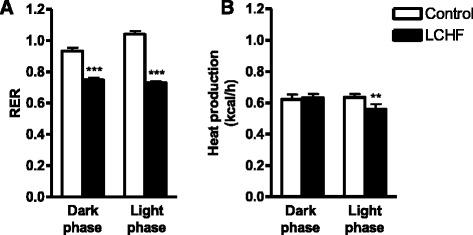
Female C57BL/6J mice were iso-energetically pair-fed for 4 weeks with standard chow or a LCHF diet. We measured body composition using echo MRI and the aerobic capacity before and after 2 and 4 weeks on diet. Cardiac function was assessed by echocardiography before and after 4 weeks on diet. The metabolic rate was measured by indirect calorimetry the fourth week of the diet. Mice were sacrificed after 4 weeks and the organ weight, triglyceride levels, and blood chemistry were analyzed, and the expression of key ketogenic, metabolic, hormonal, and inflammation genes were measured in the heart, liver, and adipose tissue depots of the mice using real-time PCR.
RESULTS
The increase in body weight of mice fed a LCHF diet was similar to that in controls. However, while control mice maintained their body composition throughout the study, LCHF mice gained fat mass at the expense of lean mass after 2 weeks. The LCHF diet increased cardiac triglyceride content, impaired cardiac function, and reduced aerobic capacity. It also induced pronounced alterations in gene expression and substrate metabolism, indicating a unique metabolic state.
CONCLUSIONS
Pair-fed mice eating LCHF increased their percentage of body fat at the expense of lean mass already after 2 weeks, and after 4 weeks the function of the heart deteriorated. These findings highlight the urgent need to investigate the effects of a LCHF diet on health parameters in humans.
背景
体内脂肪过多是一个主要的健康问题,也是众多慢性疾病发展的危险因素。像阿特金斯饮食法这样的低碳水化合物饮食因能快速减重而广受欢迎,但其长期影响仍存在争议。在斯堪的纳维亚国家流行了约十年的斯堪的纳维亚低碳水化合物高脂肪(LCHF)饮食,碳水化合物含量极低(约5E%),但富含脂肪,且饱和脂肪酸比例很高。在此,我们研究了一种宏量营养素组成与斯堪的纳维亚LCHF饮食相似的饮食对体重稳定的小鼠的代谢和生理影响及其对器官、组织和代谢的作用。
方法
将雌性C57BL/6J小鼠以等能量方式配对喂养4周,一组喂标准饲料,另一组喂LCHF饮食。在饮食2周和4周前后,我们使用回波磁共振成像测量身体组成,并测量有氧能力。在饮食4周前后通过超声心动图评估心脏功能。在饮食第四周通过间接量热法测量代谢率。4周后处死小鼠,分析器官重量、甘油三酯水平和血液化学指标,并使用实时聚合酶链反应测量小鼠心脏、肝脏和脂肪组织库中关键生酮、代谢、激素和炎症基因的表达。
结果
喂食LCHF饮食的小鼠体重增加与对照组相似。然而,在整个研究过程中,对照小鼠保持了它们的身体组成,而LCHF小鼠在2周后以瘦体重为代价增加了脂肪量。LCHF饮食增加了心脏甘油三酯含量,损害了心脏功能,并降低了有氧能力。它还引起了基因表达和底物代谢的明显改变,表明存在一种独特的代谢状态。
结论
配对喂养的食用LCHF饮食的小鼠在2周后就以瘦体重为代价增加了身体脂肪百分比,4周后心脏功能恶化。这些发现凸显了迫切需要研究LCHF饮食对人类健康参数的影响。


 Zotero 插件