Qi Nan, Li Fang, Li Xiaosong, Kang Huanrong, Zhao Hui, Du Nan
Department of Oncology, The First Affiliated Hospital Tumor Center, Chinese PLA General Hospital, Beijing, China.
Medicine (Baltimore). 2016 Nov;95(47):e5392. doi: 10.1097/MD.0000000000005392.
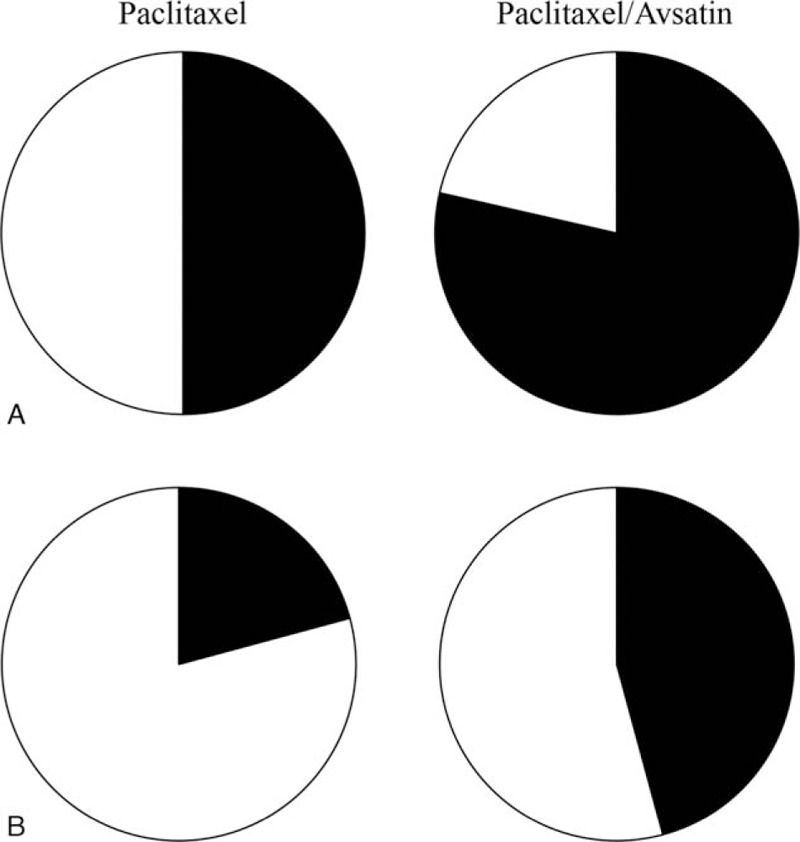
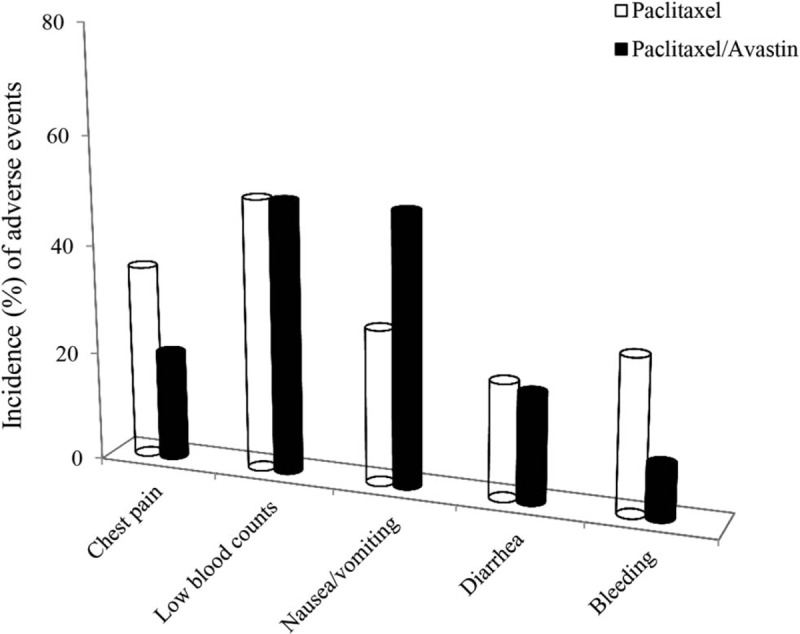
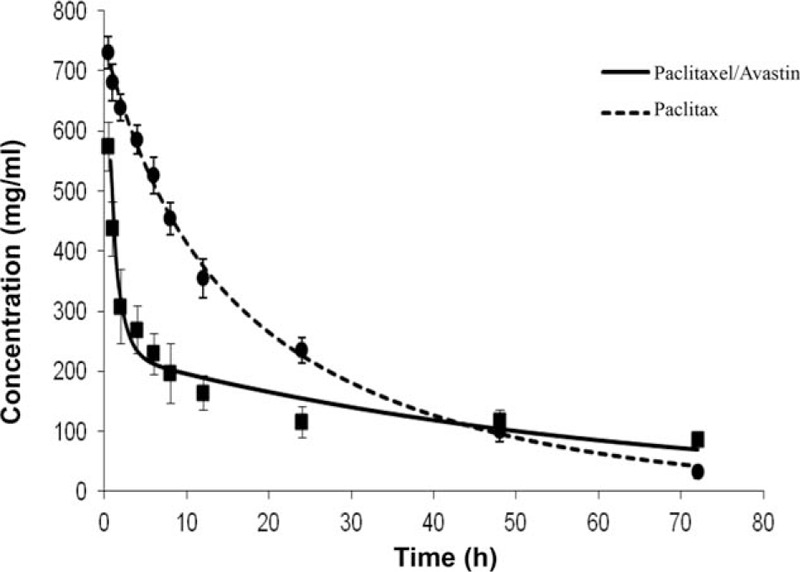
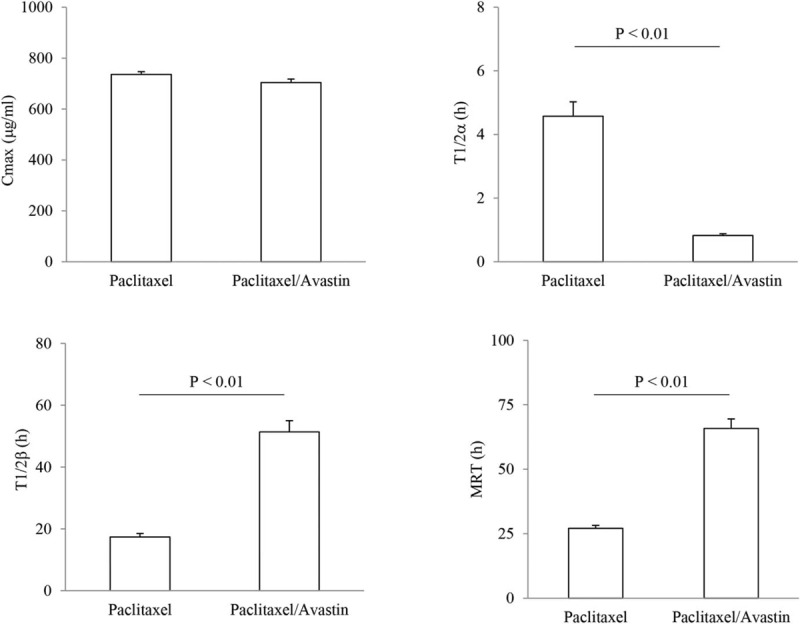
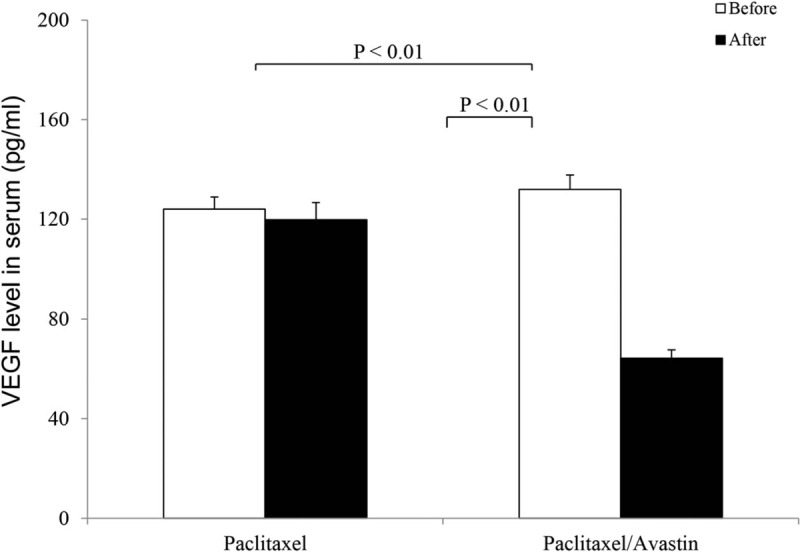
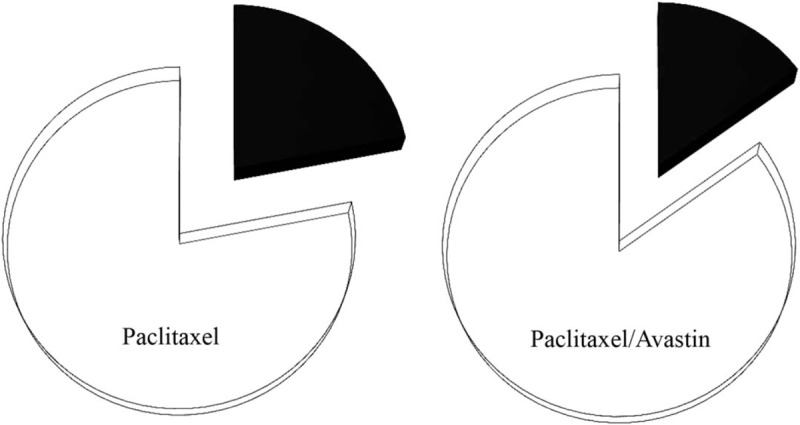
The current study is conducted to investigate efficacy of the chemotherapy drug paclitaxel in combination with Avastin (Roche Diagnostics GmbH., Mannheim, Germany) (antiangiogenic agent) in treatment of malignant pleural effusions (MPEs).Twenty-four patients with non-small cell lung cancer were randomly assigned for 2 treatment approaches. Ten patients received paclitaxel (175 mg/m) alone, and 14 patients took a combination therapy of paclitaxel and Avastin (5 mg/kg). Efficacy of the treatment approaches in the patients was validated with the change in the MPE volume. Pharmacokinetic (PK) profile and urinary excretion rate of paclitaxel were analyzed with serum vascular endothelial growth factor (VEGF) level, and adverse events were examined as well.The combination therapy reduced the MPE level with a successful rate of 29% and a survival rate of 25% over the single paclitaxel treatment in the study cohort (both P < 0.05). PKs for the combined treatment displayed a rapid distribution of the anticancer drug paclitaxel with an obvious increase in its elimination half-life in the pleural fluid (both P < 0.01). Mean residence time of paclitaxel increased in the presence of Avastin (P < 0.01). Serum VEGF levels significantly reduced in the Avastin-treated patients as compared to the paclitaxel-treated ones (P < 0.01). The urinary excretion rate was similar in the study cohort. Incidence of adverse events for the 2 treatment approaches was similar in the patients.Intervention of Avastin enhances potency of paclitaxel in treatment of MPEs with the increased survival rate of the patients through inhibiting VEGF production and prolonging time of ongoing interaction between the chemotherapy drug and the tumor tissues.
本研究旨在探讨化疗药物紫杉醇联合阿瓦斯汀(德国曼海姆罗氏诊断有限公司)(抗血管生成剂)治疗恶性胸腔积液(MPE)的疗效。24例非小细胞肺癌患者被随机分配接受两种治疗方法。10例患者单独接受紫杉醇(175mg/m)治疗,14例患者接受紫杉醇与阿瓦斯汀(5mg/kg)的联合治疗。通过MPE体积的变化来验证治疗方法对患者的疗效。分析紫杉醇的药代动力学(PK)特征和尿排泄率,并检测血清血管内皮生长因子(VEGF)水平,同时也检查不良事件。在研究队列中,联合治疗降低了MPE水平,成功率为29%,生存率为25%,高于单一紫杉醇治疗(P均< 0.05)。联合治疗的PK显示抗癌药物紫杉醇分布迅速,其在胸腔积液中的消除半衰期明显延长(P均< 0.01)。在有阿瓦斯汀存在的情况下,紫杉醇的平均驻留时间增加(P< 0.01)。与紫杉醇治疗的患者相比,阿瓦斯汀治疗的患者血清VEGF水平显著降低(P< 0.01)。研究队列中的尿排泄率相似。两种治疗方法在患者中的不良事件发生率相似。阿瓦斯汀的干预通过抑制VEGF产生和延长化疗药物与肿瘤组织之间的持续相互作用时间,增强了紫杉醇治疗MPE的效力,并提高了患者的生存率。