Ballatore Z, Pistelli M, Battelli N, Pagliacci A, De Lisa M, Berardi R, Cascinu S
Clinica di Oncologia Medica e Centro Regionale di Genetica Oncologica, Università Politecnica delle Marche, AOU Ospedali Riuniti-Ancona, Ancona, Italy.
BMC Res Notes. 2016 Nov 28;9(1):497. doi: 10.1186/s13104-016-2301-2.
Male breast cancer is a rare event, accounting for approximately 1% of all breast carcinomas. Although men with breast cancer had poorer survival when compared with women, data on prognosis principally derive from retrospective studies and from extrapolation of female breast cancer series. We reported the case of a very long survival patient.
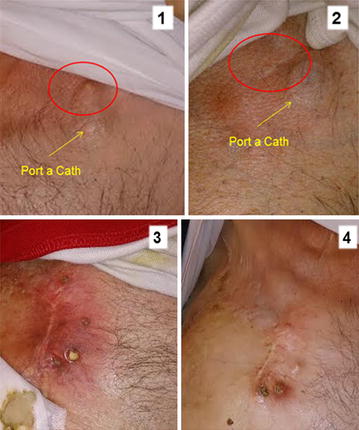
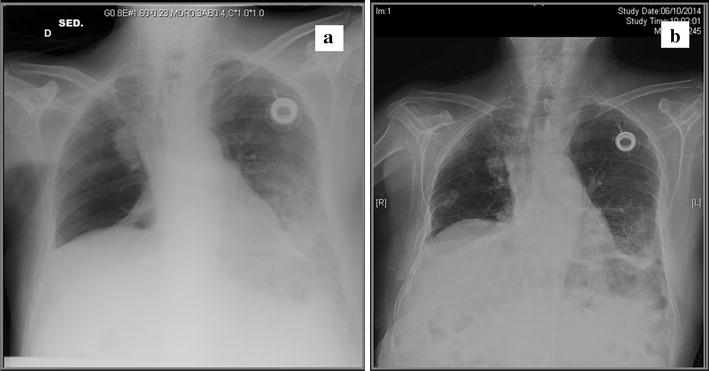
A caucasian 42-year-old man underwent radical mastectomy with axillary dissection for breast cancer in 1993. Pathologic stage was pT4pN0M0 infiltrating ductal carcinoma of right breast without lymph nodes metastases. Biological characterization was not available. He received adjuvant treatment with chemotherapy, six cycles of cyclophosphamide, methotrexate and fluorouracil, then endocrine therapy with tamoxifen for 5 years and complementary radiotherapy. Then he began clinical-instrumental follow up. In May 1996, a computed tomography scan showed multiple lung metastases. Hereafter he received several oncologic treatment including seven chemotherapy and five endocrine therapy lines with two re-challenge of endocrine therapy. In October 2007 further lung progression was showed and a biopsy was performed to characterize the disease. Histological examination confirmed breast cancer metastases, immunohistochemistry showed positive staining for estrogen receptor, negative for progesterone receptor and human epithelial growth factor receptor 2, proliferative index was 21%. In April 2013, bone disease progression was evident and he received radiant treatment to sacral spine. In May 2014 an off-label treatment with exemestane and everolimus combination was approved by Ethics Committee of the Marche Region. The patient received treatment for 3 months with evident clinical benefit to subcutaneous lesions of the chest wall that were not visible nor palpable on physical examination after 1 month of treatment.
That is the case of long survival male breast cancer patient with luminal B subtype and no BRCA mutations. He achieved higher progression free survival with endocrine therapy creating the rationale for last line treatment with everolimus and exemestane combination. Attending conclusive results from ongoing studies, everolimus and exemestane should not be used routinely in male metastatic breast cancer patients, but taking into account for selected cases. At the best of our knowledge, this is the first case of male beast cancer treated with exemestane and everolimus combination.
男性乳腺癌是一种罕见疾病,约占所有乳腺癌的1%。尽管与女性乳腺癌患者相比,男性乳腺癌患者的生存率较低,但预后数据主要来自回顾性研究以及对女性乳腺癌系列研究的推断。我们报告了一例生存期极长的患者。
一名42岁的白种男性于1993年因乳腺癌接受了根治性乳房切除术及腋窝淋巴结清扫术。病理分期为pT4pN0M0,右乳浸润性导管癌,无淋巴结转移。未进行生物学特征分析。他接受了辅助化疗,使用环磷酰胺、甲氨蝶呤和氟尿嘧啶进行了六个周期的化疗,随后接受了5年的他莫昔芬内分泌治疗及辅助放疗。之后开始进行临床仪器随访。1996年5月,计算机断层扫描显示肺部有多处转移。此后,他接受了多种肿瘤治疗,包括七种化疗方案和五种内分泌治疗方案,其中内分泌治疗有两次重新挑战。2007年10月,肺部病情进一步进展,进行了活检以明确疾病特征。组织学检查证实为乳腺癌转移,免疫组化显示雌激素受体染色阳性,孕激素受体和人表皮生长因子受体2染色阴性,增殖指数为21%。2013年4月,骨转移明显,对骶骨进行了放射治疗。2014年5月,一种依西美坦和依维莫司联合的非标签治疗方案获得了马尔凯大区伦理委员会的批准。患者接受了3个月的治疗,对胸壁皮下病变有明显的临床益处,治疗1个月后体格检查已无法看到或摸到这些病变。
这是一例具有管腔B亚型且无BRCA突变的男性乳腺癌长期生存患者。他通过内分泌治疗获得了较高的无进展生存期,这为依维莫司和依西美坦联合作为最后一线治疗提供了理论依据。在等待正在进行的研究得出最终结果之前,依维莫司和依西美坦不应常规用于男性转移性乳腺癌患者,但可考虑用于特定病例。据我们所知,这是首例使用依西美坦和依维莫司联合治疗的男性乳腺癌病例。