Nguyen Susan, Siu Rylie, Dewey Shannamar, Cui Ziyou, Gomes Aldrin V
Department of Neurobiology, Physiology, and Behavior, University of California, Davis Davis, CA, USA.
Department of Neurobiology, Physiology, and Behavior, University of California, DavisDavis, CA, USA; Department of Physiology and Membrane Biology, University of California, DavisDavis, CA, USA.
Front Physiol. 2016 Nov 15;7:520. doi: 10.3389/fphys.2016.00520. eCollection 2016.
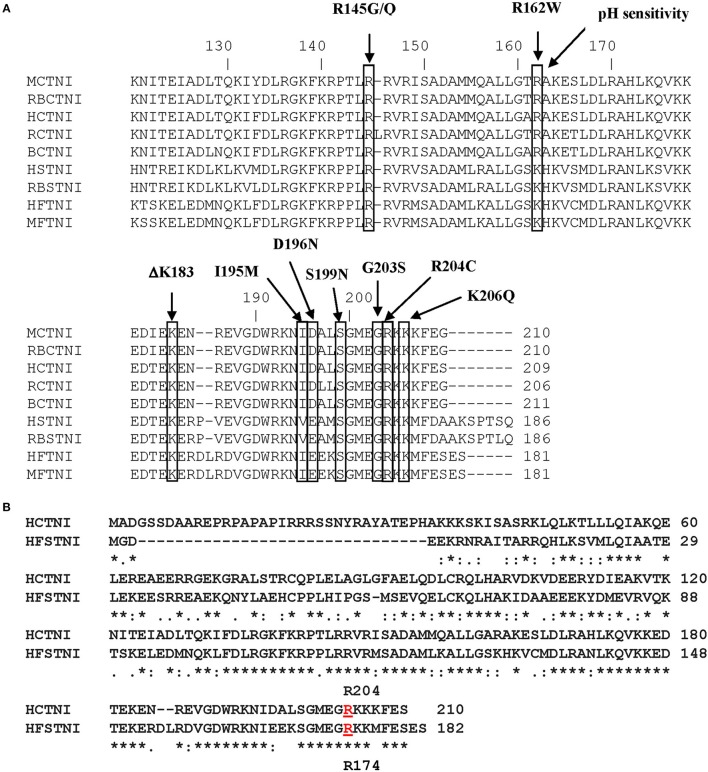
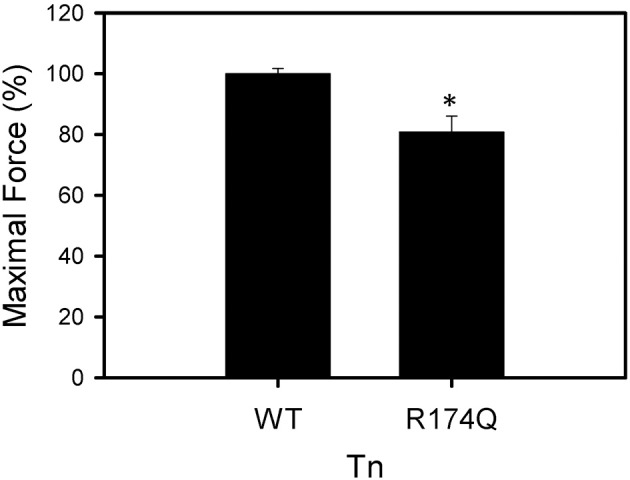
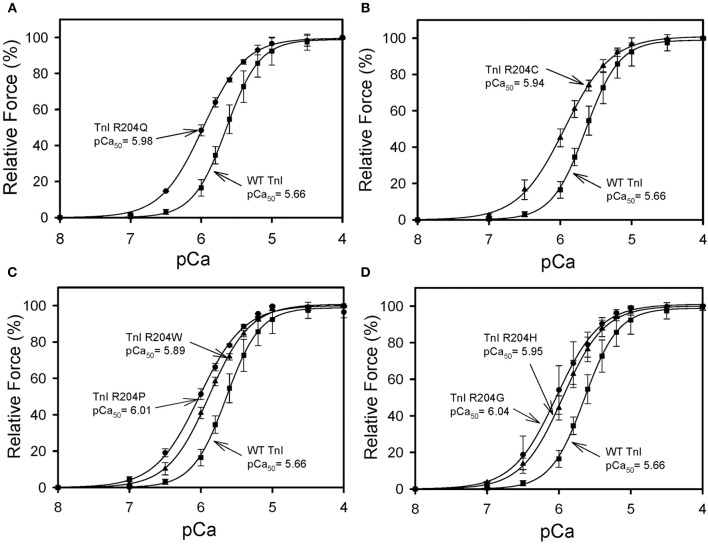
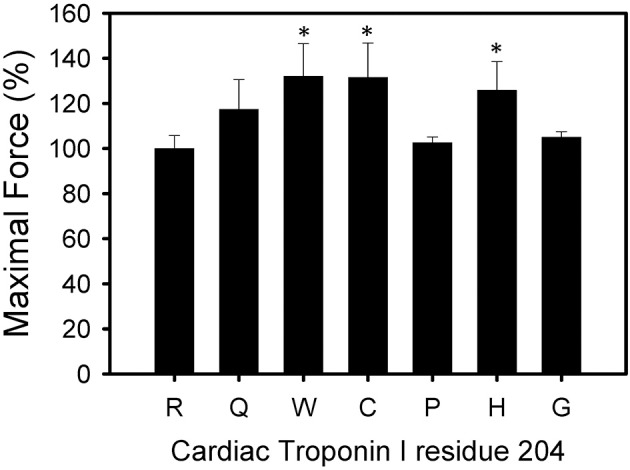
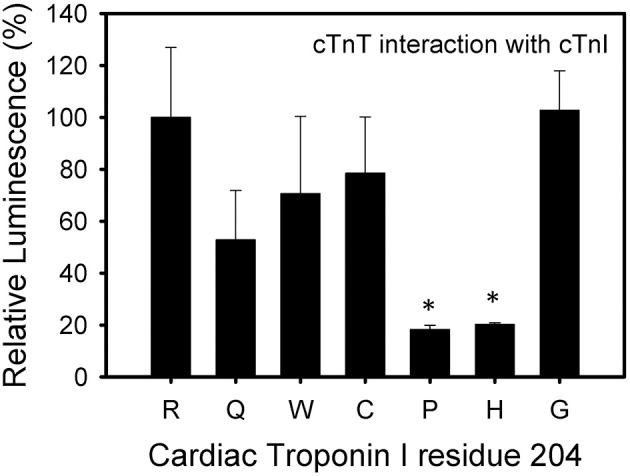
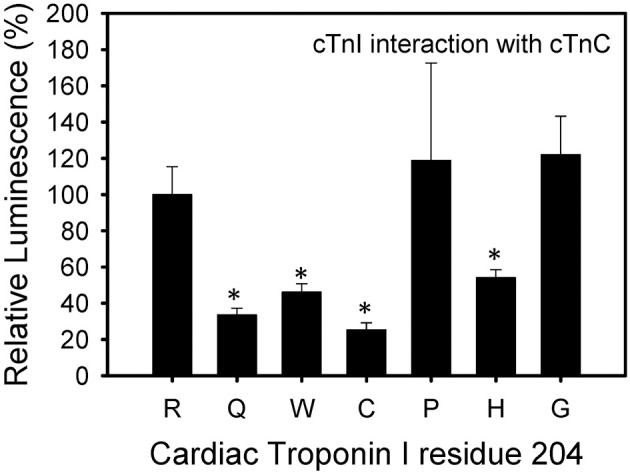
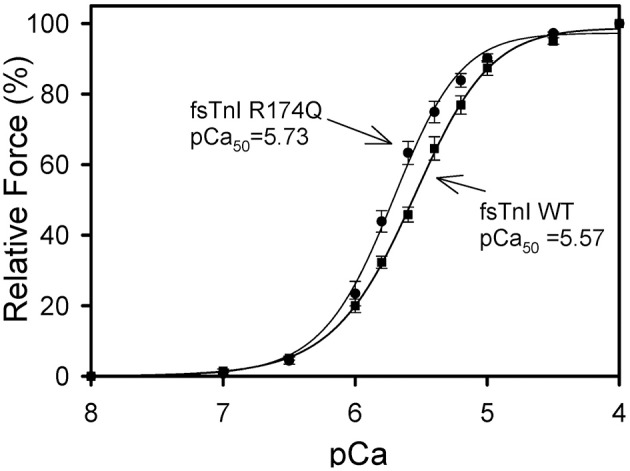
Mutations in human cardiac troponin I (cTnI) have been associated with restrictive, dilated, and hypertrophic cardiomyopathies. The most commonly occurring residue on cTnI associated with familial hypertrophic cardiomyopathy (FHC) is arginine (R), which is also the most common residue at which multiple mutations occur. Two FHC mutations are known to occur at cTnI arginine 204, R204C and R204H, and both are associated with poor clinical prognosis. The R204H mutation has also been associated with restrictive cardiomyopathy (RCM). To characterize the effects of different mutations at the same residue (R204) on the physiological function of cTnI, six mutations at R204 (C, G, H, P, Q, W) were investigated in skinned fiber studies. Skinned fiber studies showed that all tested mutations at R204 caused significant increases in Ca sensitivity of force development (ΔpCa = 0.22-0.35) when compared to wild-type (WT) cTnI. Investigation of the interactions between the cTnI mutants and WT cardiac troponin C (cTnC) or WT cardiac troponin T (cTnT) showed that all the mutations investigated, except R204G, affected either or both cTnI:cTnT and cTnI:cTnC interactions. The R204H mutation affected both cTnI:cTnT and cTnI:cTnC interactions while the R204C mutation affected only the cTnI:cTnC interaction. These results suggest that different mutations at the same site on cTnI could have varying effects on thin filament interactions. A mutation in fast skeletal TnI (R174Q, homologous to cTnI R204Q) also significantly increased Ca sensitivity of force development (ΔpCa = 0.16). Our studies indicate that known cTnI mutations associated with poor prognosis (R204C and R204H) exhibit large increases in Ca sensitivity of force development. Therefore, other R204 mutations that cause similar increases in Ca sensitivity are also likely to have poor prognoses.
人类心肌肌钙蛋白I(cTnI)的突变与限制性、扩张性和肥厚性心肌病有关。与家族性肥厚性心肌病(FHC)相关的cTnI上最常出现的残基是精氨酸(R),它也是多个突变发生的最常见残基。已知有两个FHC突变发生在cTnI精氨酸204(R204C和R204H),且两者都与不良临床预后相关。R204H突变也与限制性心肌病(RCM)有关。为了表征同一残基(R204)上不同突变对cTnI生理功能的影响,在皮肤纤维研究中对R204处的六个突变(C、G、H、P、Q、W)进行了研究。皮肤纤维研究表明,与野生型(WT)cTnI相比,R204处所有测试突变均导致力产生的钙敏感性显著增加(ΔpCa = 0.22 - 0.35)。对cTnI突变体与WT心肌肌钙蛋白C(cTnC)或WT心肌肌钙蛋白T(cTnT)之间相互作用的研究表明,除R204G外,所有研究的突变均影响cTnI:cTnT和cTnI:cTnC相互作用中的一个或两个。R204H突变影响cTnI:cTnT和cTnI:cTnC相互作用,而R204C突变仅影响cTnI:cTnC相互作用。这些结果表明,cTnI上同一位点的不同突变可能对细肌丝相互作用产生不同影响。快速骨骼肌肌钙蛋白I中的一个突变(R174Q,与cTnI R204Q同源)也显著增加了力产生的钙敏感性(ΔpCa = 0.16)。我们的研究表明,与不良预后相关的已知cTnI突变(R204C和R204H)表现出力产生的钙敏感性大幅增加。因此,其他导致钙敏感性类似增加的R204突变也可能具有不良预后。