Cheng JiWen, Zhao Pu, Liu JiangBo, Liu Xi, Wu XuanLin
Department of Pediatric Surgery, The Second Affiliated Hospital of Xi'an Jiaotong University Department of Neonatology, Shaanxi Provincial People's Hospital, Xi'an, Shaanxi Province Department of General Surgery, First Affiliated Hospital, College of Clinical Medicine, Henan University of Science and Technology, Luoyang, Henan Province Department of Pathology, First Affiliated Hospital of Xi'an Jiaotong University, Xi'an, Shaanxi Province, China.
Medicine (Baltimore). 2016 Nov;95(48):e5486. doi: 10.1097/MD.0000000000005486.
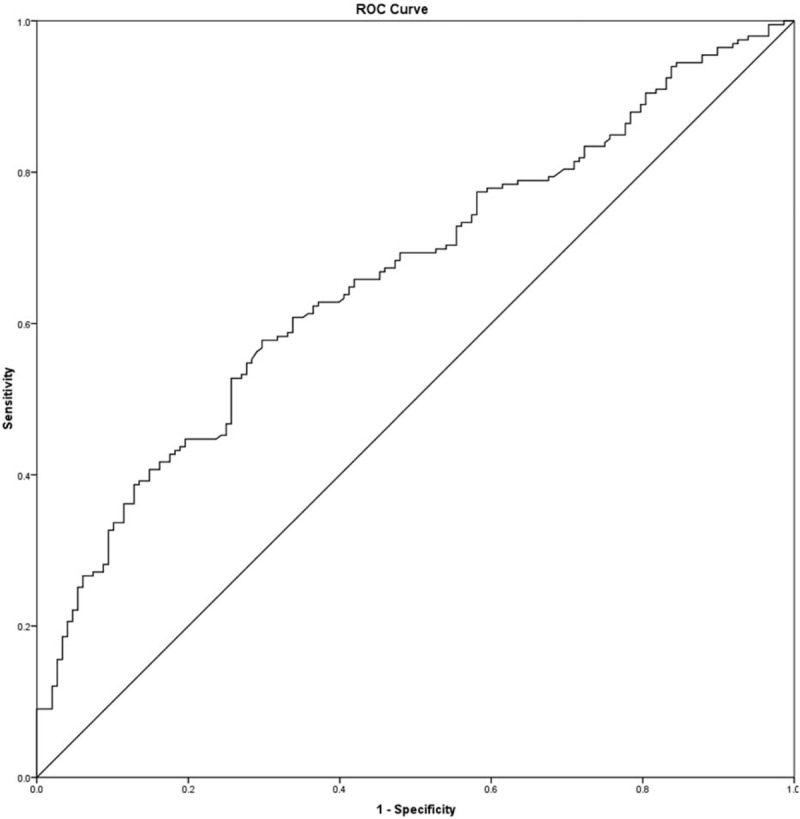
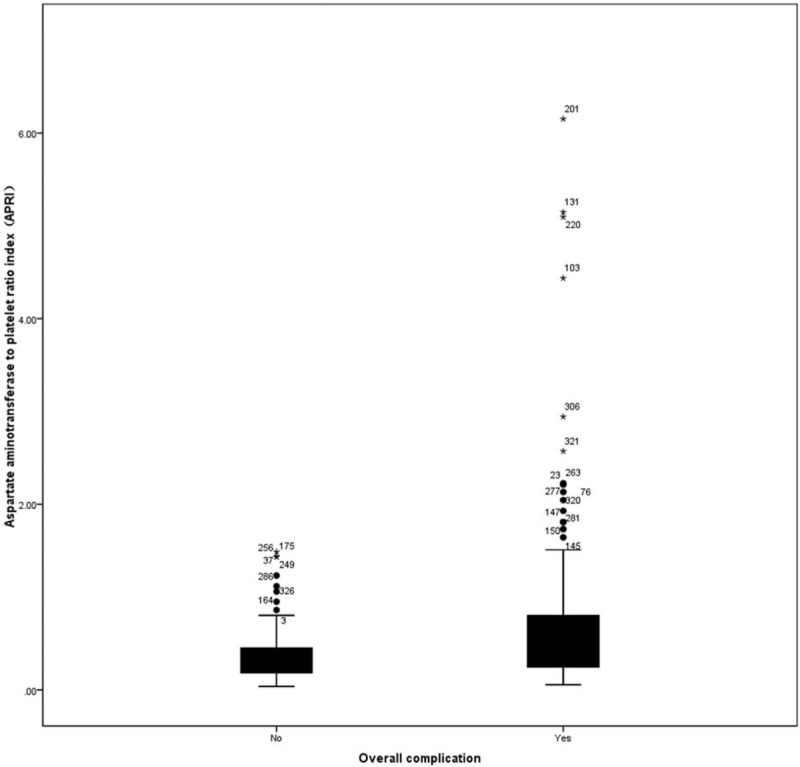
Preoperative aspartate aminotransferase-to-platelet ratio index (APRI) has been identified as a biochemical marker for histological fibrogenesis and fibrosis in cirrhosis and prognosis of hepatocellular carcinoma (HCC). Whether preoperative APRI can predict postoperative short-term outcomes has not been studied. The purpose of this study was to investigate the ability of preoperative APRI to predict short-term outcomes following liver resection for HCC. APRI was evaluated in 360 patients undergoing liver resection for HCC. The receiver operating characteristic curve analysis was conducted to determine the cutoff value of the APRI in predicting postoperative morbidity. Univariate and multivariate analysis was performed to identify the risk factors for postoperative outcomes. The correlation of the preoperative APRI value with clinicopathological parameters was also examined. We found that the optimal cutoff value of the APRI was set at 9.5 for postoperative complications. APRI was an independent risk factor for overall complications by univariate and multivariate analyses. HCC patients with elevated APRI (>9.5) had a worse liver function and significantly higher postoperative complication rate. In conclusion, preoperative APRI is a useful biochemical marker to predict postoperative outcomes in HCC patients.
术前天冬氨酸转氨酶与血小板比值指数(APRI)已被确定为肝硬化组织纤维化和纤维化以及肝细胞癌(HCC)预后的生化标志物。术前APRI能否预测术后短期结局尚未见研究报道。本研究旨在探讨术前APRI预测肝癌肝切除术后短期结局的能力。对360例行肝癌肝切除术的患者进行了APRI评估。采用受试者工作特征曲线分析确定APRI预测术后并发症的临界值。进行单因素和多因素分析以确定术后结局的危险因素。还检测了术前APRI值与临床病理参数的相关性。我们发现,术后并发症的APRI最佳临界值设定为9.5。单因素和多因素分析显示,APRI是总体并发症的独立危险因素。APRI升高(>9.5)的HCC患者肝功能较差,术后并发症发生率显著更高。总之,术前APRI是预测HCC患者术后结局的有用生化标志物。