Schlüter Daniela K, Ndeffo-Mbah Martial L, Takougang Innocent, Ukety Tony, Wanji Samuel, Galvani Alison P, Diggle Peter J
CHICAS, Lancaster Medical School, Lancaster University, Lancaster, United Kingdom.
Department of Epidemiology of Microbial Diseases, Yale School of Public Health, New Haven, Connecticut, United States of America.
PLoS Negl Trop Dis. 2016 Dec 1;10(12):e0005157. doi: 10.1371/journal.pntd.0005157. eCollection 2016 Dec.
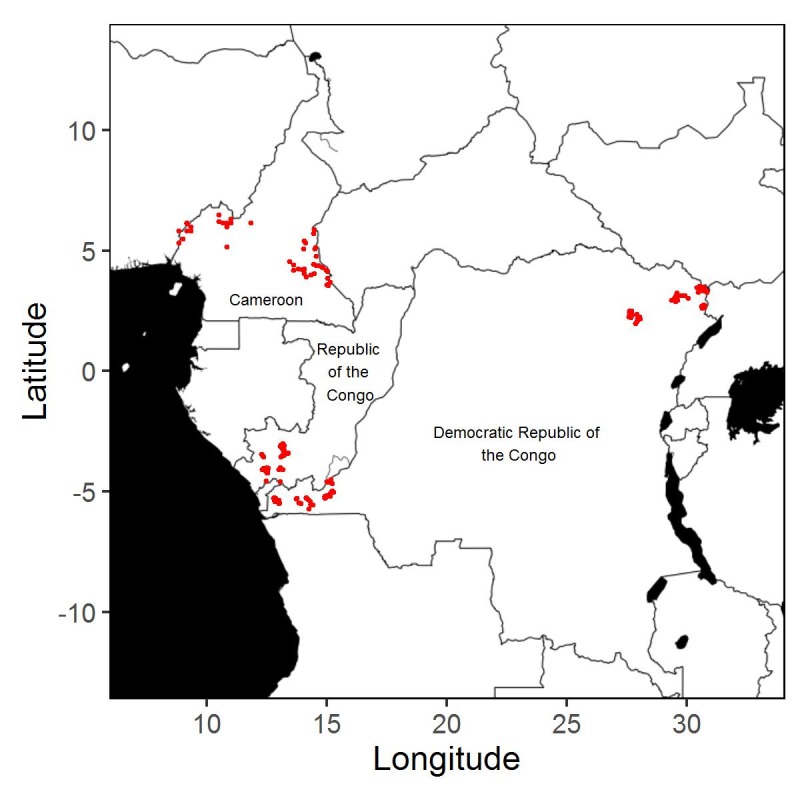
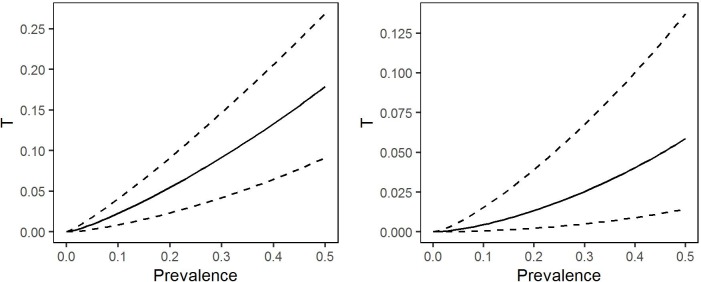
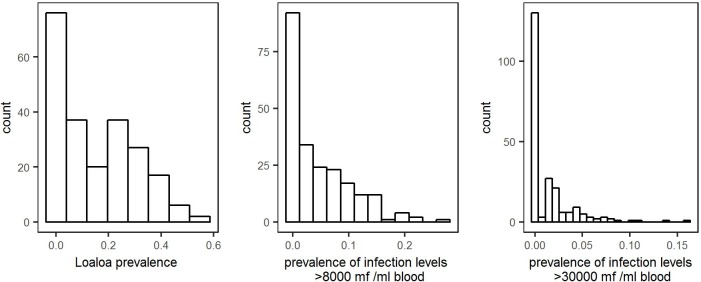
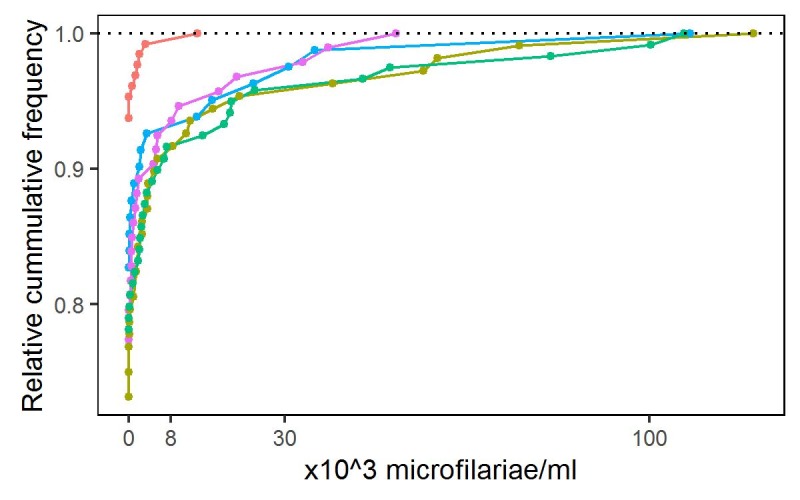
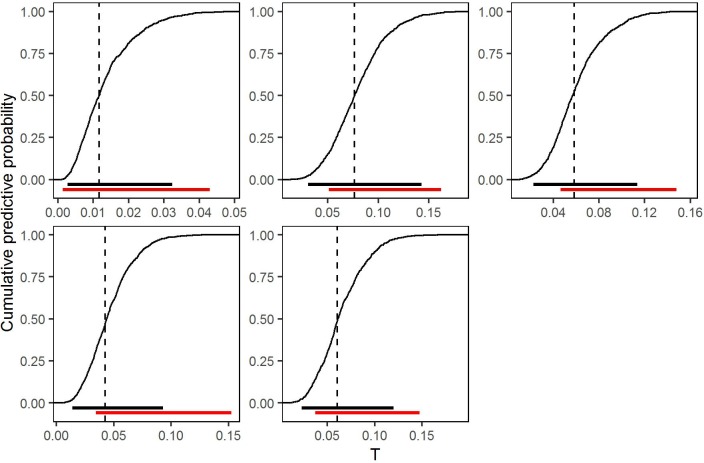
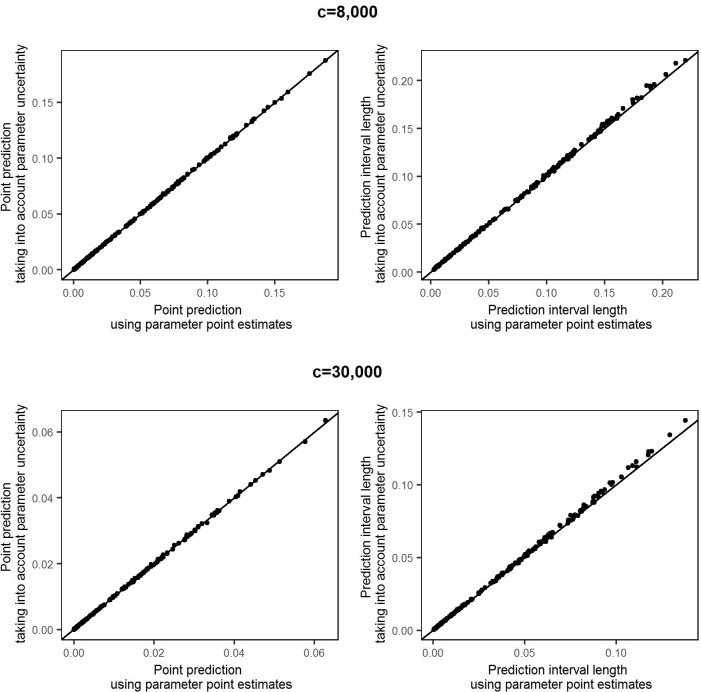
Lymphatic Filariasis and Onchocerciasis (river blindness) constitute pressing public health issues in tropical regions. Global elimination programs, involving mass drug administration (MDA), have been launched by the World Health Organisation. Although the drugs used are generally well tolerated, individuals who are highly co-infected with Loa loa are at risk of experiencing serious adverse events. Highly infected individuals are more likely to be found in communities with high prevalence. An understanding of the relationship between individual infection and population-level prevalence can therefore inform decisions on whether MDA can be safely administered in an endemic community. Based on Loa loa infection intensity data from individuals in Cameroon, the Republic of the Congo and the Democratic Republic of the Congo we develop a statistical model for the distribution of infection levels in communities. We then use this model to make predictive inferences regarding the proportion of individuals whose parasite count exceeds policy-relevant levels. In particular we show how to exploit the positive correlation between community-level prevalence and intensity of infection in order to predict the proportion of highly infected individuals in a community given only prevalence data from the community in question. The resulting prediction intervals are not substantially wider, and in some cases narrower, than the corresponding binomial confidence intervals obtained from data that include measurements of individual infection levels. Therefore the model developed here facilitates the estimation of the proportion of individuals highly infected with Loa loa using only estimated community level prevalence. It can be used to assess the risk of rolling out MDA in a specific community, or to guide policy decisions.
淋巴丝虫病和盘尾丝虫病(河盲症)是热带地区紧迫的公共卫生问题。世界卫生组织已启动了包括大规模药物治疗(MDA)在内的全球消除计划。尽管所使用的药物一般耐受性良好,但同时感染大量罗阿丝虫的个体有发生严重不良事件的风险。在感染率高的社区中更容易发现高感染个体。因此,了解个体感染与人群感染率之间的关系可为是否能在地方病流行社区安全实施大规模药物治疗的决策提供依据。基于喀麦隆、刚果共和国和刚果民主共和国个体的罗阿丝虫感染强度数据,我们建立了一个社区感染水平分布的统计模型。然后,我们使用该模型对寄生虫计数超过政策相关水平的个体比例进行预测性推断。特别是,我们展示了如何利用社区层面感染率与感染强度之间的正相关关系,以便仅根据所讨论社区的感染率数据预测该社区高感染个体的比例。所得的预测区间并不比从包含个体感染水平测量数据得到的相应二项式置信区间宽很多,在某些情况下甚至更窄。因此,这里开发的模型有助于仅使用估计的社区层面感染率来估计罗阿丝虫高感染个体的比例。它可用于评估在特定社区开展大规模药物治疗的风险,或指导政策决策。