Devlin A Sloan, Marcobal Angela, Dodd Dylan, Nayfach Stephen, Plummer Natalie, Meyer Tim, Pollard Katherine S, Sonnenburg Justin L, Fischbach Michael A
Department of Bioengineering and Therapeutic Sciences and California Institute for Quantitative Biosciences, University of California, San Francisco, San Francisco, CA 94143, USA.
Department of Microbiology and Immunology, Stanford University School of Medicine, Stanford, CA 94305, USA.
Cell Host Microbe. 2016 Dec 14;20(6):709-715. doi: 10.1016/j.chom.2016.10.021. Epub 2016 Dec 1.
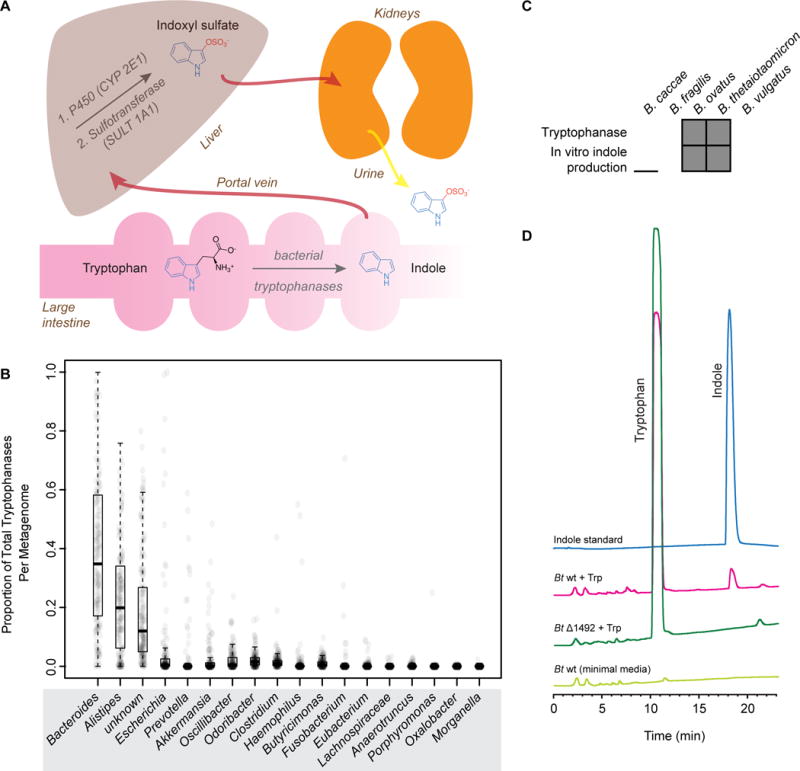
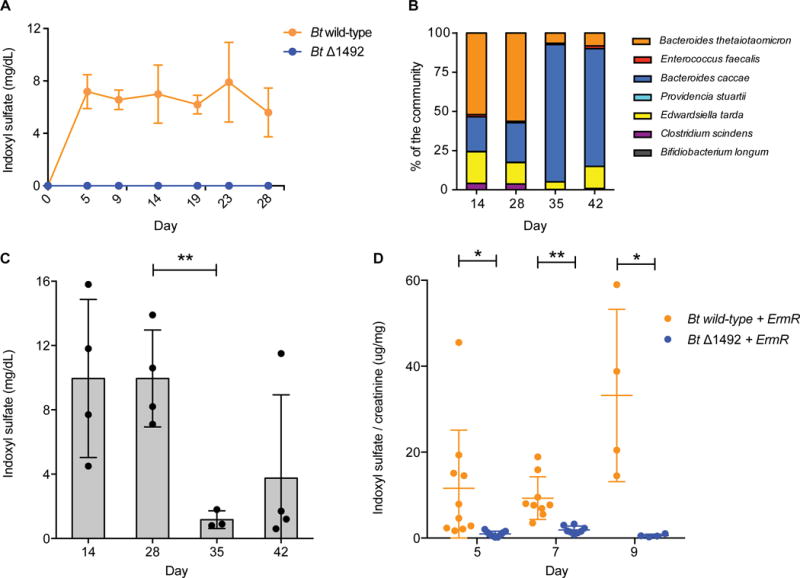
Renal disease is growing in prevalence and has striking co-morbidities with metabolic and cardiovascular disease. Indoxyl sulfate (IS) is a toxin that accumulates in plasma when kidney function declines and contributes to the progression of chronic kidney disease. IS derives exclusively from the gut microbiota. Bacterial tryptophanases convert tryptophan to indole, which is absorbed and modified by the host to produce IS. Here, we identify a widely distributed family of tryptophanases in the gut commensal Bacteroides and find that deleting this gene eliminates the production of indole in vitro. By altering the status or abundance of the Bacteroides tryptophanase, we can modulate IS levels in gnotobiotic mice and in the background of a conventional murine gut community. Our results demonstrate that it is possible to control host IS levels by targeting the microbiota and suggest a possible strategy for treating renal disease.
肾脏疾病的患病率正在上升,并且与代谢和心血管疾病有着显著的合并症。硫酸吲哚酚(IS)是一种在肾功能下降时在血浆中积累的毒素,它会促进慢性肾病的进展。IS仅来源于肠道微生物群。细菌色氨酸酶将色氨酸转化为吲哚,吲哚被宿主吸收并修饰以产生IS。在这里,我们在肠道共生菌拟杆菌中鉴定出一个广泛分布的色氨酸酶家族,并发现删除该基因可在体外消除吲哚的产生。通过改变拟杆菌色氨酸酶的状态或丰度,我们可以调节无菌小鼠以及传统小鼠肠道群落背景下的IS水平。我们的结果表明,通过靶向微生物群来控制宿主IS水平是可行的,并提出了一种治疗肾脏疾病的可能策略。