Liao Mingmei, Yang Pu, Wang Fen, Berceli Scott A, Ali Yasmin H, Chan Kelvin L, Jiang Zhihua
Division of Vascular Surgery and Endovascular Therapy, University of Florida College of Medicine, Gainesville, Florida.
Department of Surgery, Central South University Xiangya Hospital, Changsha, Hunan, China.
Physiol Rep. 2016 Dec;4(23). doi: 10.14814/phy2.13056.
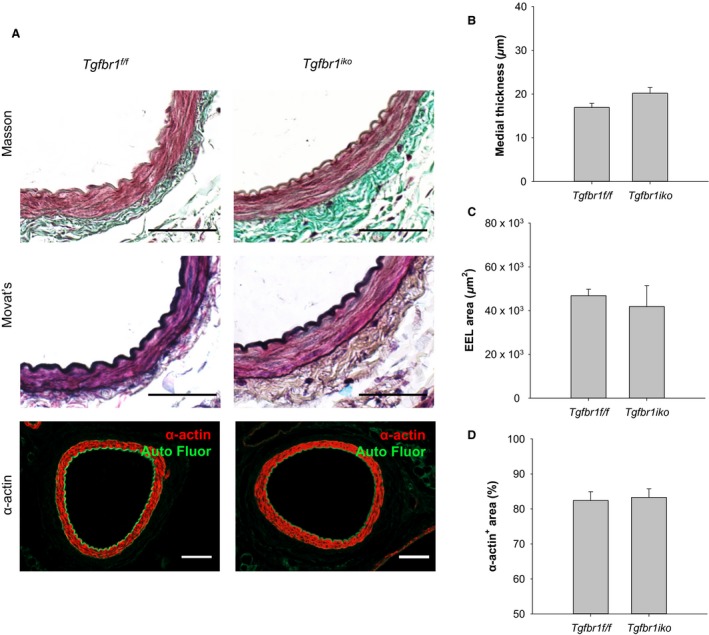
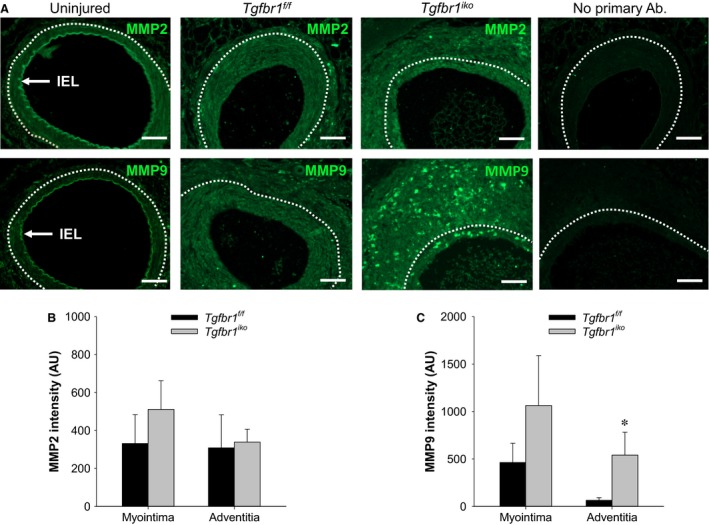
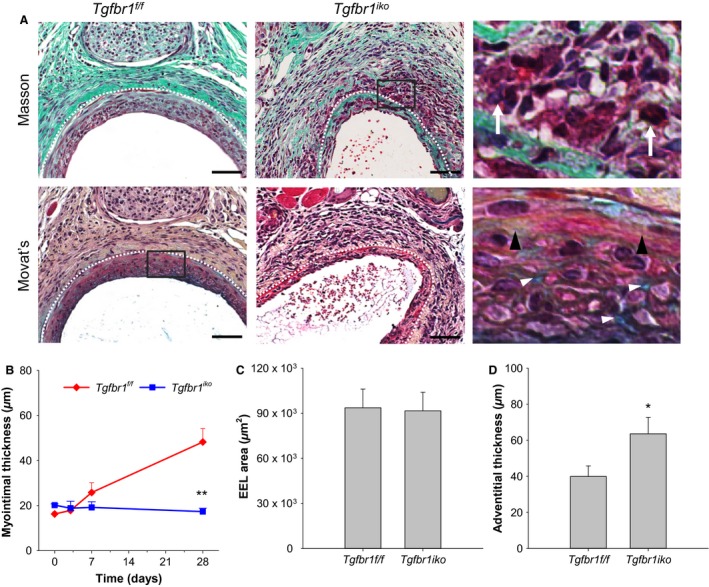
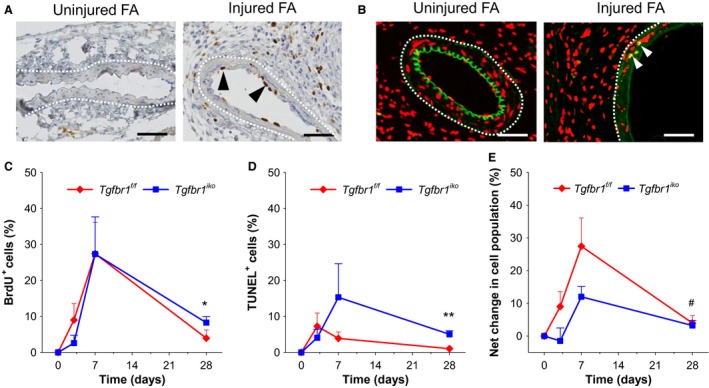
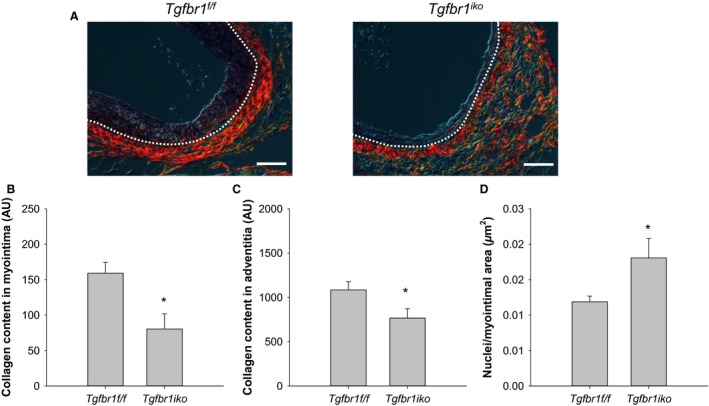
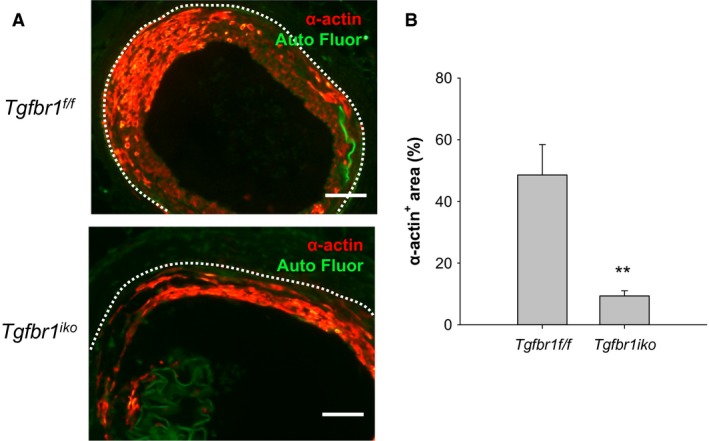
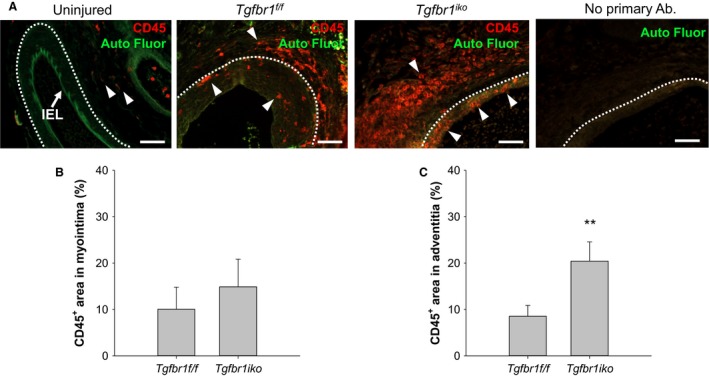
Neointimal hyperplasia (NIH) and inward wall remodeling cause arterial restenosis and failure of bypass vein grafts. Previous studies from our group suggest that transforming growth factor (TGF) β promotes these pathologies via regulating cell kinetics at the early stage and matrix metabolism at the late stage. Although these temporal TGFβ effects may result from its signaling in different cell groups, the responsible cell type has not been identified. In the current study, we evaluated the effect of smooth muscle cell (SMC)-specific TGFβ signaling through its type I receptor TGFBR1 on NIH and wall remodeling of the injured femoral arteries (FAs). An inducible Cre/loxP system was employed to delete SMC Tgfbr1 (Tgfbr1). Mice not carrying the Cre allele (Tgfbr1) served as controls. The injured FAs were evaluated on d3, d7, and d28 postoperatively. Tgfbr1 attenuated NIH by 92%, but had insignificant influence on arterial caliber when compared with Tgfbr1 controls on d28. This attenuation correlated with greater cellularity and reduced collagen content. Compared with Tgfbr1 FAs, however, Tgfbr1 FAs exhibited persistent neointimal cell proliferation and cell apoptosis, with both events at a greater rate on d28. Tgfbr1 FAs additionally contained fewer SMCs and more inflammatory infiltrates in the neointima and displayed a thicker adventitia than did Tgfbr1 FAs. More MMP9 proteins were detected in the adventitia of Tgfbr1 FAs than in that of Tgfbr1 controls. Our results suggest that disruption of SMC Tgfbr1 inhibits arterial NIH in the short term, but the overall vascular phenotype may not favor long-term performance of the injured arteries.
新生内膜增生(NIH)和血管壁内向重塑会导致动脉再狭窄和静脉搭桥移植失败。我们团队之前的研究表明,转化生长因子(TGF)β通过在早期调节细胞动力学和在晚期调节基质代谢来促进这些病变。尽管这些TGFβ的时间效应可能源于其在不同细胞群中的信号传导,但具体的责任细胞类型尚未确定。在本研究中,我们评估了平滑肌细胞(SMC)特异性TGFβ信号通过其I型受体TGFBR1对损伤股动脉(FA)的NIH和血管壁重塑的影响。采用诱导型Cre/loxP系统删除SMC的Tgfbr1(Tgfbr1)。未携带Cre等位基因的小鼠(Tgfbr1)作为对照。在术后第3天、第7天和第28天对损伤的FA进行评估。与Tgfbr1对照相比,Tgfbr1在第28天时使NIH减少了92%,但对动脉管径的影响不显著。这种减少与更高的细胞密度和降低的胶原蛋白含量相关。然而,与Tgfbr1 FA相比,Tgfbr1 FA在第28天时表现出持续的新生内膜细胞增殖和细胞凋亡,且这两种情况的发生率都更高。Tgfbr1 FA在新生内膜中还含有更少的SMC和更多的炎性浸润,并且外膜比Tgfbr1 FA更厚。在Tgfbr1 FA的外膜中检测到的MMP9蛋白比Tgfbr1对照更多。我们的结果表明,SMC的Tgfbr1破坏在短期内抑制动脉NIH,但整体血管表型可能不利于损伤动脉的长期性能。