Hart Bryan E, Lee Sunhee
Human Vaccine Institute and Department of Medicine, Duke University Medical Center, Durham, North Carolina, United States of America.
PLoS Negl Trop Dis. 2016 Dec 12;10(12):e0005229. doi: 10.1371/journal.pntd.0005229. eCollection 2016 Dec.
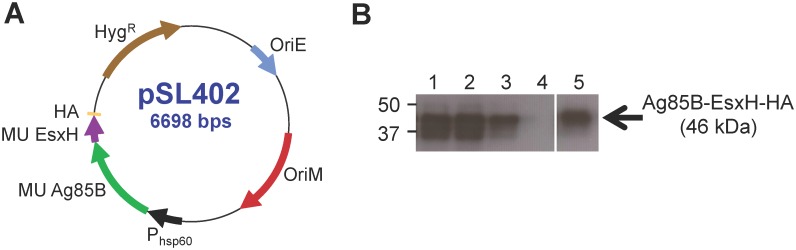
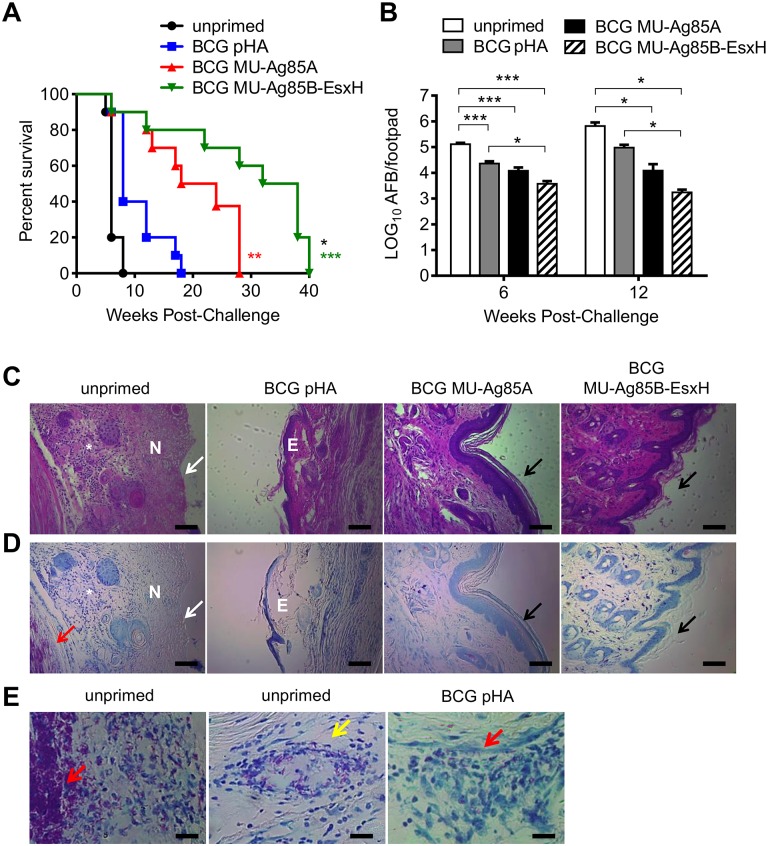
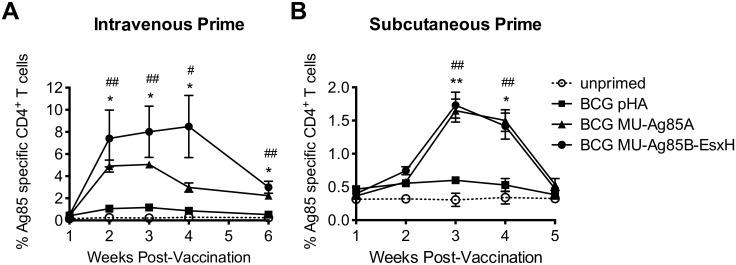
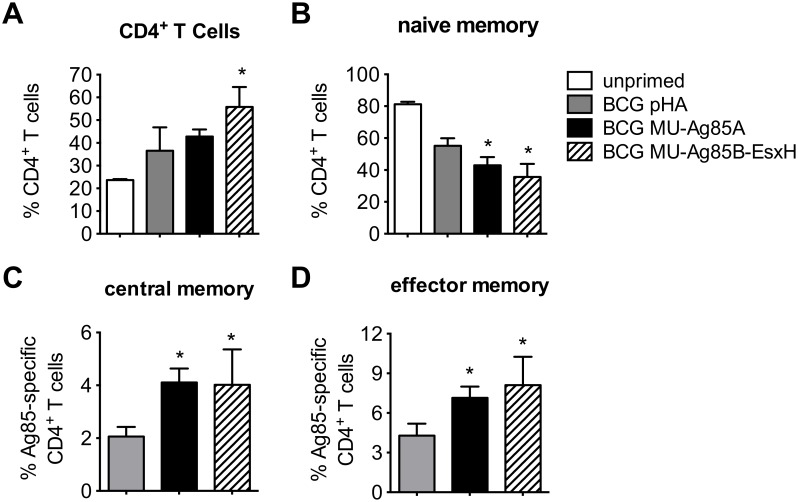
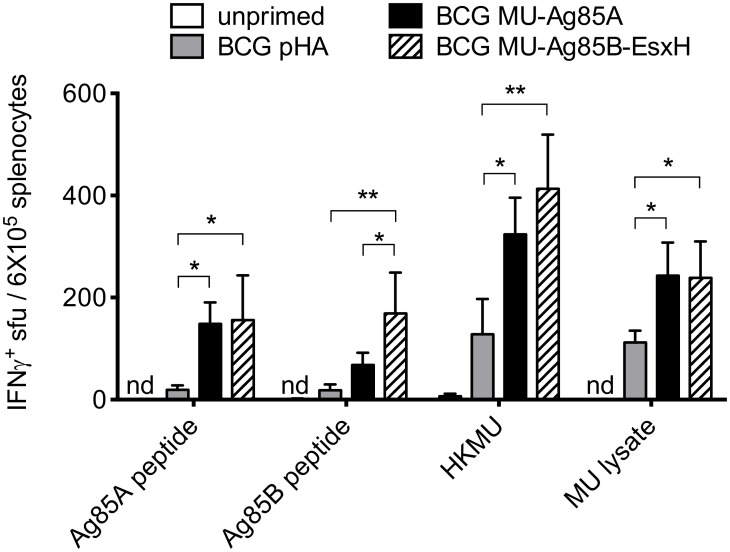
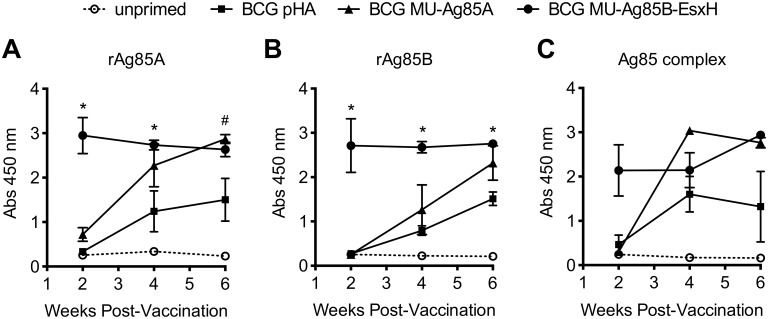
Buruli ulcer (BU) vaccine design faces similar challenges to those observed during development of prophylactic tuberculosis treatments. Multiple BU vaccine candidates, based upon Mycobacterium bovis BCG, altered Mycobacterium ulcerans (MU) cells, recombinant MU DNA, or MU protein prime-boosts, have shown promise by conferring transient protection to mice against the pathology of MU challenge. Recently, we have shown that a recombinant BCG vaccine expressing MU-Ag85A (BCG MU-Ag85A) displayed the highest level of protection to date, by significantly extending the survival time of MU challenged mice compared to BCG vaccination alone. Here we describe the generation, immunogenicity testing, and evaluation of protection conferred by a recombinant BCG strain which overexpresses a fusion of two alternative MU antigens, Ag85B and the MU ortholog of tuberculosis TB10.4, EsxH. Vaccination with BCG MU-Ag85B-EsxH induces proliferation of Ag85 specific CD4+ T cells in greater numbers than BCG or BCG MU-Ag85A and produces IFNγ+ splenocytes responsive to whole MU and recombinant antigens. In addition, anti-Ag85A and Ag85B IgG humoral responses are significantly enhanced after administration of the fusion vaccine compared to BCG or BCG MU-Ag85A. Finally, mice challenged with MU following a single subcutaneous vaccination with BCG MU-Ag85B-EsxH display significantly less bacterial burden at 6 and 12 weeks post-infection, reduced histopathological tissue damage, and significantly longer survival times compared to vaccination with either BCG or BCG MU-Ag85A. These results further support the potential of BCG as a foundation for BU vaccine design, whereby discovery and recombinant expression of novel immunogenic antigens could lead to greater anti-MU efficacy using this highly safe and ubiquitous vaccine.
布鲁里溃疡(BU)疫苗的设计面临着与预防性结核病治疗开发过程中所观察到的类似挑战。多种基于牛分枝杆菌卡介苗(BCG)、经改造的溃疡分枝杆菌(MU)细胞、重组MU DNA或MU蛋白初免 - 加强免疫方案的BU疫苗候选物,通过给予小鼠针对MU攻击的病理过程的短暂保护而展现出前景。最近,我们已经表明,一种表达MU - Ag85A的重组卡介苗疫苗(BCG MU - Ag85A),与单独接种BCG相比,通过显著延长MU攻击小鼠的存活时间,显示出了迄今为止最高水平的保护。在这里,我们描述了一种重组BCG菌株的构建、免疫原性测试以及对其提供的保护作用的评估,该重组BCG菌株过表达两种替代MU抗原Ag85B和结核病TB10.4的MU直系同源物EsxH的融合蛋白。用BCG MU - Ag85B - EsxH接种疫苗诱导产生的Ag85特异性CD4 + T细胞增殖数量比BCG或BCG MU - Ag85A更多,并产生对整个MU和重组抗原产生反应的IFNγ + 脾细胞。此外,与BCG或BCG MU - Ag85A相比,在接种融合疫苗后,抗Ag85A和Ag85B IgG体液反应显著增强。最后,与接种BCG或BCG MU - Ag85A相比,在用BCG MU - Ag85B - EsxH进行单次皮下接种后受到MU攻击的小鼠,在感染后6周和12周时显示出显著更低的细菌载量、减少的组织病理学组织损伤以及显著更长的存活时间。这些结果进一步支持了BCG作为BU疫苗设计基础的潜力,即通过发现和重组表达新的免疫原性抗原,利用这种高度安全且广泛应用的疫苗可能带来更高的抗MU效力。