Monteiro Maria Lúcia G, Mársico Eliane T, Soares Manoel S, Magalhães Amanda O, Canto Anna Carolina V C S, Costa-Lima Bruno R C, Alvares Thiago S, Conte Carlos A
Departament of Food Technology, Universidade Federal Fluminense, Rio de Janeiro, Brazil.
Departament of Food Engineering, School of Agronomy, Universidade Federal de Goiás, Goiânia, Brazil.
PLoS One. 2016 Dec 14;11(12):e0168270. doi: 10.1371/journal.pone.0168270. eCollection 2016.
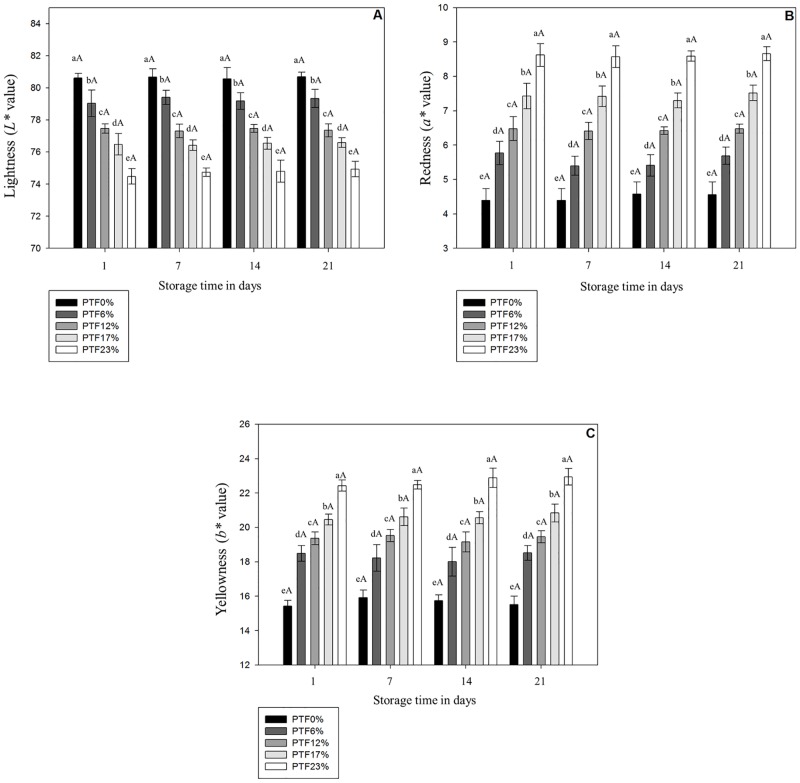
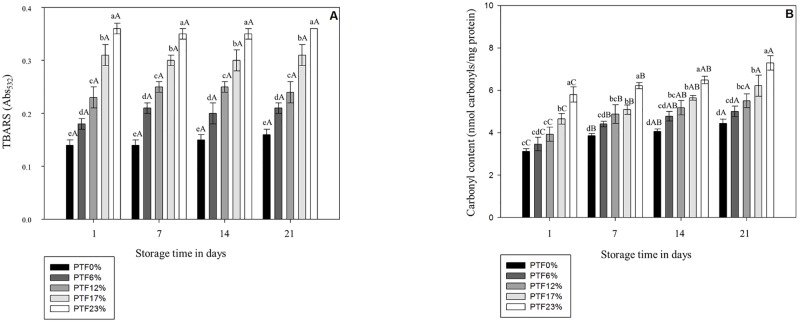
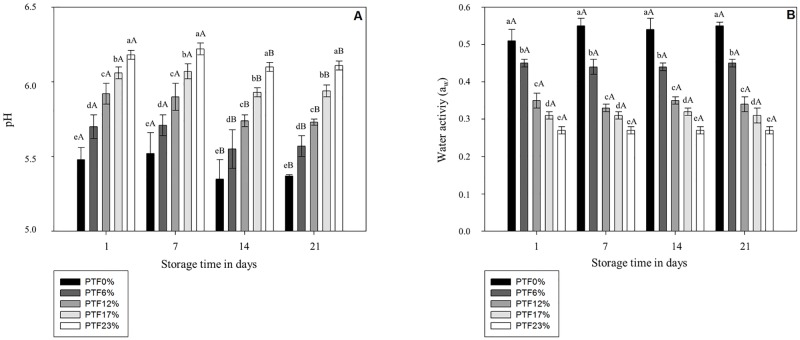
Physicochemical parameters of pasta enriched with tilapia (Oreochromis niloticus) flour were investigated. Five formulations were prepared with different concentrations of tilapia flour as partial substitute of wheat flour: pasta without tilapia flour (PTF0%), pasta with 6% (PTF6%), 12% (PTF12%), 17% (PTF17%), and 23% (PTF23%) of tilapia flour. The formulations were assessed for proximate composition, fatty acid and amino acid profile on day 1 whereas, instrumental color parameters (L*, a* and b* values), pH, water activity (aw), and lipid and protein oxidation were evaluated on days 1, 7, 14, and 21 of storage at 25°C. Fortification with tilapia flour increased (p < 0.05) protein, lipid, ash, total essential amino acids, and total polyunsaturated fatty acids contents. In addition, supplementation of pasta with tilapia flour decreased (p < 0.05) lightness and water activity while redness, yellowness, pH values, and lipid oxidation were increased (p < 0.05) in a level-dependent manner. Nevertheless, all formulations were exhibited storage stability at 25°C. In general, protein oxidation was greater (p < 0.05) in the pasta containing 12%, 17%, and 23% of tilapia flour than their counterparts, and the storage promoted an increase (p < 0.05) on the carbonyl content in all formulations. Thus, pasta with 6% of tilapia flour has the potential to be a technological alternative to food industry for the nutritional enrichment of traditional pasta with negligible negative effects on the chemical stability of the final product during 21 days at 25°C.
研究了添加罗非鱼(尼罗罗非鱼)粉的意大利面的物理化学参数。制备了五种配方,用不同浓度的罗非鱼粉作为小麦粉的部分替代品:不含罗非鱼粉的意大利面(PTF0%)、含6%(PTF6%)、12%(PTF12%)、17%(PTF17%)和23%(PTF23%)罗非鱼粉的意大利面。在第1天对配方进行了近似成分、脂肪酸和氨基酸谱的评估,而在25°C储存的第1、7、14和21天评估了仪器颜色参数(L*、a和b值)、pH值、水分活度(aw)以及脂质和蛋白质氧化情况。添加罗非鱼粉提高了(p < 0.05)蛋白质、脂质、灰分、总必需氨基酸和总多不饱和脂肪酸的含量。此外,用罗非鱼粉补充意大利面降低了(p < 0.05)亮度和水分活度,而红色度、黄色度、pH值和脂质氧化以剂量依赖的方式增加(p < 0.05)。然而,所有配方在25°C下均表现出储存稳定性。总体而言,含有12%、17%和23%罗非鱼粉的意大利面中的蛋白质氧化比其对照更大(p < 0.05),并且储存促进了所有配方中羰基含量的增加(p < 0.05)。因此,含有6%罗非鱼粉的意大利面有可能成为食品工业的一种技术选择,用于传统意大利面的营养强化,在25°C下21天内对最终产品的化学稳定性产生可忽略不计的负面影响。