Strullu-Derrien Christine, Goral Tomasz, Longcore Joyce E, Olesen Jørgen, Kenrick Paul, Edgecombe Gregory D
Department of Earth Sciences, The Natural History Museum, Cromwell Road, London, United Kingdom.
Imaging and Analysis Centre, The Natural History Museum, Cromwell Road, London, United Kingdom.
PLoS One. 2016 Dec 14;11(12):e0167301. doi: 10.1371/journal.pone.0167301. eCollection 2016.
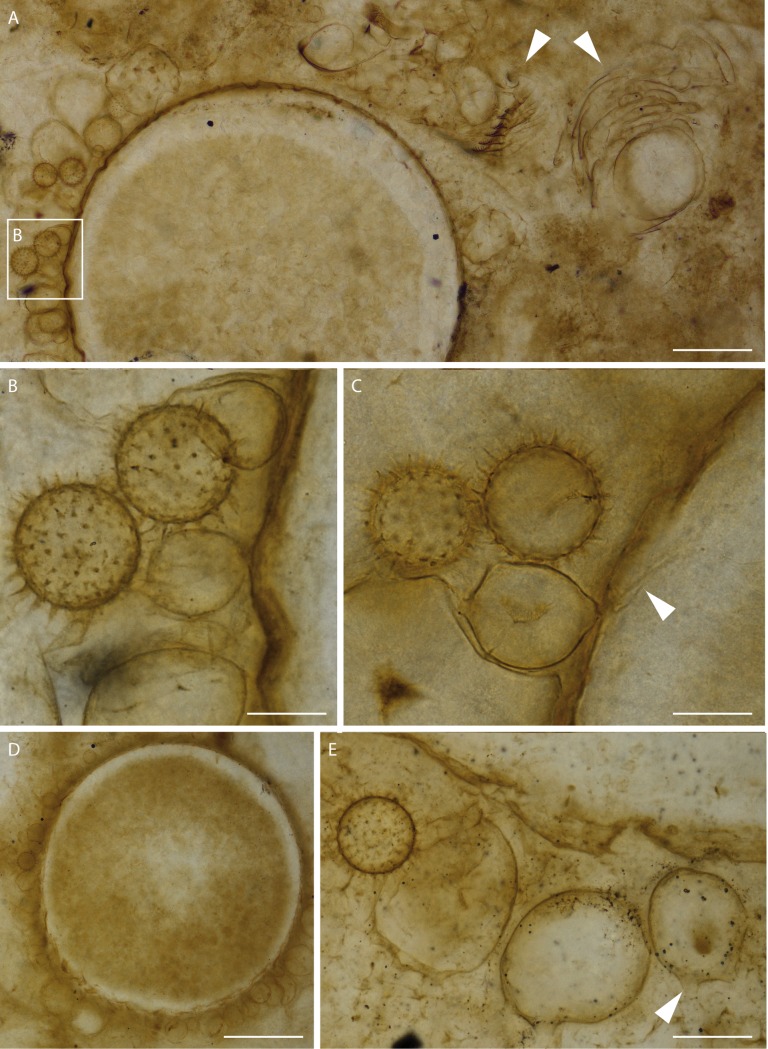
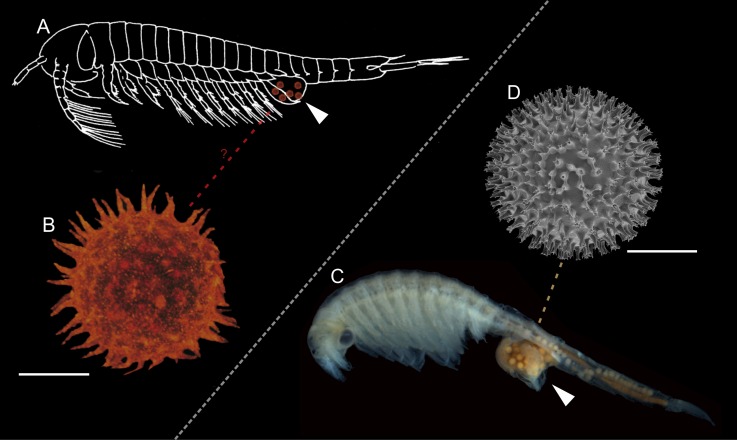
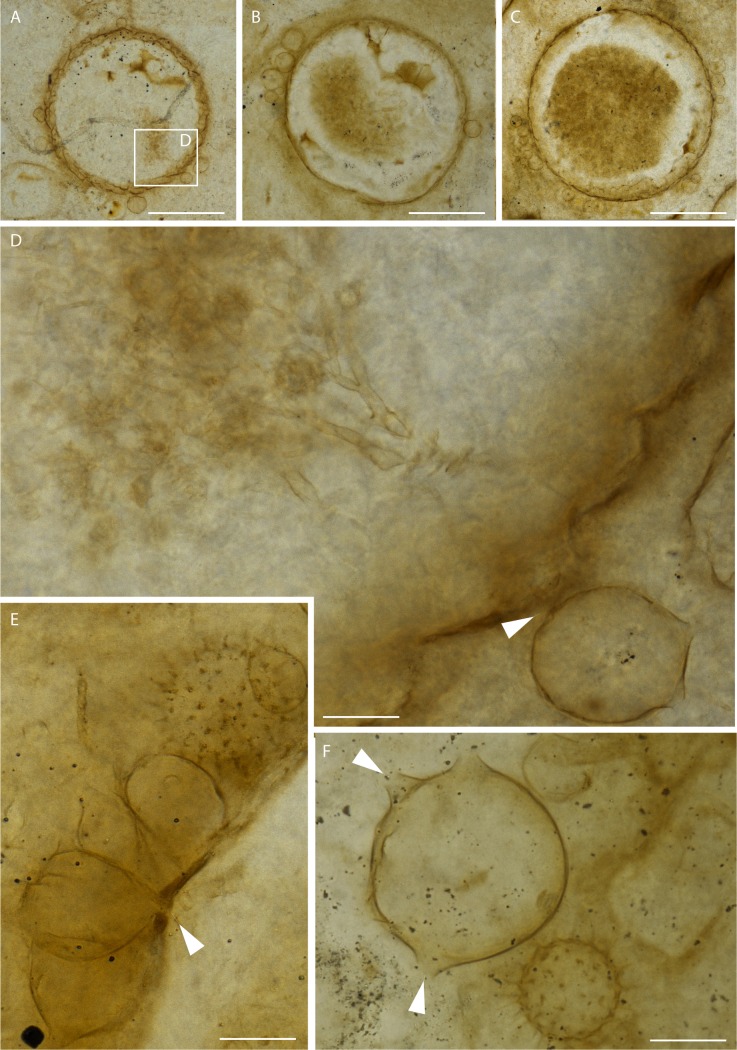
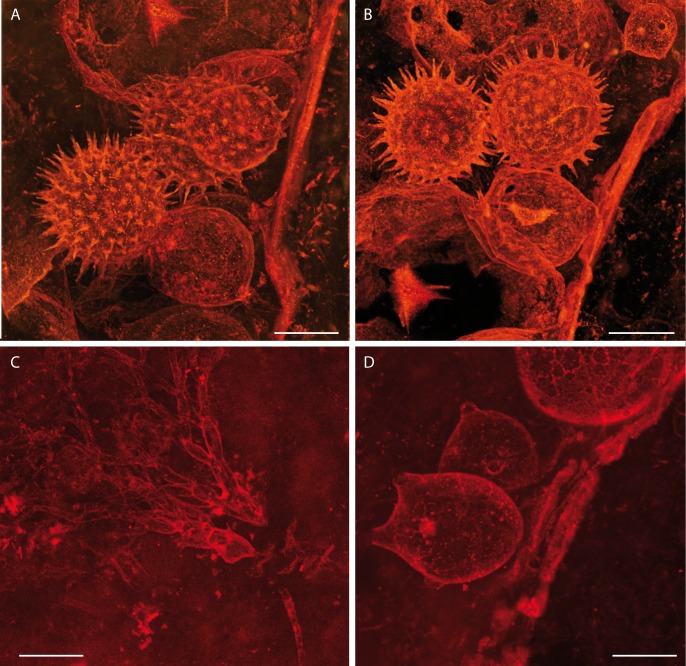
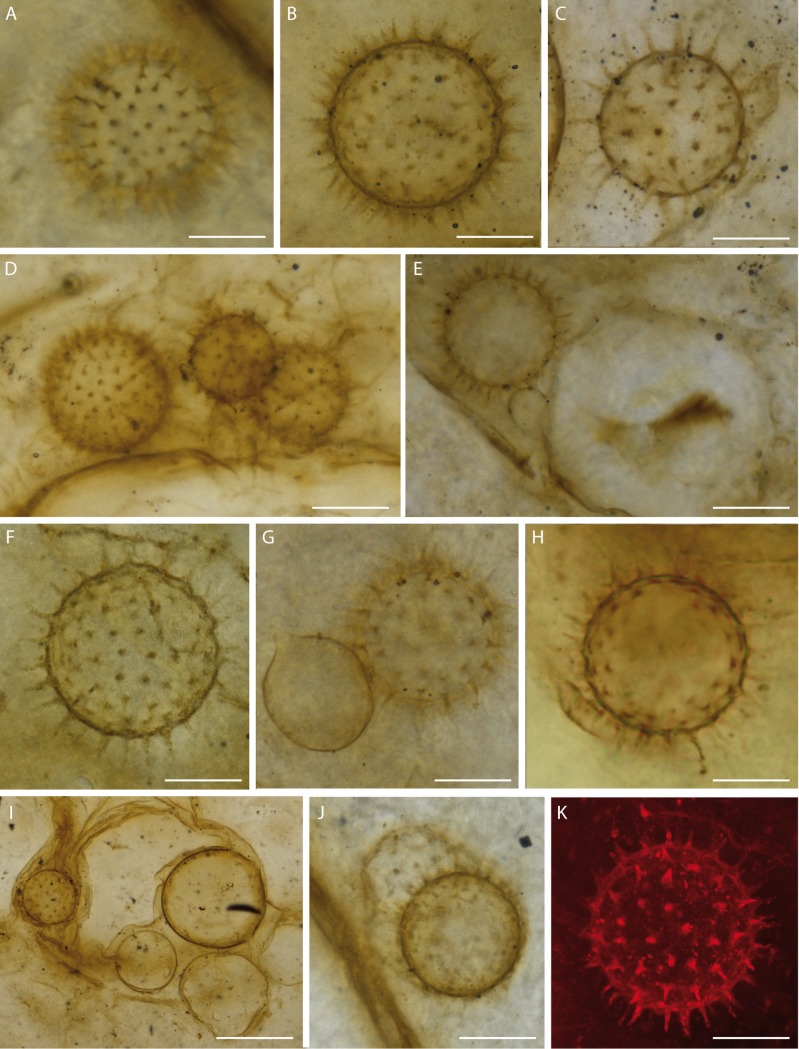
The 407-million-year-old Rhynie Chert (Scotland) contains the most intact fossilised remains of an early land-based ecosystem including plants, arthropods, fungi and other microorganisms. Although most studies have focused on the terrestrial component, fossilised freshwater environments provide critical insights into fungal-algal interactions and the earliest continental branchiopod crustaceans. Here we report interactions between an enigmatic organism and an exquisitely preserved fungus. The fungal reproductive structures are intermixed with exceptionally well-preserved globular spiny structures interpreted as branchiopod resting eggs. Confocal laser scanning microscopy enabled us to reconstruct the fungus and its possible mode of nutrition, the affinity of the resting eggs, and their spatial associations. The new fungus (Cultoraquaticus trewini gen. et sp. nov) is attributed to Chytridiomycota based on its size, consistent formation of papillae, and the presence of an internal rhizoidal system. It is the most pristine fossil Chytridiomycota known, especially in terms of rhizoidal development and closely resembles living species in the Rhizophydiales. The spiny resting eggs are attributed to the crustacean Lepidocaris rhyniensis, dating branchiopod adaptation to life in ephemeral pools to the Early Devonian. The new fungal interaction suggests that, as in modern freshwater environments, chytrids were important to the mobilisation of nutrients in early aquatic foodwebs.
有着4.07亿年历史的莱尼燧石层(位于苏格兰)保存着早期陆地生态系统中最为完整的化石遗迹,其中包括植物、节肢动物、真菌和其他微生物。尽管大多数研究都聚焦于陆地部分,但化石记录的淡水环境为了解真菌与藻类的相互作用以及最早的大陆鳃足甲壳类动物提供了关键线索。在此,我们报告一种神秘生物与一种保存极为精美的真菌之间的相互作用。真菌的繁殖结构与保存异常完好的球状多刺结构混合在一起,这些结构被解释为鳃足动物的休眠卵。共聚焦激光扫描显微镜使我们能够重建这种真菌及其可能的营养模式、休眠卵的亲缘关系以及它们的空间关联。这种新真菌(Cultoraquaticus trewini,新属新种)基于其大小、一致的乳突形成以及内部假根系统的存在,被归为壶菌门。它是已知最原始的壶菌门化石,特别是在假根发育方面,与根壶菌目中的现存物种极为相似。这些多刺的休眠卵被归为甲壳类动物莱尼鳞虾,这将鳃足动物对临时水塘生活的适应追溯到了早泥盆世。这种新的真菌相互作用表明,与现代淡水环境一样,壶菌在早期水生食物网的营养物质循环中起着重要作用。