Department of Radiology and Nuclear Medicine, Erasmus MC, Rotterdam 3015 CE, The Netherlands.
Department of Medical Informatics, Erasmus MC, Rotterdam 3015 CE, The Netherlands.
Nat Commun. 2016 Dec 15;7:13738. doi: 10.1038/ncomms13738.
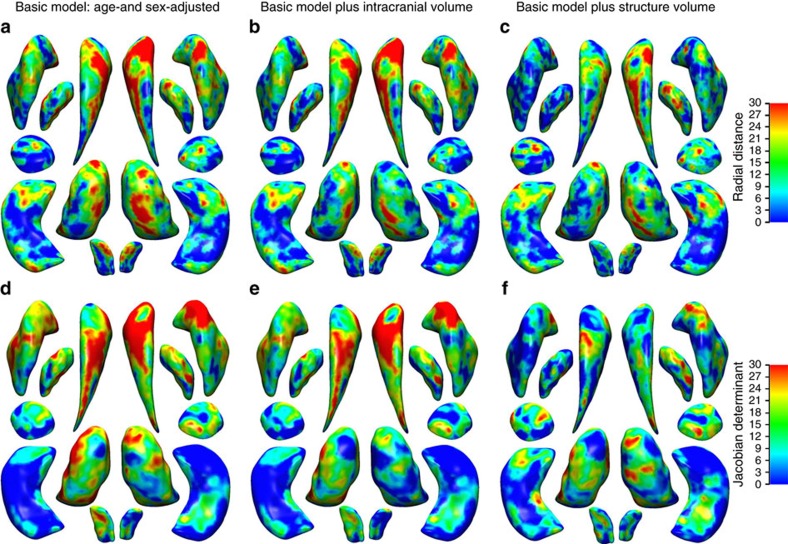
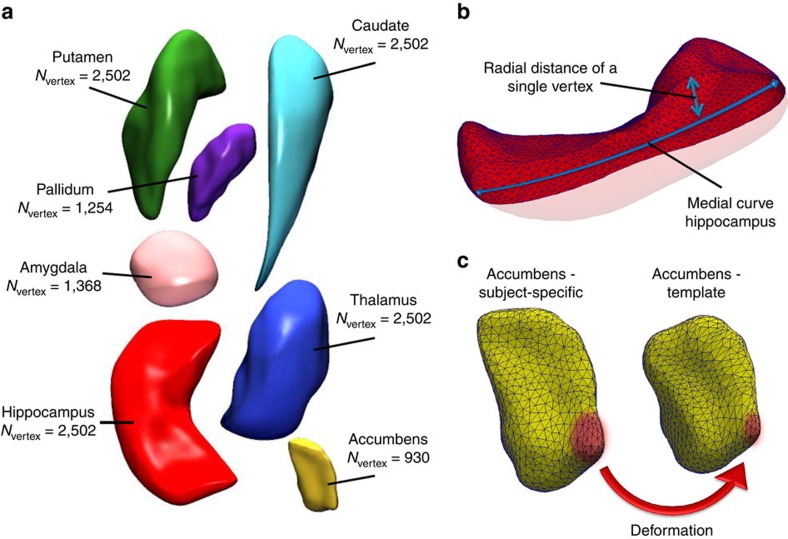
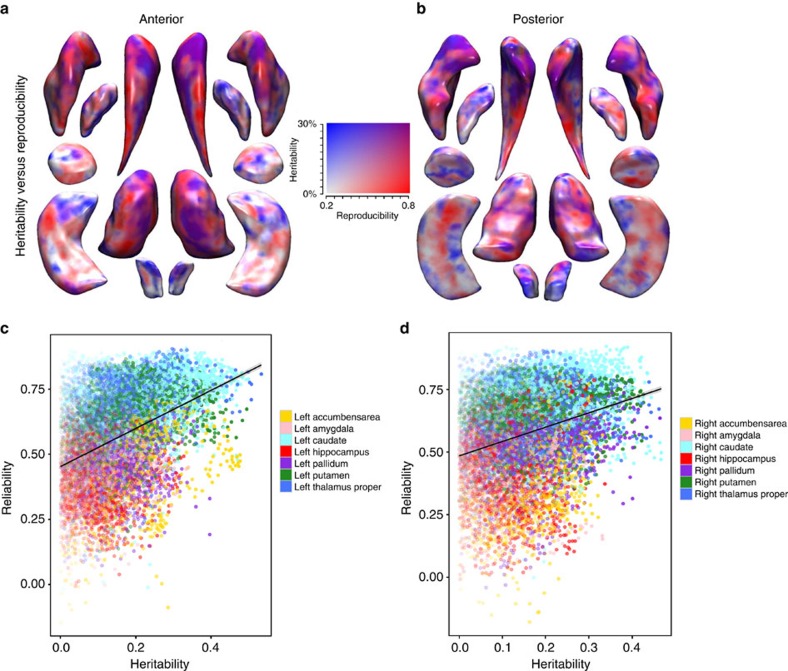
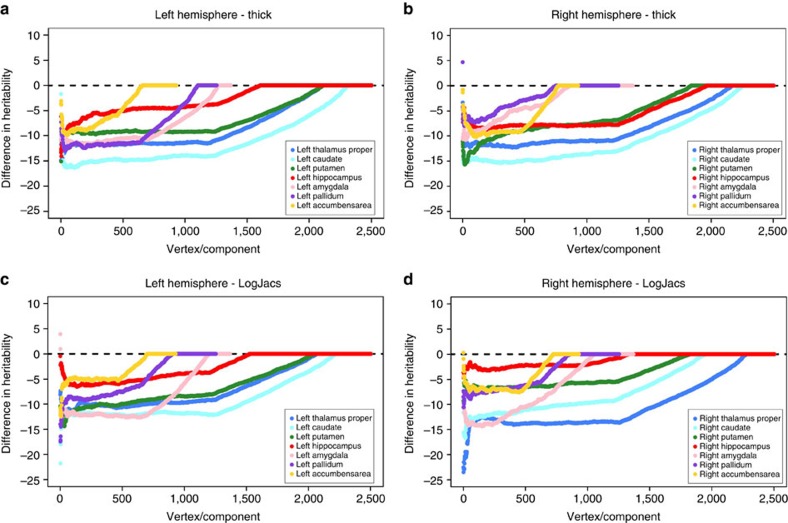
The volumes of subcortical brain structures are highly heritable, but genetic underpinnings of their shape remain relatively obscure. Here we determine the relative contribution of genetic factors to individual variation in the shape of seven bilateral subcortical structures: the nucleus accumbens, amygdala, caudate, hippocampus, pallidum, putamen and thalamus. In 3,686 unrelated individuals aged between 45 and 98 years, brain magnetic resonance imaging and genotyping was performed. The maximal heritability of shape varies from 32.7 to 53.3% across the subcortical structures. Genetic contributions to shape extend beyond influences on intracranial volume and the gross volume of the respective structure. The regional variance in heritability was related to the reliability of the measurements, but could not be accounted for by technical factors only. These findings could be replicated in an independent sample of 1,040 twins. Differences in genetic contributions within a single region reveal the value of refined brain maps to appreciate the genetic complexity of brain structures.
大脑皮质下结构的体积具有高度的遗传性,但它们的形状的遗传基础仍相对不明确。在这里,我们确定了遗传因素对 7 个双侧皮质下结构的形状个体差异的相对贡献:伏隔核、杏仁核、尾状核、海马体、苍白球、壳核和丘脑。在 3686 名年龄在 45 至 98 岁之间的无亲缘关系的个体中,进行了脑磁共振成像和基因分型。皮质下结构的形状的最大遗传性从 32.7%到 53.3%不等。对形状的遗传贡献超出了对颅内体积和各自结构的总体积的影响。遗传变异的区域差异与测量的可靠性有关,但不能仅由技术因素来解释。这些发现可以在 1040 对双胞胎的独立样本中得到复制。单个区域内遗传贡献的差异揭示了精细脑图谱的价值,以了解大脑结构的遗传复杂性。