Chen Qiang, Cheng Minjing, Wang Zhuo, Zhao Shipeng
The Second Anorectal Section, The Third Hospital of Hebei Medical University, Hebei Province, China.
Medicine (Baltimore). 2016 Dec;95(50):e5284. doi: 10.1097/MD.0000000000005284.
Panitumumab, a fully human monoclonal antibody targeting epidermal growth factor receptor, is used in combination with chemotherapy for patients with metastatic colorectal cancer (mCRC). However, the effects of panitumumab in combination with irrinotecan-based chemotherapy remain uncertain. Therefore, we conducted this meta-analysis to assess the efficacy and safety of combination treatment of panitumumab plus chemotherapy in the treatment of mCRC.
By searching electronic databases (PubMed, Embase, and Web of Science), all clinical trials which assessed the effects of panitumumab plus irrinotecan-based chemotherapy in mCRC would be included. Main outcome measures included progression-free survival (PFS), overall survival (OS), overall response rate (ORR), and adverse events. Pooled estimates were calculated by a fixed-effects model or random-effects model, according to the heterogeneity among the included studies.
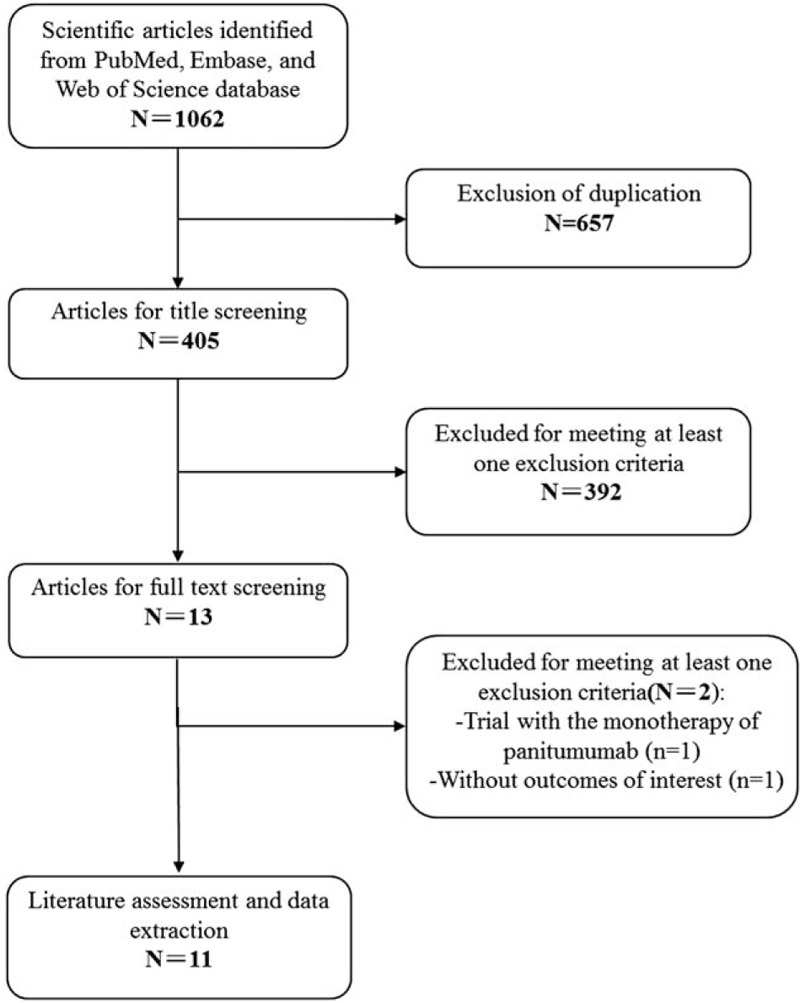
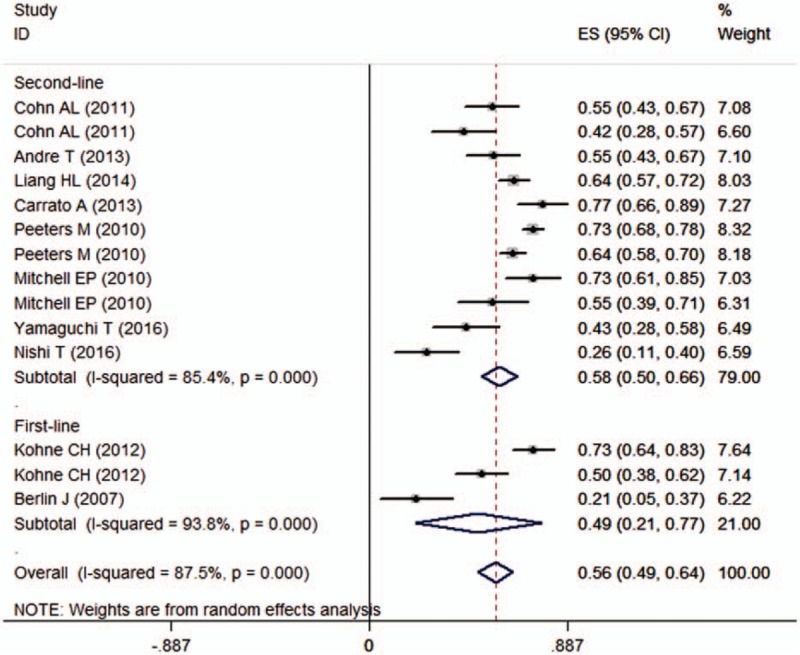
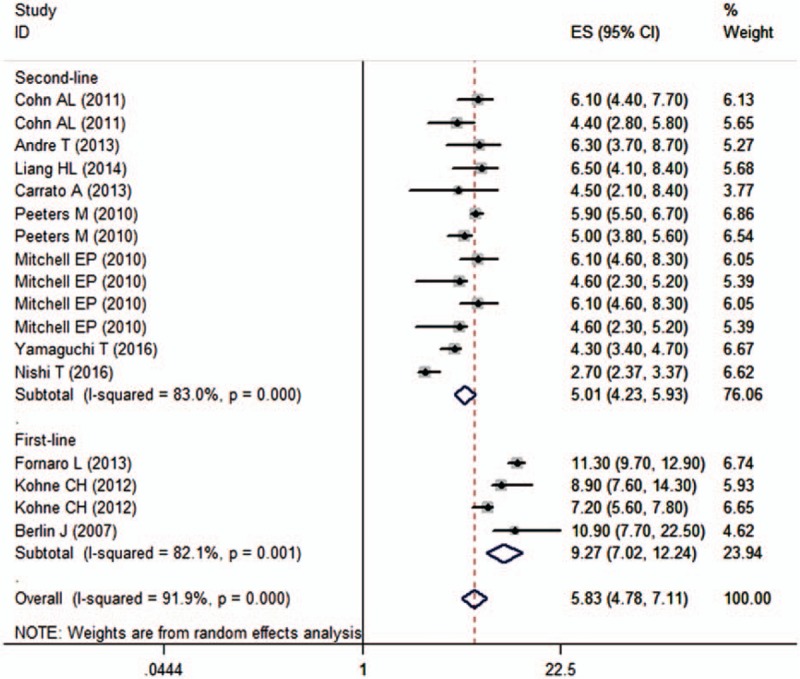
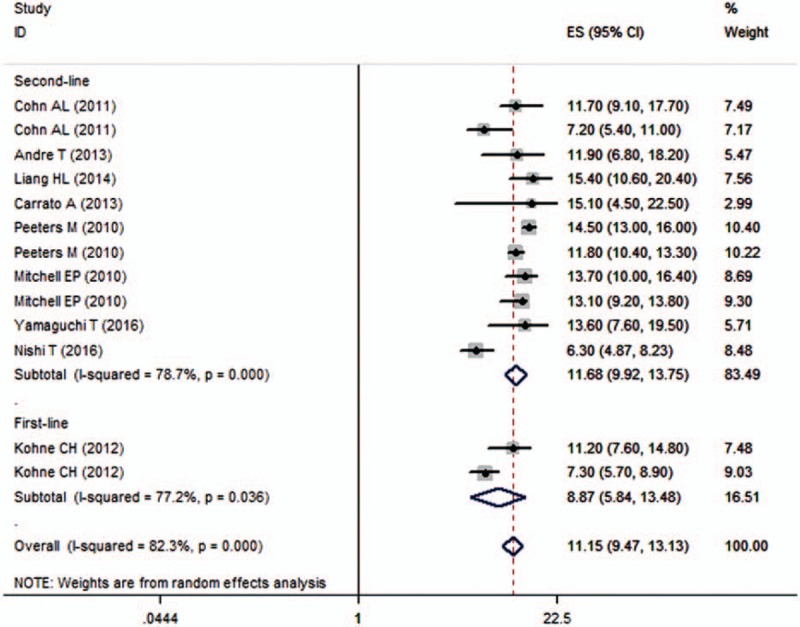
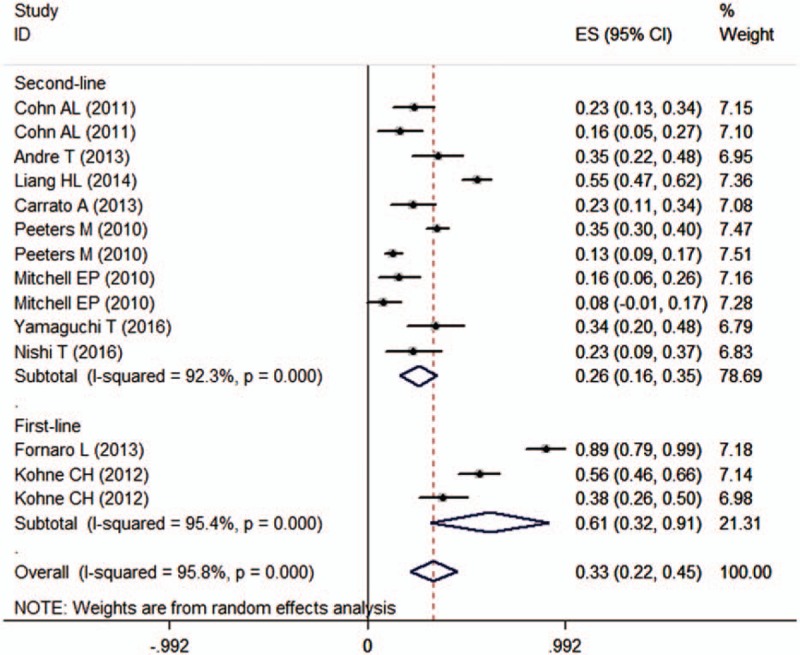
Eleven trials with a total number of 1338 patients met the inclusion criteria and were included in this meta-analysis. The combination treatment of panitumumab and irrinotecan-based chemotherapy was associated with a median PFS of 5.83 months, OS of 11.15 months, and ORR of 33%. Subgroup analysis showed that, in the first-line and second-line treatment, the combination therapy for PFS was 9.27 and 5.01 months, for OS was 8.87 and 11.68 months, and for ORR was 61% and 26%, respectively. In the wild-type and mutant KRAS populations, the combination therapy for PFS was 5.76 and 5.27 months, for OS was 11.15 and 10.64 months, and for ORR was 37% and 18%, respectively. Moreover, combination therapy also induced an incidence of 56% treatment-related adverse events.
Panitumumab plus irrinotecan-based chemotherapy is effective and well-tolerated in the treatment of patients with mCRC, especially in those with wild-type KRAS tumors.
帕尼单抗是一种靶向表皮生长因子受体的全人单克隆抗体,用于转移性结直肠癌(mCRC)患者的化疗联合治疗。然而,帕尼单抗联合基于伊立替康的化疗的效果仍不确定。因此,我们进行了这项荟萃分析,以评估帕尼单抗联合化疗治疗mCRC的疗效和安全性。
通过检索电子数据库(PubMed、Embase和Web of Science),纳入所有评估帕尼单抗联合基于伊立替康的化疗对mCRC疗效的临床试验。主要结局指标包括无进展生存期(PFS)、总生存期(OS)、总缓解率(ORR)和不良事件。根据纳入研究之间的异质性,采用固定效应模型或随机效应模型计算合并估计值。
11项试验共1338例患者符合纳入标准并纳入本荟萃分析。帕尼单抗与基于伊立替康的化疗联合治疗的中位PFS为5.83个月,OS为11.15个月,ORR为33%。亚组分析显示,在一线和二线治疗中,联合治疗的PFS分别为9.27和5.01个月,OS分别为8.87和11.68个月,ORR分别为61%和26%。在野生型和突变型KRAS人群中,联合治疗的PFS分别为5.76和5.27个月,OS分别为11.15和10.64个月,ORR分别为37%和18%。此外,联合治疗还导致56%的治疗相关不良事件发生率。
帕尼单抗联合基于伊立替康的化疗在治疗mCRC患者中有效且耐受性良好,尤其是在KRAS野生型肿瘤患者中。