Paterno Flavio, Girnita Alin, Brailey Paul, Witte David, Wang Jiang, Cuffy Madison C, Diwan Tayyab, Tremblay Simon, Revollo Jane Y, Alloway Rita R, Schoech Michael R, Anwar Nadim, Shah Shimul A, Woodle Steve E
Division of Transplantation, Department of Surgery, University of Cincinnati College of Medicine, Cincinnati, OH.
Transplant Direct. 2016 Nov 23;2(12):e121. doi: 10.1097/TXD.0000000000000633. eCollection 2016 Dec.
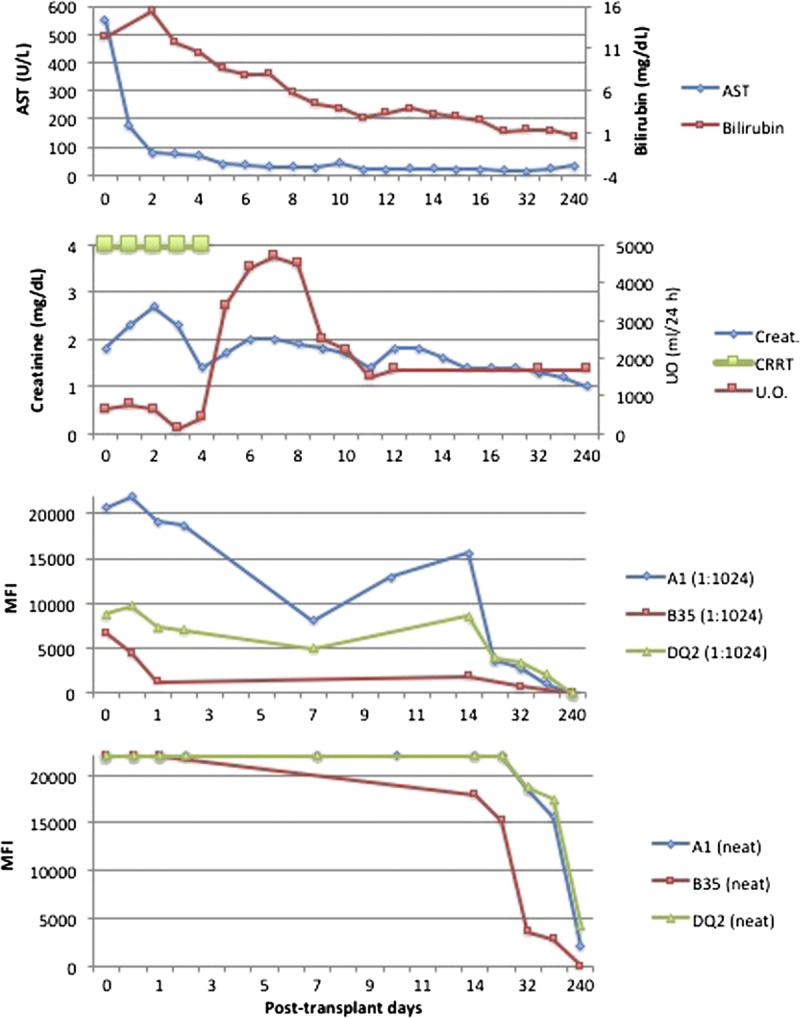
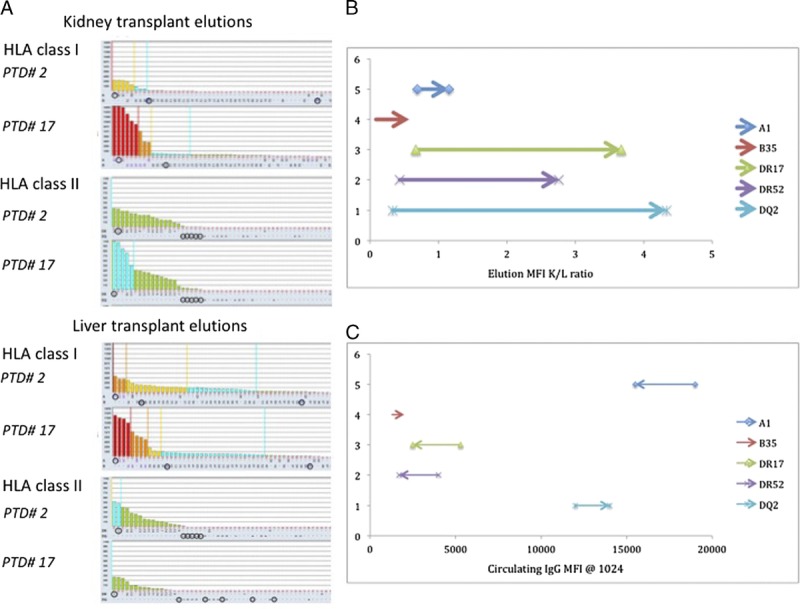
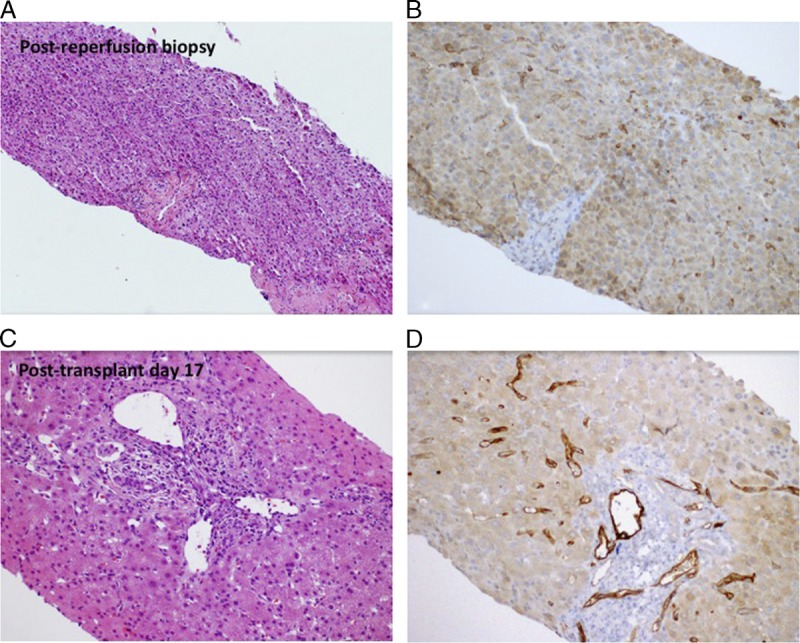
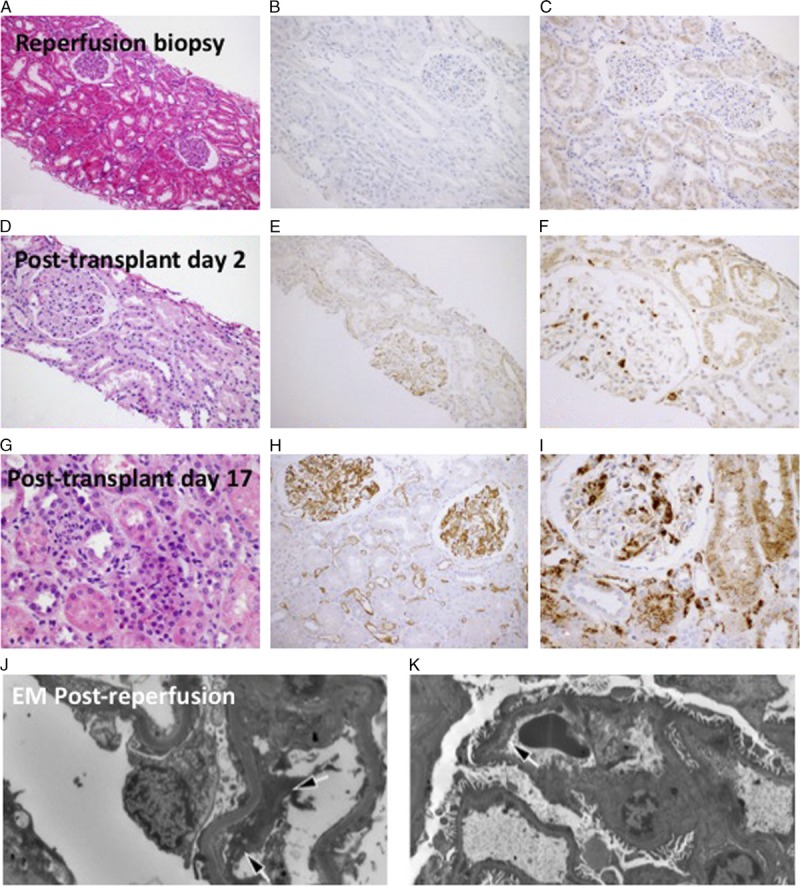
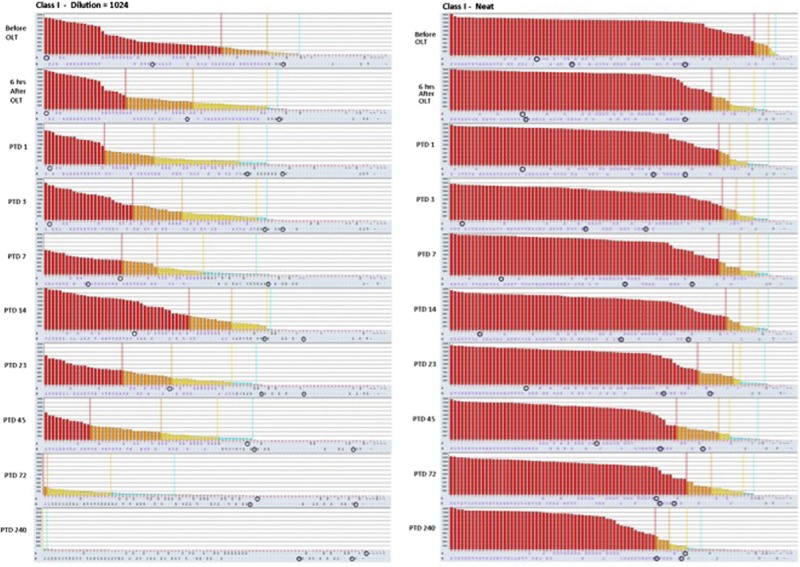
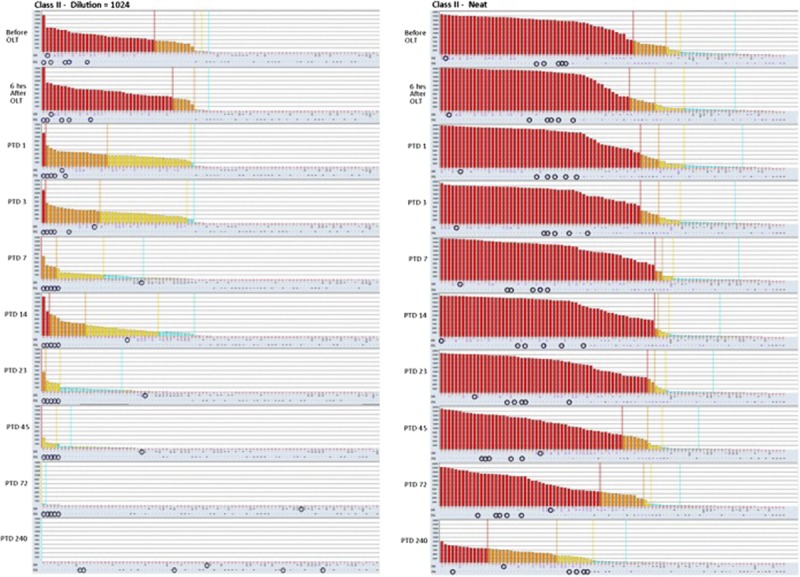
The results of simultaneous liver-kidney transplants in highly sensitized recipients have been controversial in terms of antibody-mediated rejection and kidney allograft outcomes. This case report provides a detailed and sophisticated documentation of histocompatibility and pathologic data in a simultaneous liver-kidney transplant performed in a recipient with multiple high-titered class I and II antidonor HLA antibodies and a strongly positive cytotoxic crossmatch. Patient received induction with steroids, rituximab, and eculizumab without lymphocyte depleting agents. The kidney transplant was delayed by 6 hours after the liver transplant to allow more time to the liver allograft to "absorb" donor-specific antibodies (DSA). Interestingly, the liver allograft did not prevent immediate antibody-mediated injury to the kidney allograft in this highly sensitized recipient. Anti-HLA single antigen bead analysis of liver and kidney allograft biopsy eluates revealed deposition of both class I and II DSA in both liver and kidney transplants during the first 2 weeks after transplant. Afterward, both liver and kidney allograft functions improved and remained normal after a year with progressive reduction in serum DSA values.
在高敏受者中,肝肾联合移植的结果在抗体介导的排斥反应和肾移植结局方面一直存在争议。本病例报告详细且深入地记录了一名接受肝肾联合移植受者的组织相容性和病理数据,该受者具有多种高滴度的I类和II类抗供体HLA抗体,细胞毒性交叉配型呈强阳性。患者接受了类固醇、利妥昔单抗和依库珠单抗诱导治疗,未使用淋巴细胞清除剂。肾移植在肝移植后延迟6小时进行,以便肝移植有更多时间“吸收”供体特异性抗体(DSA)。有趣的是,在这个高敏受者中,肝移植并不能预防肾移植立即发生的抗体介导损伤。对肝和肾移植活检洗脱液进行的抗HLA单抗原珠分析显示,移植后前2周内,肝和肾移植中均有I类和II类DSA沉积。此后,肝和肾移植功能均有所改善,一年后保持正常,血清DSA值逐渐降低。