Khasnis Mukta D, Halkidis Konstantine, Bhardwaj Anshul, Root Michael J
Department of Biochemistry and Molecular Biology, Sidney Kimmel Cancer Center, Thomas Jefferson University, Philadelphia, PA, United States of America.
PLoS Pathog. 2016 Dec 19;12(12):e1006098. doi: 10.1371/journal.ppat.1006098. eCollection 2016 Dec.
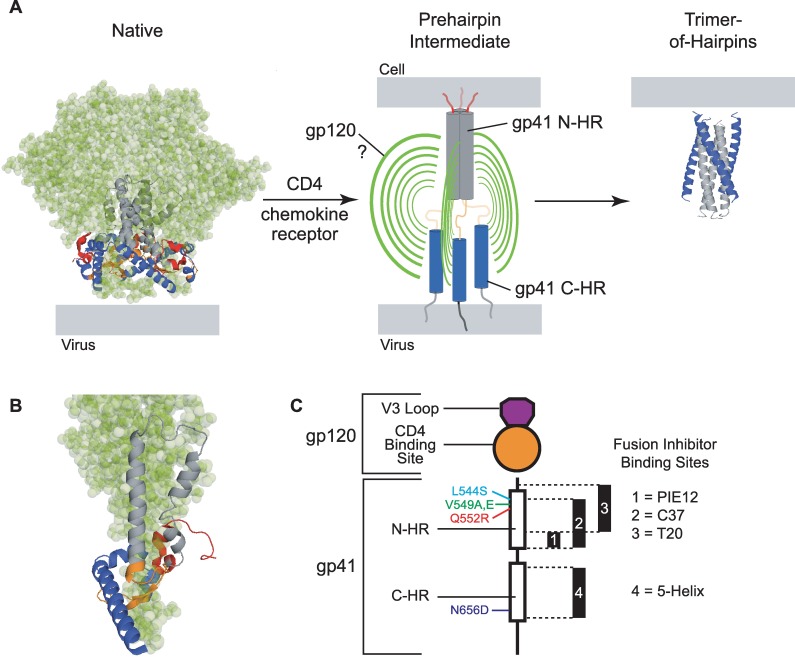
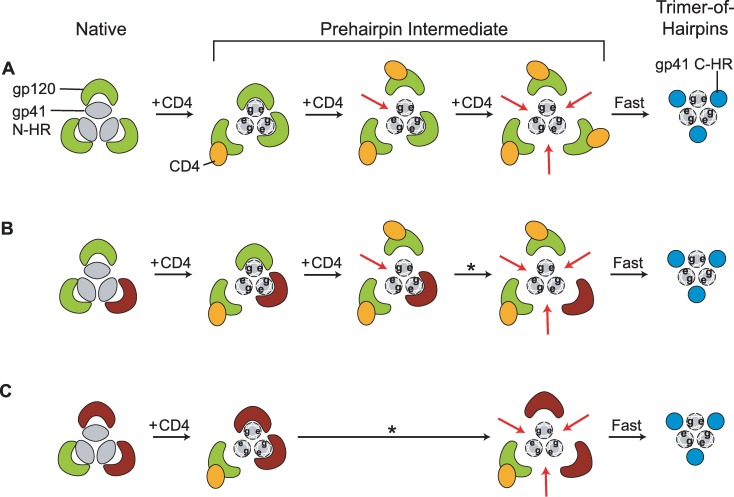
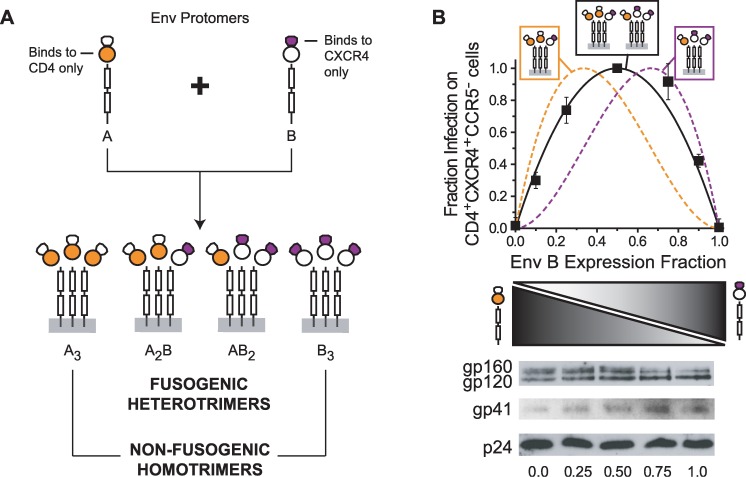
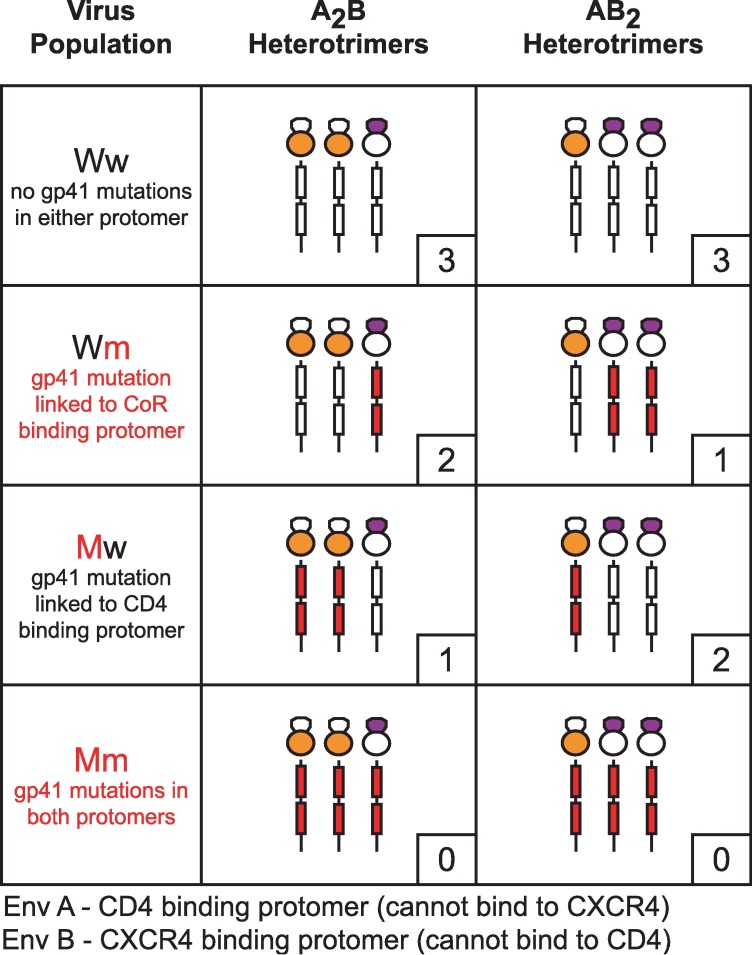
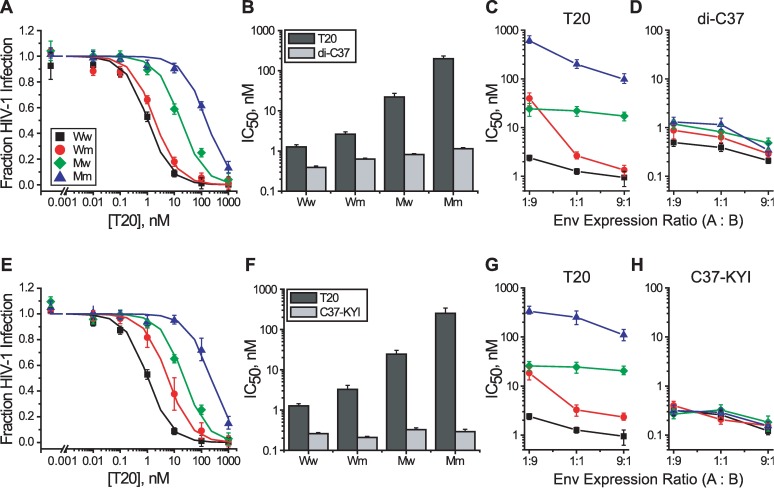
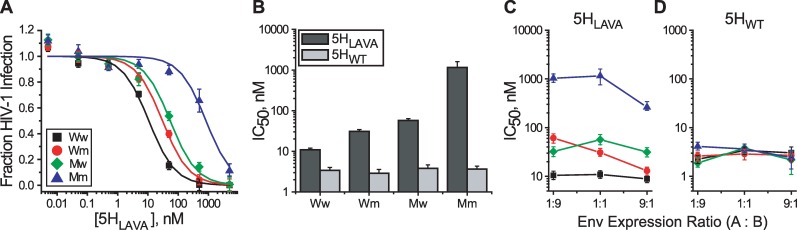
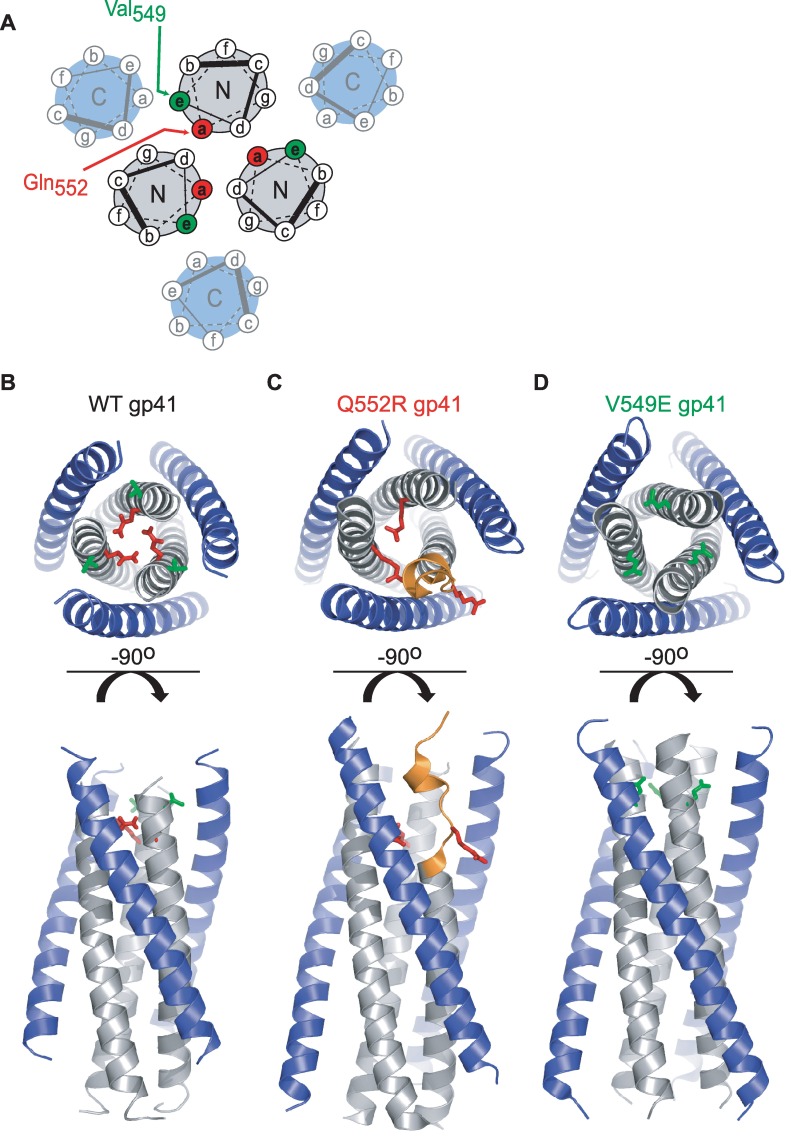
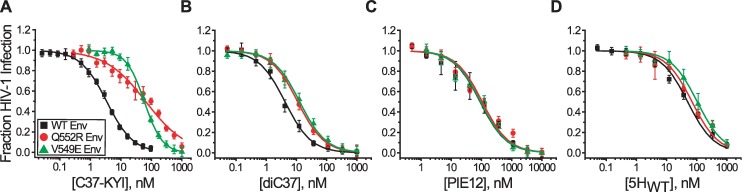
Structural rearrangements of HIV-1 glycoprotein Env promote viral entry through membrane fusion. Env is a symmetric homotrimer with each protomer composed of surface subunit gp120 and transmembrane subunit gp41. Cellular CD4- and chemokine receptor-binding to gp120 coordinate conformational changes in gp41, first to an extended prehairpin intermediate (PHI) and, ultimately, into a fusogenic trimer-of-hairpins (TOH). HIV-1 fusion inhibitors target gp41 in the PHI and block TOH formation. To characterize structural transformations into and through the PHI, we employed asymmetric Env trimers containing both high and low affinity binding sites for individual fusion inhibitors. Asymmetry was achieved using engineered Env heterotrimers composed of protomers deficient in either CD4- or chemokine receptor-binding. Linking receptor engagement to inhibitor affinity allowed us to assess conformational changes of individual Env protomers in the context of a functioning trimer. We found that the transition into the PHI could occur symmetrically or asymmetrically depending on the stoichiometry of CD4 binding. Sequential engagement of multiple CD4s promoted progressive exposure of individual fusion inhibitor binding sites in a CD4-dependent fashion. By contrast, engagement of only a single CD4 molecule led to a delayed, but symmetric, exposure of the gp41 trimer. This complex coupling between Env-CD4 interaction and gp41 exposure explained the multiphasic fusion-inhibitor titration observed for a mutant Env homotrimer with a naturally asymmetric gp41. Our results suggest that the spatial and temporal exposure of gp41 can proceed in a nonconcerted, asymmetric manner depending on the number of CD4s that engage the Env trimer. The findings have important implications for the mechanism of viral membrane fusion and the development of vaccine candidates designed to elicit neutralizing antibodies targeting gp41 in the PHI.
HIV-1糖蛋白Env的结构重排通过膜融合促进病毒进入。Env是一种对称的同三聚体,每个原体由表面亚基gp120和跨膜亚基gp41组成。细胞的CD4和趋化因子受体与gp120结合,协调gp41的构象变化,首先转变为延伸的前发夹中间体(PHI),最终转变为融合性发夹三聚体(TOH)。HIV-1融合抑制剂靶向PHI中的gp41并阻断TOH的形成。为了表征进入和通过PHI的结构转变,我们使用了对单个融合抑制剂具有高亲和力和低亲和力结合位点的不对称Env三聚体。通过使用由缺乏CD4或趋化因子受体结合的原体组成的工程化Env异三聚体实现不对称性。将受体结合与抑制剂亲和力联系起来,使我们能够在有功能的三聚体背景下评估单个Env原体的构象变化。我们发现,向PHI的转变可以对称或不对称地发生,这取决于CD4结合的化学计量。多个CD4的顺序结合以CD4依赖的方式促进了单个融合抑制剂结合位点的逐步暴露。相比之下,仅一个CD4分子的结合导致gp41三聚体延迟但对称的暴露。Env-CD4相互作用与gp41暴露之间的这种复杂耦合解释了对具有天然不对称gp41的突变Env同三聚体观察到的多相融合抑制剂滴定。我们的结果表明,gp41的空间和时间暴露可以以非协同、不对称的方式进行,这取决于与Env三聚体结合的CD4的数量。这些发现对病毒膜融合机制以及旨在引发靶向PHI中gp41的中和抗体的候选疫苗的开发具有重要意义。