Xiong Si-Qi, Jiang Hai-Bo, Li Yan-Xiu, Li Hai-Bo, Xu Hui-Zhuo, Wu Zhen-Kai, Zheng Wei, Xia Xiao-Bo
Department of Ophthalmology, Xiangya Hospital, Central South University, Changsha, P.R.China.
Mol Vis. 2016 Dec 2;22:1375-1386. eCollection 2016.
To elucidate the role of insulin gene enhancer protein ISL-1 (Islet-1) in angiogenesis and regulation of vascular endothelial growth factor (VEGF) expression in vitro and in vivo.
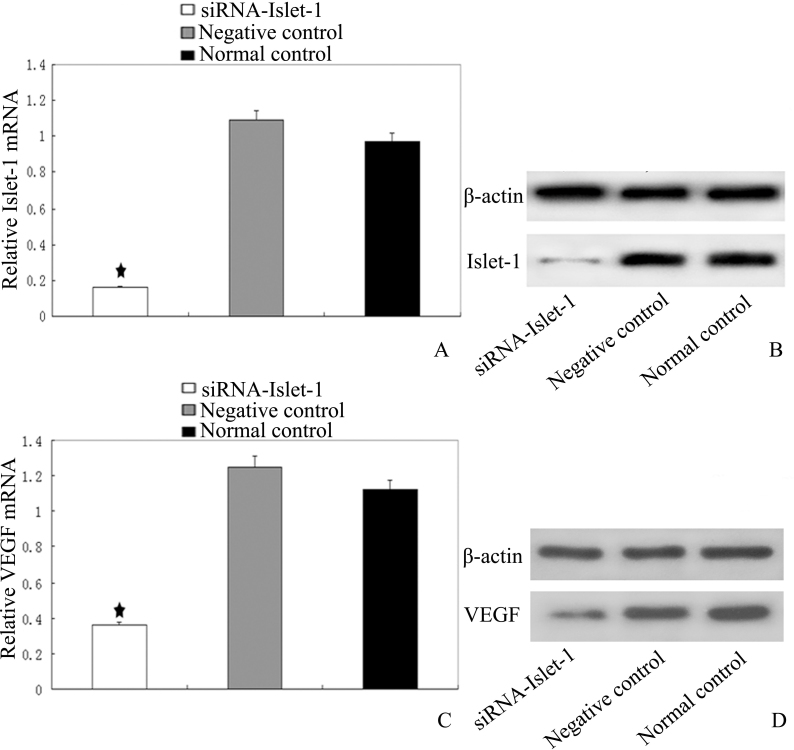
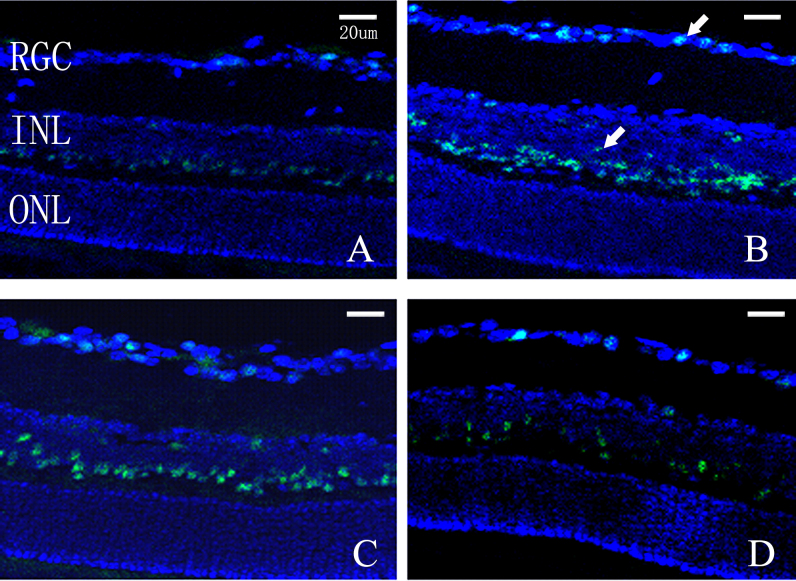
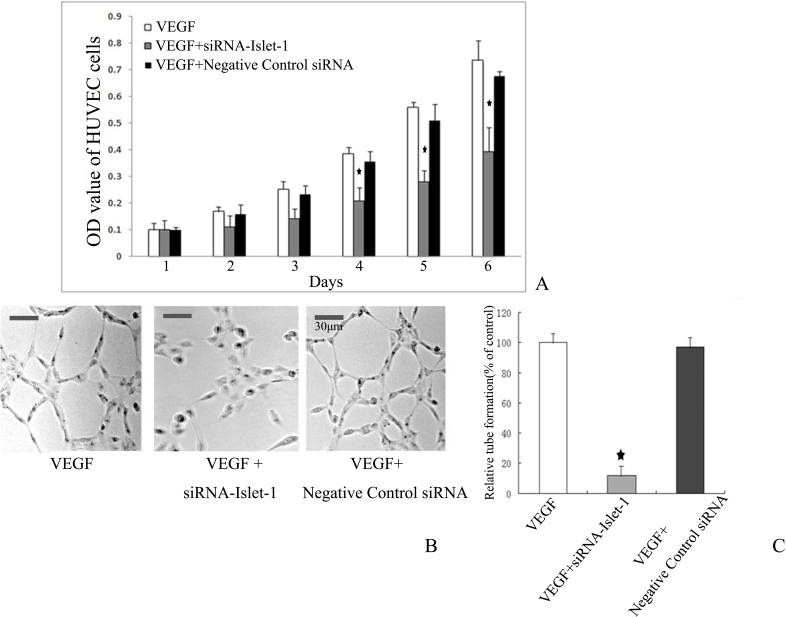
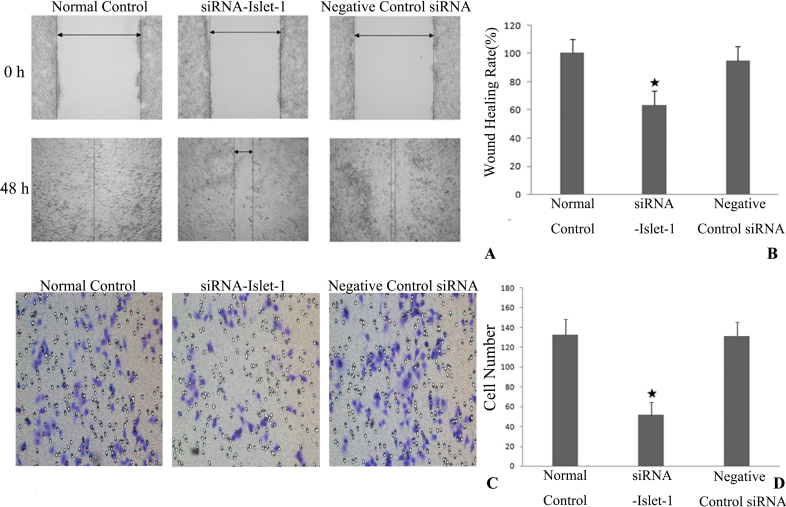
siRNA targeting Islet-1 was transfected to human umbilical vein endothelial cell lines (HUVECs). The expression of Islet-1 and VEGF in the cultured cells was measured using real-time PCR and immunoblotting. 3-[4,5-dimethylthiazol-2-yl]-2,5- diphenyltetrazolium bromide; thiazolyl blue (MTT) assay was used to analyze the proliferation of HUVECs affected by Islet-1. Wound healing and Transwell assays were conducted to assess the motility of HUVECs. The formation of capillary-like structures was examined using growth factor-reduced Matrigel. siRNA targeting Islet-1 was intravitreally injected into the murine model of oxygen-induced retinopathy (OIR). Retinal neovascularization was evaluated with angiography using fluorescein-labeled dextran and then quantified histologically. Real-time PCR and immunoblotting were used to determine whether local Islet-1 silencing affected the expression of Islet-1 and VEGF in murine retinas.
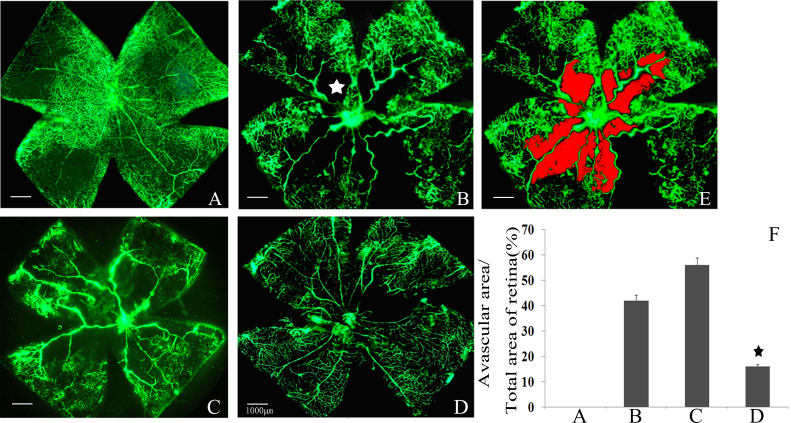
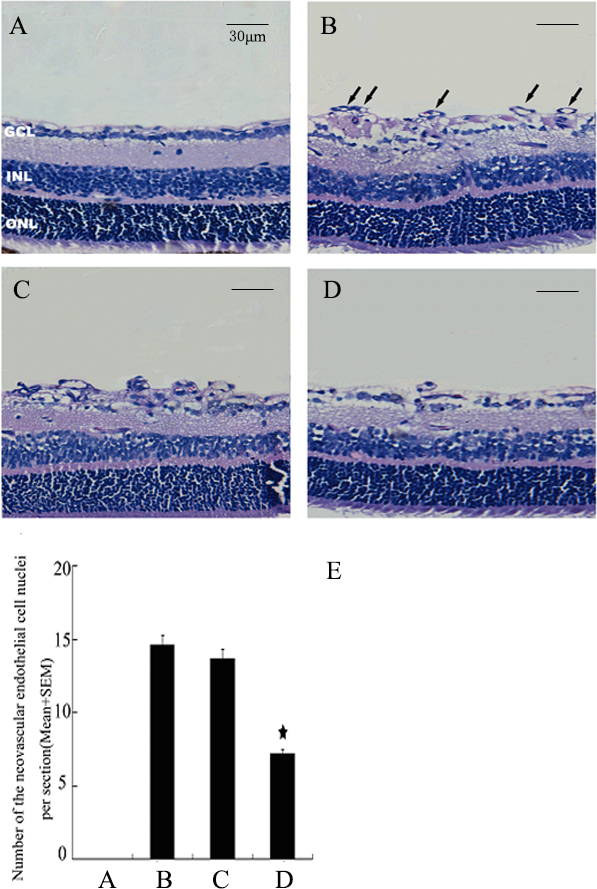
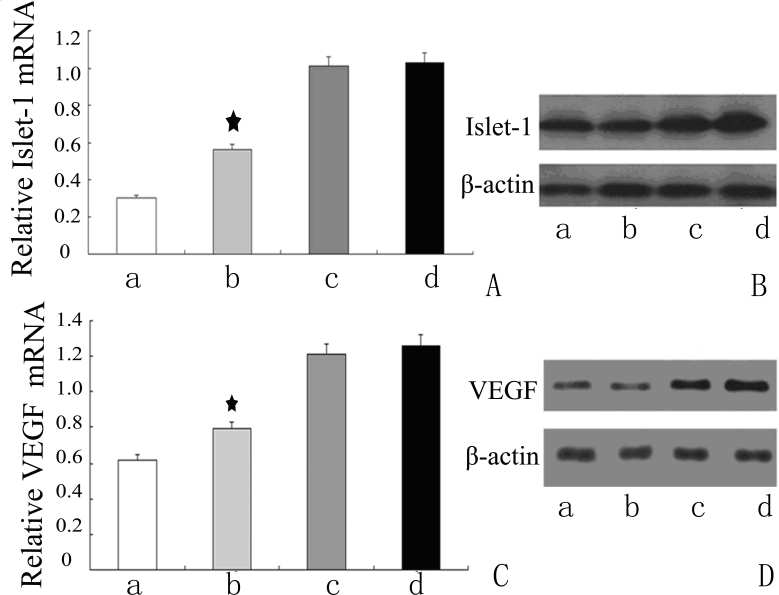
The expression of Islet-1 and VEGF in HUVECs was knocked down by siRNA. Reduced endogenous Islet-1 levels in cultured cells greatly inhibited the proliferation, migration, and tube formation in HUVECs in vitro. Retinal neovascularization following injection of Islet-1 siRNA was significantly reduced compared with that of the contralateral control eye. Histological analysis indicated that the neovascular nuclei protruding into the vitreous cavity were decreased. Furthermore, the Islet-1 and VEGF expression levels were downregulated in murine retinas treated with siRNA against Islet-1.
Reducing the expression of endogenous Islet-1 inhibits proliferation, migration, and tube formation in vascular endothelial cells in vitro and suppresses retinal angiogenesis in vivo Endogenous Islet-1 regulates angiogenesis via VEGF.
阐明胰岛素基因增强子蛋白ISL-1(胰岛-1)在体内外血管生成及血管内皮生长因子(VEGF)表达调控中的作用。
将靶向胰岛-1的小干扰RNA(siRNA)转染到人脐静脉内皮细胞系(HUVECs)。采用实时聚合酶链反应(PCR)和免疫印迹法检测培养细胞中胰岛-1和VEGF的表达。用噻唑蓝(MTT)比色法分析胰岛-1对HUVECs增殖的影响。进行伤口愈合实验和Transwell实验以评估HUVECs的迁移能力。使用生长因子减少的基质胶检测毛细血管样结构的形成。将靶向胰岛-1的siRNA玻璃体内注射到氧诱导视网膜病变(OIR)小鼠模型中。使用荧光素标记的葡聚糖通过血管造影评估视网膜新生血管形成,然后进行组织学定量分析。采用实时PCR和免疫印迹法确定局部胰岛-1沉默是否影响小鼠视网膜中胰岛-1和VEGF的表达。
siRNA敲低了HUVECs中胰岛-1和VEGF的表达。培养细胞中内源性胰岛-1水平降低极大地抑制了体外HUVECs的增殖、迁移和管腔形成。与对侧对照眼相比,注射胰岛-1 siRNA后视网膜新生血管形成明显减少。组织学分析表明,突入玻璃体腔的新生血管核减少。此外,用针对胰岛-1的siRNA处理的小鼠视网膜中胰岛-1和VEGF表达水平下调。
降低内源性胰岛-1的表达可抑制体外血管内皮细胞的增殖、迁移和管腔形成,并抑制体内视网膜血管生成。内源性胰岛-1通过VEGF调节血管生成。