Zhang Shuaishuai, Qin Fengxian, Yang Liyuan, Xian Jingrong, Zou Qin, Jin Hongjun, Wang Lu, Zhang Ling
Key Laboratory of Laboratory Medical Diagnostics Designated by the Ministry of Education, College of Laboratory Medicine, Chongqing Medical University, Chongqing, China.
Department of clinical laboratory, Liuzhou Worker's Hospital, Guangxi, China.
J Cancer. 2016 Nov 25;7(15):2270-2279. doi: 10.7150/jca.16010. eCollection 2016.
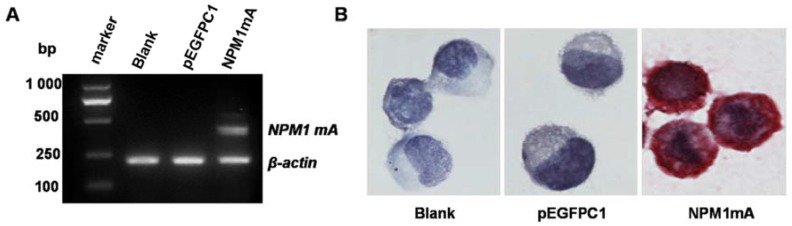
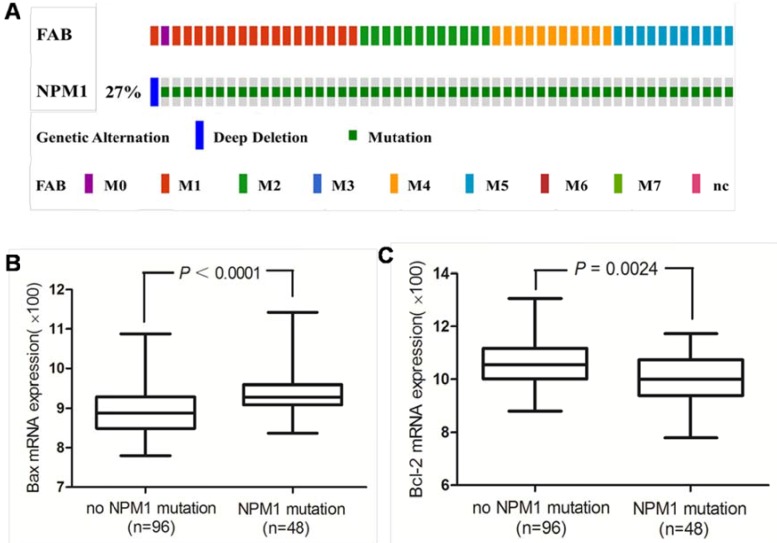
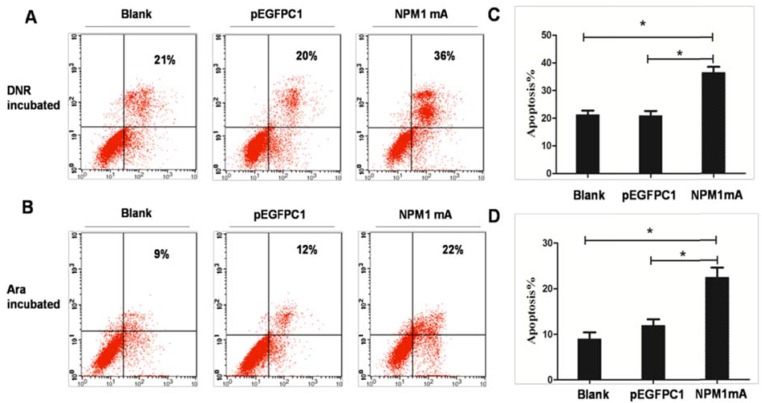
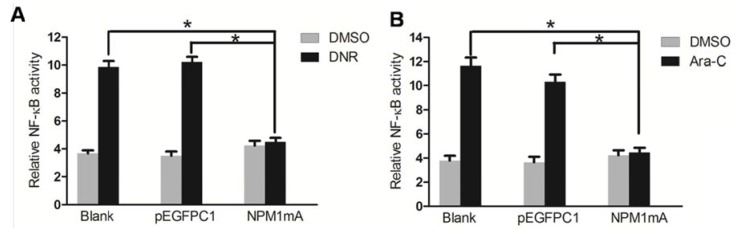
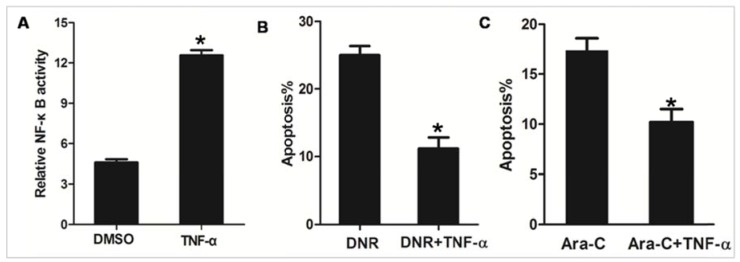
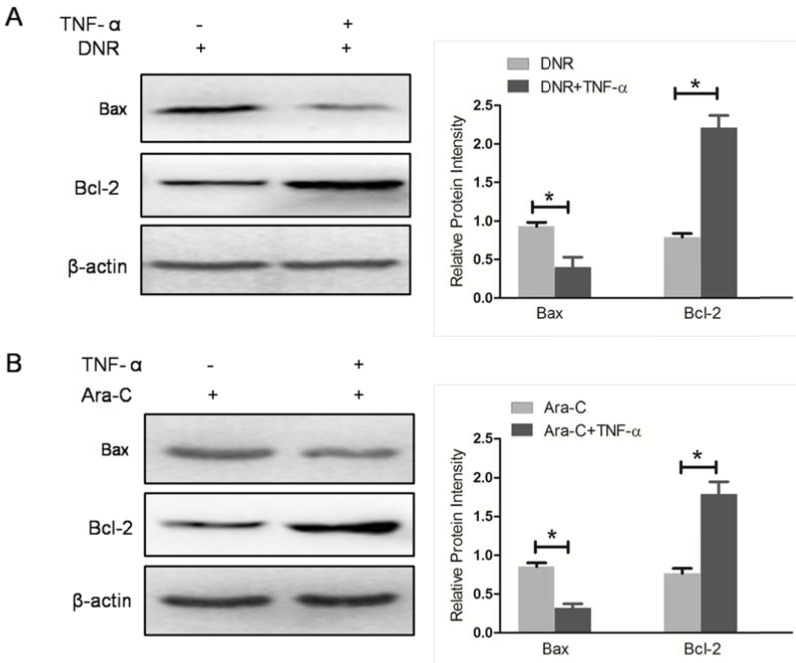
() - a gene that encodes for a nuclear protein with multiple functions. Mutations in are seen in approximately one-third of acute myeloid leukemia (AML) and are generally associated with good response to induction chemotherapy. However, the mechanisms underlying this chemosensitivity are still unknown. Recent studies have established that nuclear factor-κB (NF-κB) activation is a key response of leukemia cell to chemotherapy. In this study, we transfected human monocytic leukemia THP-1 cells with the vector expressing NPM1 mutation variant (NPM1mA), and confirmed overexpression of NPM1mA at mRNA and protein levels by reverse transcription PCR (RT-PCR) and immunohistochemistry, respectively. The effects of NPM1 mutations on chemotherapeutical agents induced apoptosis, NF-κB activity and gene expression were examined using flow cytometry, luciferase reporter assays, quantitative real time PCR (qRT-PCR) and Western blot. We found that overexpression of NPM1mA in THP-1 cells sensitized these cells to apoptosis induced by chemotherapeutical agents such as daunorubicin (DNR) and cytarabine (Ara-C). Moreover, we demonstrated that expression of NPM1 mA reduced the NF-κB transcription activity of THP-1 cells upon drug treatment. In addition, restoration of NF-κB activity via TNF-α stimulation could attenuate the effect of NPM1mA overexpression on DNR-and Ara-C-induced apoptosis. Interestingly, expression of NPM1mA could upregulate Bax and downregulate Bcl-2 at mRNA and protein levels in THP-1 cells when treated with DNR or Ara-C. We also demonstrated that restoration of NF-κB activity via TNF-α pre-treatment reversed the effect of NPM1mA on the Bax/Bcl-2 expression. Furthermore, evaluation of gene expression data from The Cancer Genome Atlas (TCGA) dataset revealed that NPM1-mutated patients showed a higher expression of Bax and a lower expression of Bcl-2. These results suggest that the NPM1 gene mutations could confer increased sensitivity to chemotherapeutic agents, at least in part, by suppressing NF-κB activity and regulating Bax/Bcl-2 expression.
()——一种编码具有多种功能的核蛋白的基因。约三分之一的急性髓系白血病(AML)中可见该基因的突变,且这些突变通常与诱导化疗的良好反应相关。然而,这种化疗敏感性的潜在机制仍不清楚。最近的研究表明,核因子-κB(NF-κB)激活是白血病细胞对化疗的关键反应。在本研究中,我们用表达NPM1突变变体(NPM1mA)的载体转染人单核细胞白血病THP-1细胞,并分别通过逆转录PCR(RT-PCR)和免疫组织化学在mRNA和蛋白质水平证实了NPM1mA的过表达。使用流式细胞术、荧光素酶报告基因检测、定量实时PCR(qRT-PCR)和蛋白质印迹法检测NPM1突变对化疗药物诱导的细胞凋亡、NF-κB活性和基因表达的影响。我们发现,THP-1细胞中NPM1mA的过表达使这些细胞对柔红霉素(DNR)和阿糖胞苷(Ara-C)等化疗药物诱导的细胞凋亡敏感。此外,我们证明NPM1 mA的表达降低了药物处理后THP-1细胞的NF-κB转录活性。另外,通过肿瘤坏死因子-α(TNF-α)刺激恢复NF-κB活性可减弱NPM1mA过表达对DNR和Ara-C诱导的细胞凋亡的影响。有趣的是,在用DNR或Ara-C处理时,NPM1mA的表达可在mRNA和蛋白质水平上调THP-1细胞中的Bax并下调Bcl-2。我们还证明,通过TNF-α预处理恢复NF-κB活性可逆转NPM1mA对Bax/Bcl-2表达的影响。此外,对癌症基因组图谱(TCGA)数据集的基因表达数据评估显示,NPM1突变的患者显示出较高的Bax表达和较低的Bcl-2表达。这些结果表明,NPM1基因突变至少部分地通过抑制NF-κB活性和调节Bax/Bcl-2表达来赋予对化疗药物的敏感性增加。