Dupuis Megan Murray, Tuchman Sascha A
Department of Medicine, Duke University, Durham.
Division of Hematology/Oncology, Lineberger Comprehensive Cancer Center, University of North Carolina at Chapel Hill, Chapel Hill, NC, USA.
Onco Targets Ther. 2016 Dec 15;9:7583-7590. doi: 10.2147/OTT.S122241. eCollection 2016.
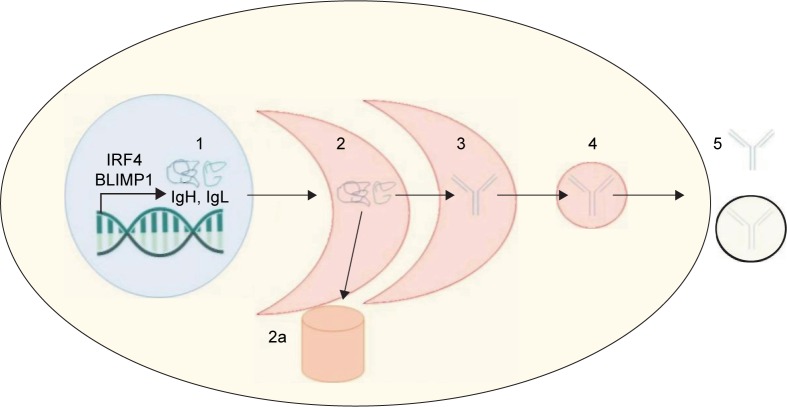
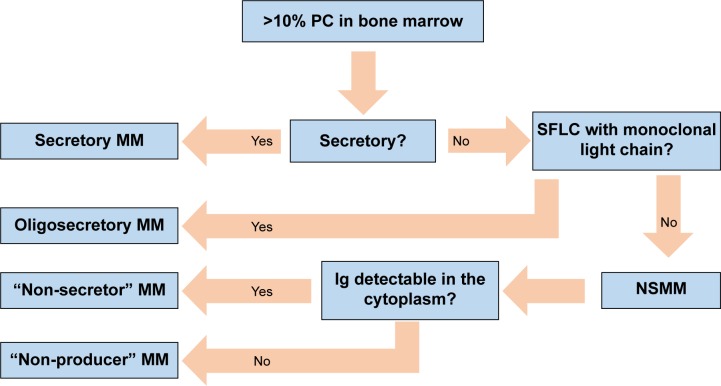
Multiple myeloma (MM) is the second most common hematologic malignancy in the US. It is typically characterized by production of large amounts of defective immunoglobulin (Ig). Diagnosing MM and monitoring treatment response, including eventual relapse, are largely based on sequential measurements of Ig. However, a small subset of MM called non-secretory multiple myeloma (NSMM) produces no detectable Ig. This subset of true NSMM has become even smaller over time, as the advent of the serum free light chain assay has resulted in the majority of NSMM patients being recategorized as light-chain MM - that is, MM cells that produce only the light-chain component of Ig. True forms of NSMM, meaning MM that secretes no monoclonal proteins whatsoever, constitute a distinct entity that is reviewed; definition of NSMM using current detection methods, discuss the biology underpinning NSMM development, and share recommendations for how NSMM should be managed clinically with respect to detection, treatment, and monitoring.
多发性骨髓瘤(MM)是美国第二常见的血液系统恶性肿瘤。其典型特征是产生大量有缺陷的免疫球蛋白(Ig)。MM的诊断以及治疗反应监测,包括最终的复发监测,很大程度上基于对Ig的连续测量。然而,一小部分称为非分泌型多发性骨髓瘤(NSMM)的MM不产生可检测到的Ig。随着时间的推移,真正的NSMM这一亚组变得更小,因为血清游离轻链检测的出现使得大多数NSMM患者被重新归类为轻链MM,即仅产生Ig轻链成分的MM细胞。真正形式的NSMM,即不分泌任何单克隆蛋白的MM,构成了一个独特的实体,本文对此进行综述;使用当前检测方法对NSMM进行定义,讨论NSMM发生发展的生物学基础,并分享关于NSMM在检测、治疗和监测方面临床管理的建议。