Schaefer Esperance A K, Meixiong James, Mark Christina, Deik Amy, Motola Daniel L, Fusco Dahlene, Yang Andrew, Brisac Cynthia, Salloum Shadi, Lin Wenyu, Clish Clary B, Peng Lee F, Chung Raymond T
Esperance AK Schaefer, James Meixiong, Christina Mark, Daniel L Motola, Dahlene Fusco, Andrew Yang, Cynthia Brisac, Shadi Salloum, Wenyu Lin, Lee F Peng, Raymond T Chung, Gastrointestinal Unit, Massachusetts General Hospital, Boston, MA 02114, United States.
World J Gastroenterol. 2016 Dec 7;22(45):9954-9965. doi: 10.3748/wjg.v22.i45.9954.
To characterize the role of apolipoprotein B100 (apoB100) in hepatitis C viral (HCV) infection.
In this study, we utilize a gene editing tool, transcription activator-like effector nucleases (TALENs), to generate human hepatoma cells with a stable genetic deletion of to assess of apoB in HCV. Using infectious cell culture-competent HCV, viral pseudoparticles, replicon models, and lipidomic analysis we determined the contribution of apoB to each step of the viral lifecycle. We further studied the effect of mipomersen, an FDA-approved antisense inhibitor of apoB100, on HCV using cell-culture competent HCV and determined its impact on viral infectivity with the TCID50 method.
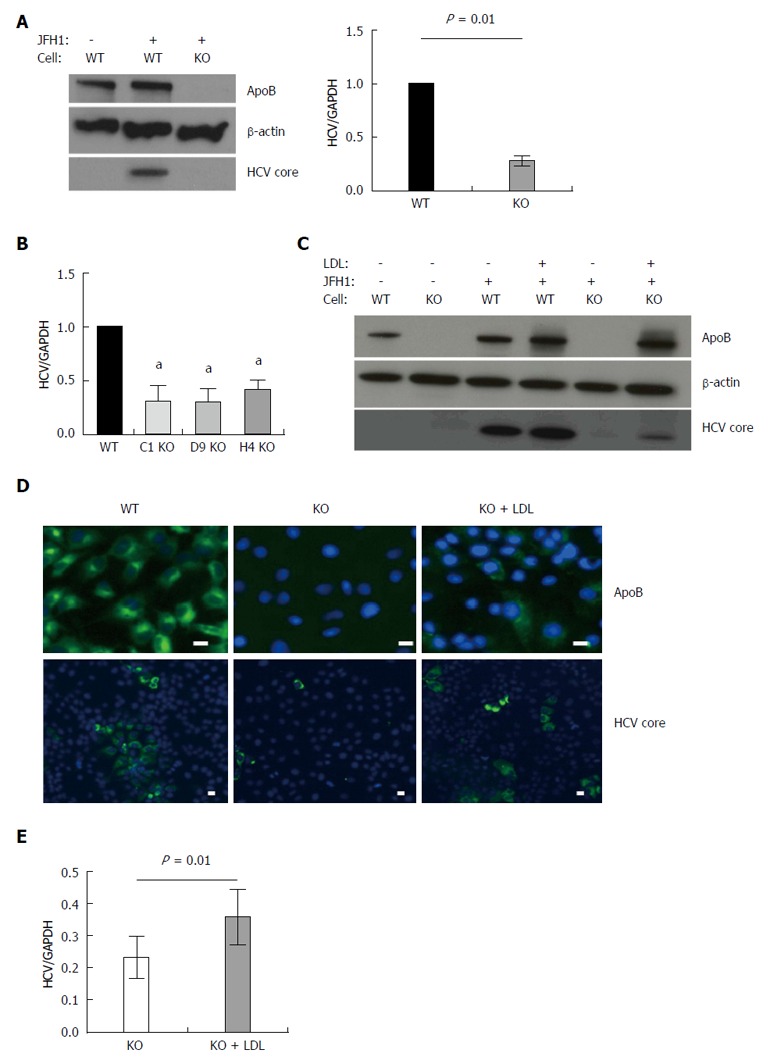
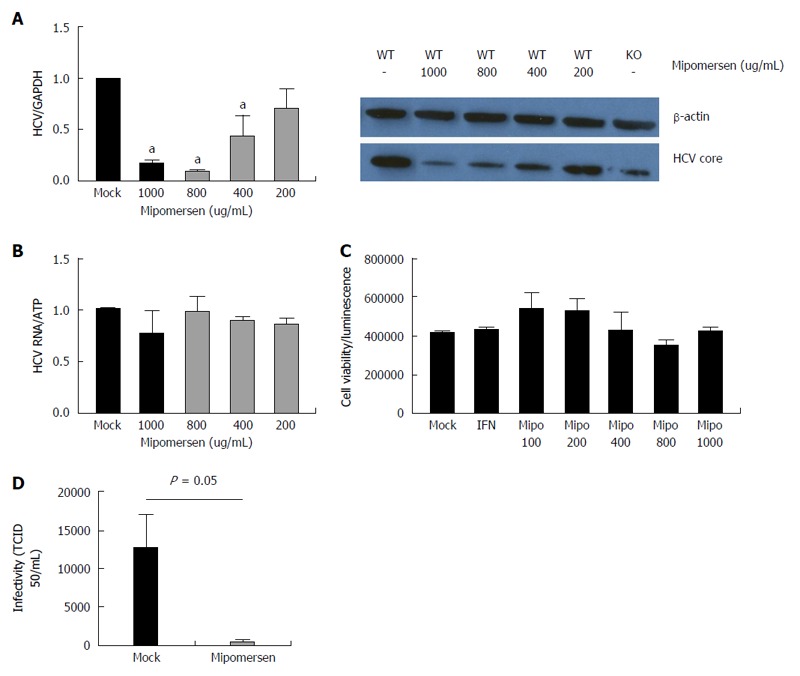
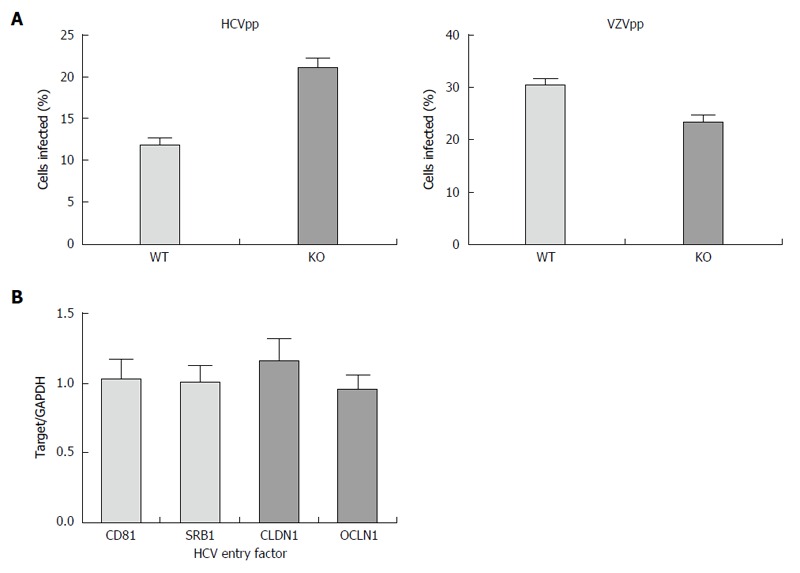
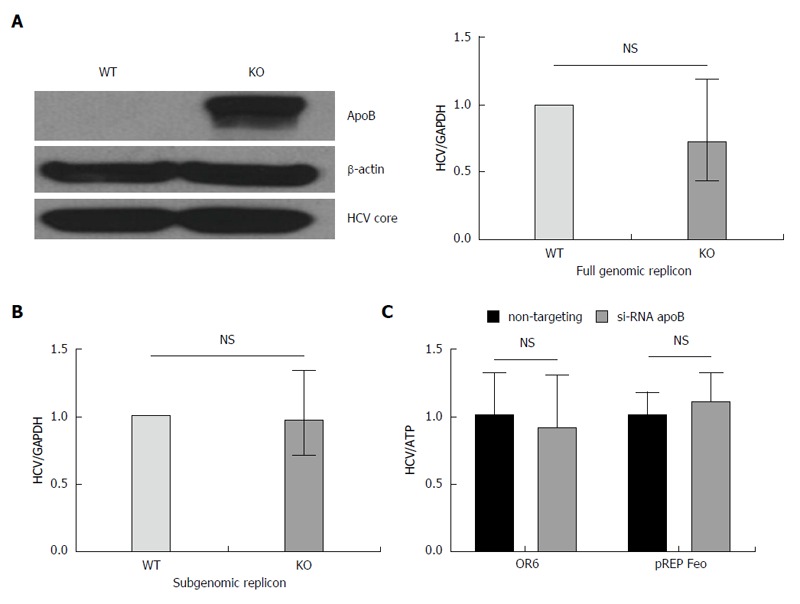
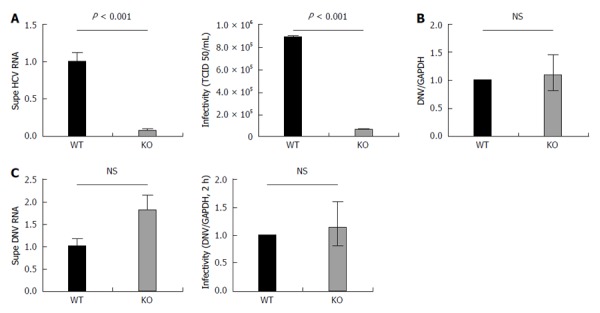
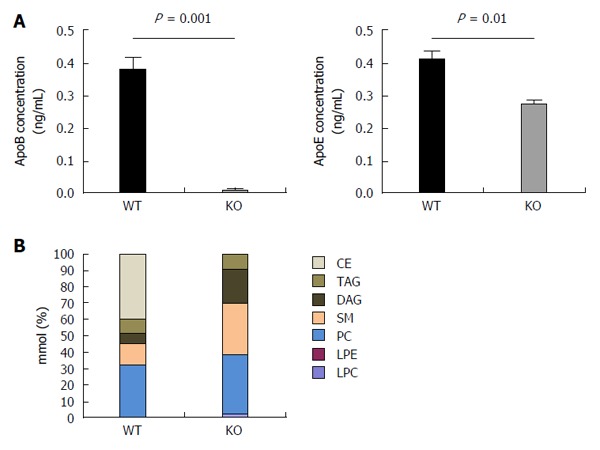
We found that apoB100 is indispensable for HCV infection. Using the JFH-1 fully infectious cell-culture competent virus in Huh 7 hepatoma cells with TALEN-mediated gene deletion of apoB (), we found a significant reduction in HCV RNA and protein levels following infection. Pseudoparticle and replicon models demonstrated that apoB did not play a role in HCV entry or replication. However, the virus produced by cells had significantly diminished infectivity as measured by the TCID-50 method compared to wild-type virus. Lipidomic analysis demonstrated that these virions have a fundamentally altered lipidome, with complete depletion of cholesterol esters. We further demonstrate that inhibition of apoB using mipomersen, an FDA-approved anti-sense oligonucleotide, results in a potent anti-HCV effect and significantly reduces the infectivity of the virus.
ApoB is required for the generation of fully infectious HCV virions, and inhibition of apoB with mipomersen blocks HCV. Targeting lipid metabolic pathways to impair viral infectivity represents a novel host targeted strategy to inhibit HCV.
明确载脂蛋白B100(apoB100)在丙型肝炎病毒(HCV)感染中的作用。
在本研究中,我们利用一种基因编辑工具——转录激活样效应核酸酶(TALENs),构建稳定基因缺失的人肝癌细胞,以评估apoB在HCV中的作用。使用具有感染性的细胞培养适应性HCV、病毒假颗粒、复制子模型和脂质组学分析,我们确定了apoB在病毒生命周期各阶段的作用。我们进一步使用细胞培养适应性HCV研究了美国食品药品监督管理局(FDA)批准的apoB100反义抑制剂米泊美生对HCV的影响,并采用半数组织培养感染剂量(TCID50)法确定其对病毒感染性的影响。
我们发现apoB100对HCV感染不可或缺。在经TALEN介导apoB基因缺失的Huh 7肝癌细胞中使用JFH - 1完全感染性细胞培养适应性病毒,我们发现感染后HCV RNA和蛋白质水平显著降低。假颗粒和复制子模型表明,apoB在HCV进入或复制过程中不起作用。然而,与野生型病毒相比,经TCID - 50法检测,apoB基因缺失细胞产生的病毒感染性显著降低。脂质组学分析表明,这些病毒粒子的脂质组发生了根本性改变,胆固醇酯完全耗尽。我们进一步证明,使用FDA批准的反义寡核苷酸米泊美生抑制apoB会产生有效的抗HCV作用,并显著降低病毒的感染性。
apoB是产生完全感染性HCV病毒粒子所必需的,米泊美生抑制apoB可阻断HCV。靶向脂质代谢途径以损害病毒感染性代表了一种抑制HCV的新型宿主靶向策略。