de Gannes Vidya, Bekele Isaac, Dipchansingh Denny, Wuddivira Mark N, De Cairies Sunshine, Boman Mattias, Hickey William J
Faculty of Food and Agriculture, The University of the West Indies at St. Augustine Trinidad and Tobago.
Ministry of Agriculture, Land and Fisheries, The University of the West Indies at St. Augustine Trinidad and Tobago.
Front Microbiol. 2016 Dec 9;7:1976. doi: 10.3389/fmicb.2016.01976. eCollection 2016.
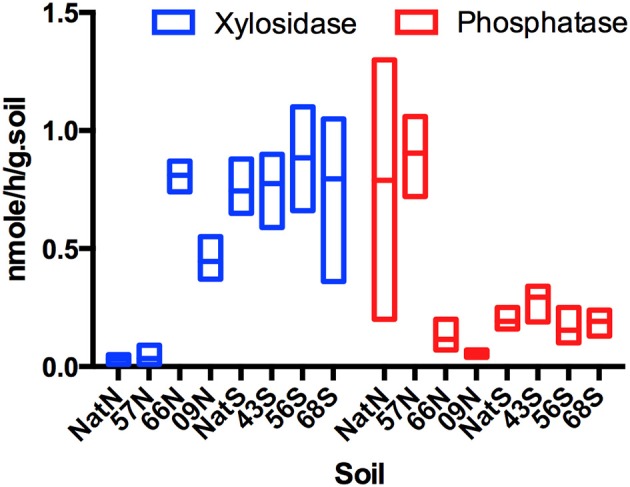
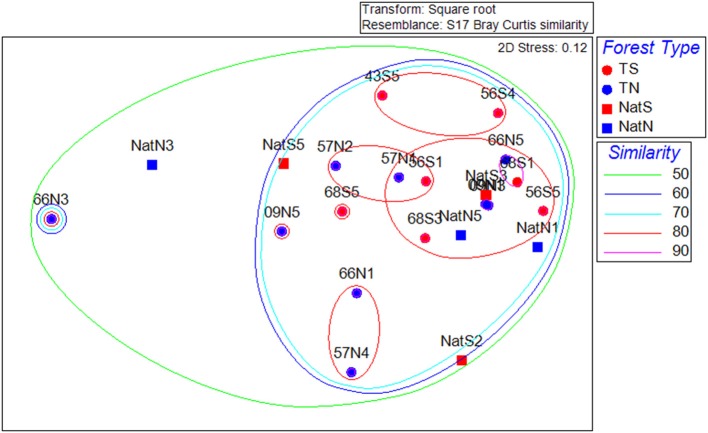
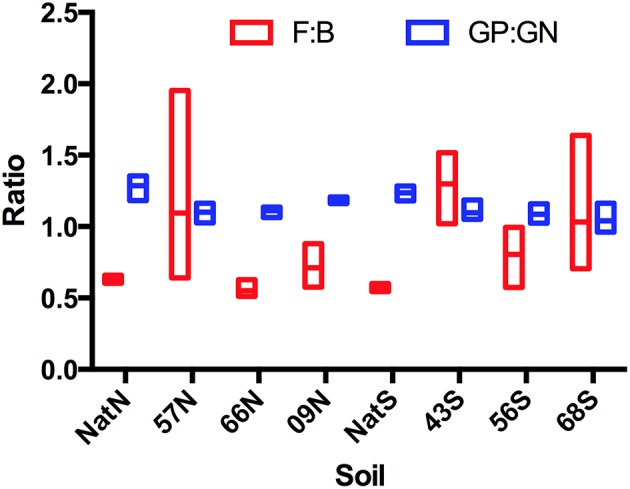
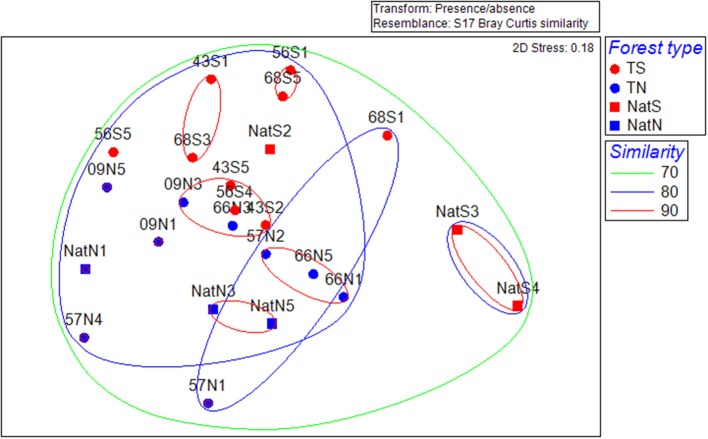
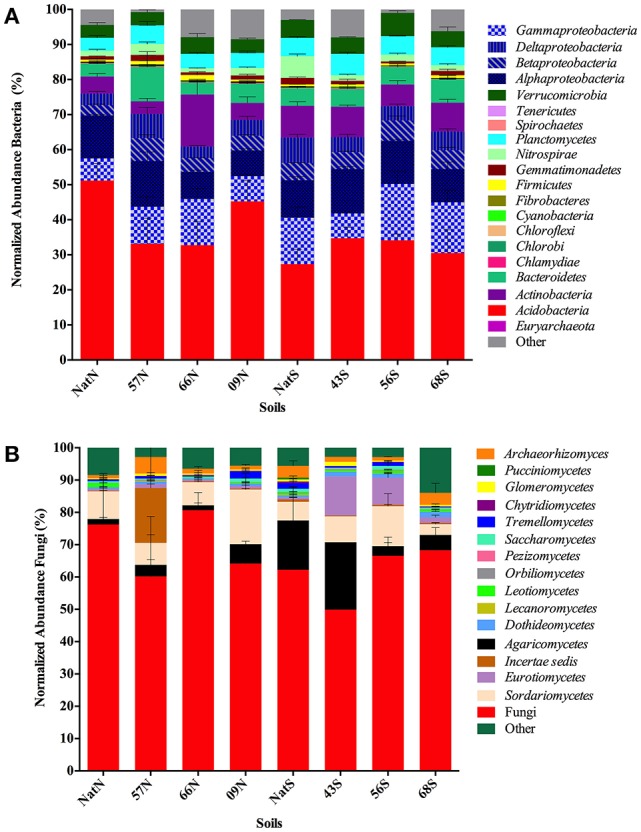
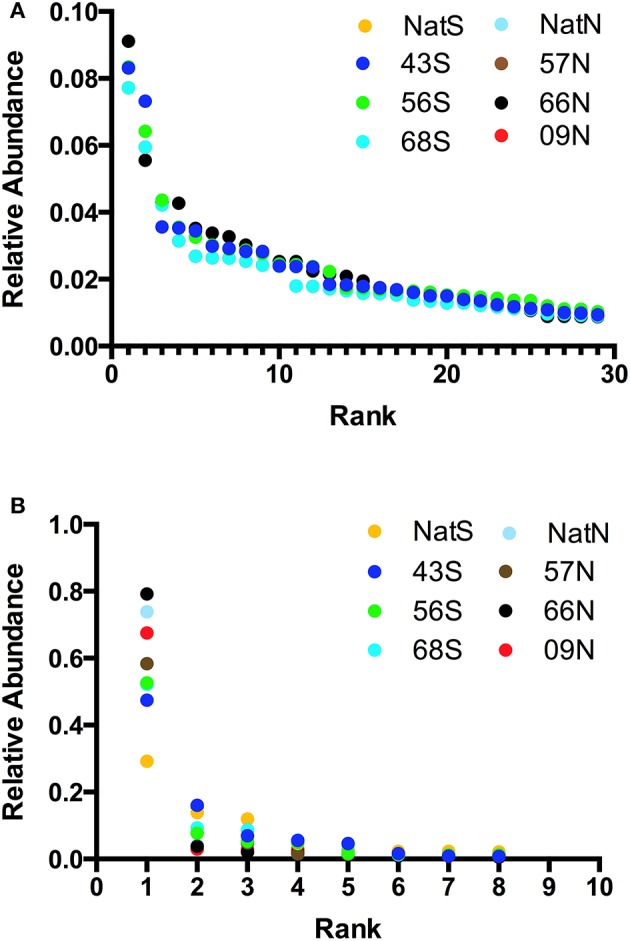
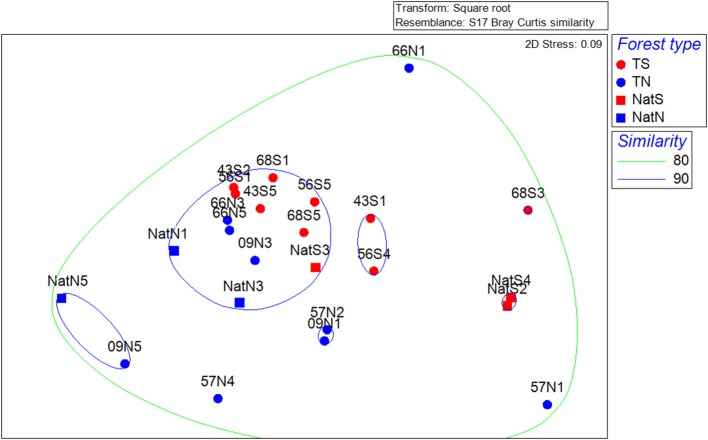
Soil microbial communities can form links between forest trees and functioning of forest soils, yet the impacts of converting diverse native forests to monoculture plantations on soil microbial communities are limited. This study tested the hypothesis that conversion from a diverse native to monoculture ecosystem would be paralleled by a reduction in the diversity of the soil microbial communities. Soils from Teak () plantations and adjacent native forest were examined at two locations in Trinidad. Microbial community structure was determined Illumina sequencing of bacterial 16S rRNA genes and fungal internal transcribed spacer (ITS) regions, and by phospholipid fatty acid (PLFA) analysis. Functional characteristics of microbial communities were assessed by extracellular enzyme activity (EEA). Conversion to Teak plantation had no effect on species richness or evenness of bacterial or fungal communities, and no significant effect on EEA. However, multivariate analyses (nested and two-way crossed analysis of similarity) revealed significant effects ( < 0.05) of forest type (Teak vs. native) upon the composition of the microbial communities as reflected in all three assays of community structure. Univariate analysis of variance identified two bacterial phyla that were significantly more abundant in the native forest soils than in Teak soils ( = 0.0180; = 0.0100) and two more abundant in Teak soils than in native forest (candidate phyla TM7, = 0.0004; WS6, = 0.044). Abundance of an unidentified class of arbuscular mycorrhizal fungi (AMF) was significantly greater in Teak soils, notable because Teak is colonized by AMF rather than by ectomycorrihzal fungi that are symbionts of the native forest tree species. In conclusion, microbial diversity indices were not affected in the conversion of native forest to teak plantation, but examination of specific bacterial taxa showed that there were significant differences in community composition.
土壤微生物群落能够在森林树木与森林土壤功能之间形成联系,然而,将多样的原生林转变为单一栽培人工林对土壤微生物群落的影响却很有限。本研究检验了这样一个假设:从多样的原生生态系统转变为单一栽培生态系统,会伴随着土壤微生物群落多样性的降低。在特立尼达的两个地点,对柚木()人工林和相邻原生林的土壤进行了检测。通过对细菌16S rRNA基因和真菌内部转录间隔区(ITS)区域进行Illumina测序,并采用磷脂脂肪酸(PLFA)分析来确定微生物群落结构。通过细胞外酶活性(EEA)评估微生物群落的功能特征。转变为柚木人工林对细菌或真菌群落的物种丰富度或均匀度没有影响,对EEA也没有显著影响。然而,多变量分析(嵌套和双向交叉相似性分析)表明,森林类型(柚木与原生林)对微生物群落组成具有显著影响(<0.05),这在所有三种群落结构分析中都有所体现。单变量方差分析确定了两个细菌门,在原生林土壤中的丰度显著高于柚木土壤(=0.0180;=0.0100),还有两个在柚木土壤中的丰度高于原生林(候选门TM7,=0.0004;WS6,=0.044)。未鉴定的一类丛枝菌根真菌(AMF)在柚木土壤中的丰度显著更高,值得注意的是,柚木由AMF定殖,而不是由作为原生林树种共生体的外生菌根真菌定殖。总之,原生林转变为柚木人工林时微生物多样性指数未受影响,但对特定细菌类群的检测表明群落组成存在显著差异。