
骨骼中的金属弯曲:是紧急手术的罕见并发症还是技能不足?
Bent Metal in a Bone: A Rare Complication of an Emergent Procedure or a Deficiency in Skill Set?
作者信息
Krishnan Mridula, Lester Katherine, Johnson Amber, Bardeloza Kaye, Edemekong Peter, Berim Ilya
机构信息
Department of Internal Medicine, CHI Creighton University Medical Center, Omaha, NE, USA.
Creighton University School of Medicine, Omaha, NE, USA.
出版信息
Case Rep Crit Care. 2016;2016:4382481. doi: 10.1155/2016/4382481. Epub 2016 Nov 27.
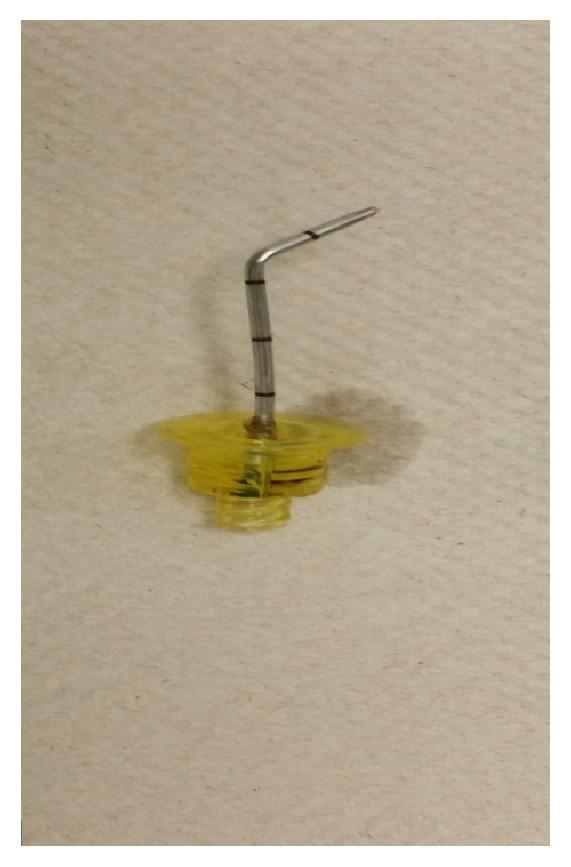
Intraosseous (IO) access is an important consideration in patients with difficult intravenous (IV) access in emergent situations. IO access in adults has become more popular due to the ease of placement and high success rates. The most common sites of access include the proximal tibia and the humeral head. The complications associated are rare but can be catastrophic: subsequent amputation of a limb has been described in the literature. We report a 25-year-old female presenting with diabetic ketoacidosis (DKA) in whom emergent IO access was complicated by needle bending inside the humerus. Conventional bedside removal was impossible and required surgical intervention in operating room.
在紧急情况下,对于静脉穿刺困难的患者,骨内(IO)通路是一个重要的考虑途径。由于放置简便且成功率高,成人的骨内通路已变得更为常用。最常见的穿刺部位包括胫骨近端和肱骨头。相关并发症虽罕见但可能是灾难性的:文献中曾描述过随后肢体截肢的情况。我们报告了一名25岁患有糖尿病酮症酸中毒(DKA)的女性患者,其紧急骨内通路穿刺因针在肱骨内弯曲而出现并发症。常规的床边取出无法实现,需要在手术室进行手术干预。

 Zotero 插件