Mearin F, Ciriza C, Mínguez M, Rey E, Mascort J J, Peña E, Cañones P, Júdez J
Coordinación de la guía de práctica clínica (GPC), Comité Roma de Trastornos Funcionales Intestinales, Asociación Española de Gastroenterología (AEG), Centro Médico Teknon, Barcelona, España.
Grupo de Trastornos Funcionales, Sociedad Española de Patología Digestiva (SEPD), Hospital Universitario Doce de Octubre, Madrid, España.
Aten Primaria. 2017 Jan;49(1):42-55. doi: 10.1016/j.aprim.2016.11.003. Epub 2016 Dec 24.
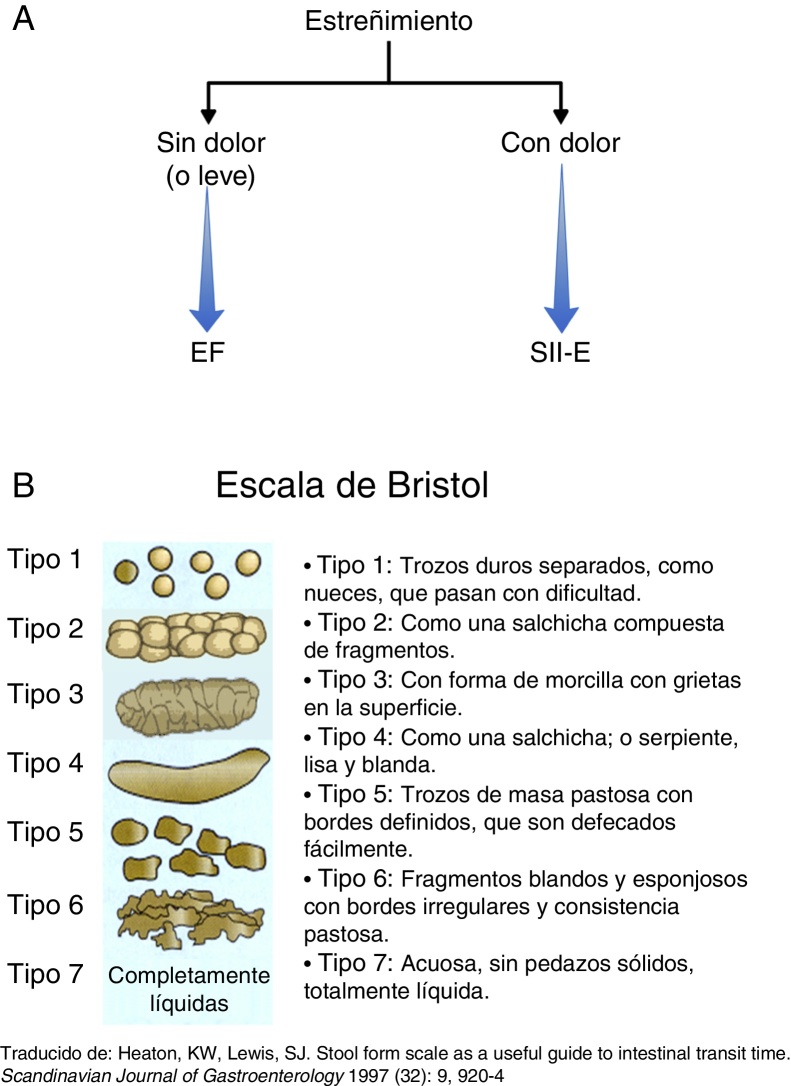
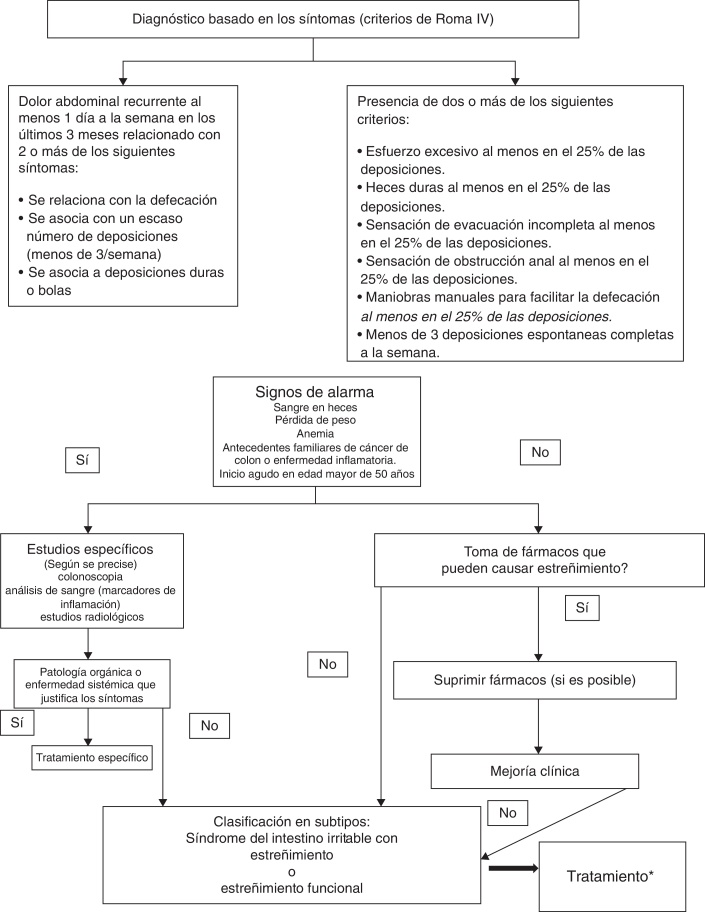
In this Clinical practice guide, an analysis is made of the diagnosis and treatment of adult patients with constipation and abdominal discomfort, under the spectrum of irritable bowel syndrome and functional constipation. These have an important personal, health and social impact, affecting the quality of life of these patients. In irritable bowel syndrome with a predominance of constipation, this is the predominant change in bowel movements, with recurrent abdominal pain, bloating and frequent abdominal distension. Constipation is characterised by infrequent or difficulty in bowel movements, associated with excessive straining during bowel movement or sensation of incomplete evacuation. There is often no underling cause, with an intestinal functional disorder being considered. They have many clinical and pathophysiological similarities, with a similar response of the constipation to common drugs. The fundamental difference is the presence or absence of pain, but not in a way evaluable way; "all or nothing". The severity depends on the intensity of bowel symptoms and other factors, a combination of gastrointestinal and extra-intestinal symptoms, level of involvement, forms of perception, and behaviour. The Rome criteria diagnose functional bowel disorders. This guide is adapted to the Rome criteria IV (May 2016) and in this first part an analysis is made of the alarm criteria, diagnostic tests, and the criteria for referral between Primary Care and Digestive Disease specialists. In the second part, a review will be made of the therapeutic alternatives available (exercise, diet, drug therapies, neurostimulation of sacral roots, or surgery), making practical recommendations for each one of them.
本临床实践指南分析了肠易激综合征和功能性便秘范围内成年便秘及腹部不适患者的诊断和治疗。这些病症对个人、健康和社会有重要影响,会影响这些患者的生活质量。在以便秘为主的肠易激综合征中,排便习惯改变是主要特征,伴有反复腹痛、腹胀和频繁腹部膨隆。便秘的特点是排便次数少或排便困难,伴有排便时过度用力或排便不尽感。通常没有潜在病因,考虑为肠道功能紊乱。它们在临床和病理生理方面有许多相似之处,便秘对常用药物的反应也相似。根本区别在于是否存在疼痛,但并非以可评估的方式;“全有或全无”。严重程度取决于肠道症状的强度以及其他因素,包括胃肠道和肠外症状的组合、受累程度、感知形式和行为。罗马标准用于诊断功能性肠病。本指南符合罗马标准IV(2016年5月),在第一部分中分析了警示标准、诊断测试以及初级保健与消化疾病专科医生之间的转诊标准。在第二部分中,将对可用的治疗选择(运动、饮食、药物治疗、骶神经根神经刺激或手术)进行综述,并针对每一种治疗方法提出实用建议。