Lindsay Richard J, Kershaw Michael J, Pawlowska Bogna J, Talbot Nicholas J, Gudelj Ivana
School of Biosciences, University of Exeter, Exeter, United Kingdom.
Elife. 2016 Dec 28;5:e18678. doi: 10.7554/eLife.18678.
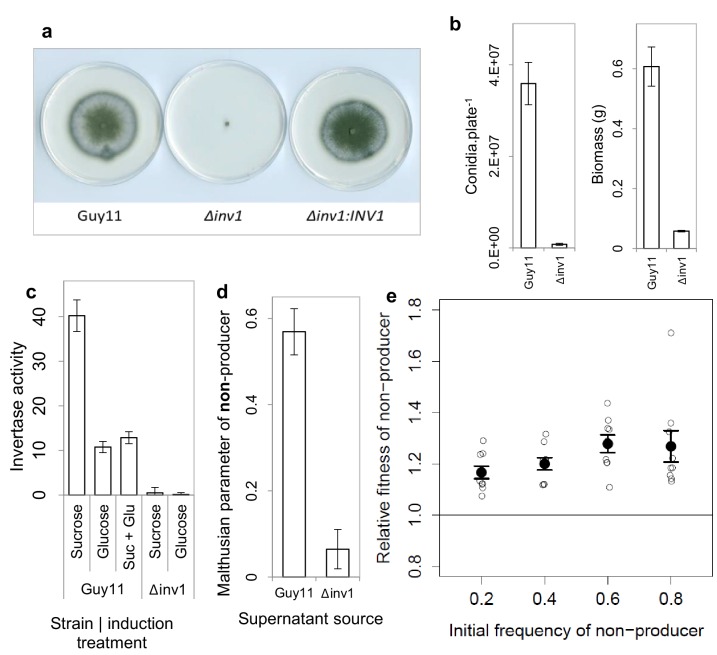
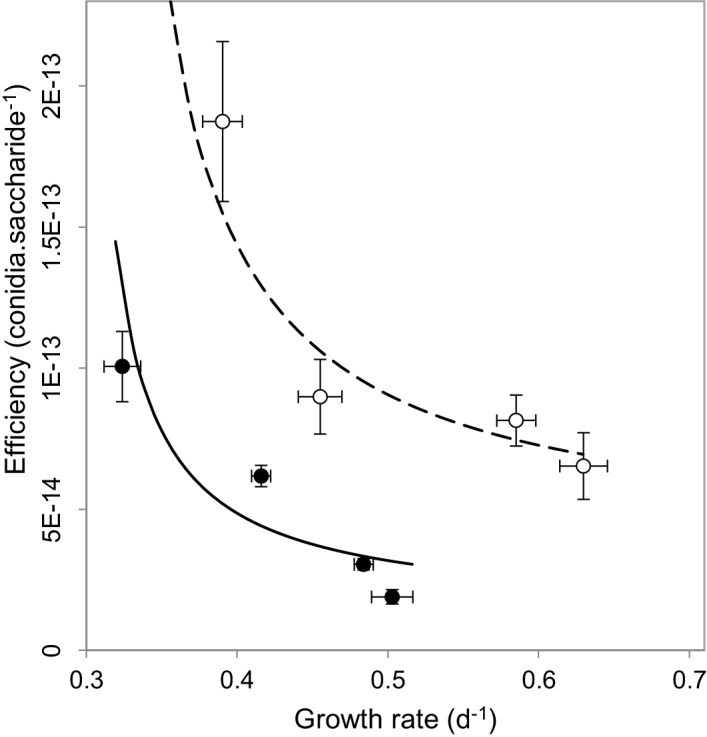
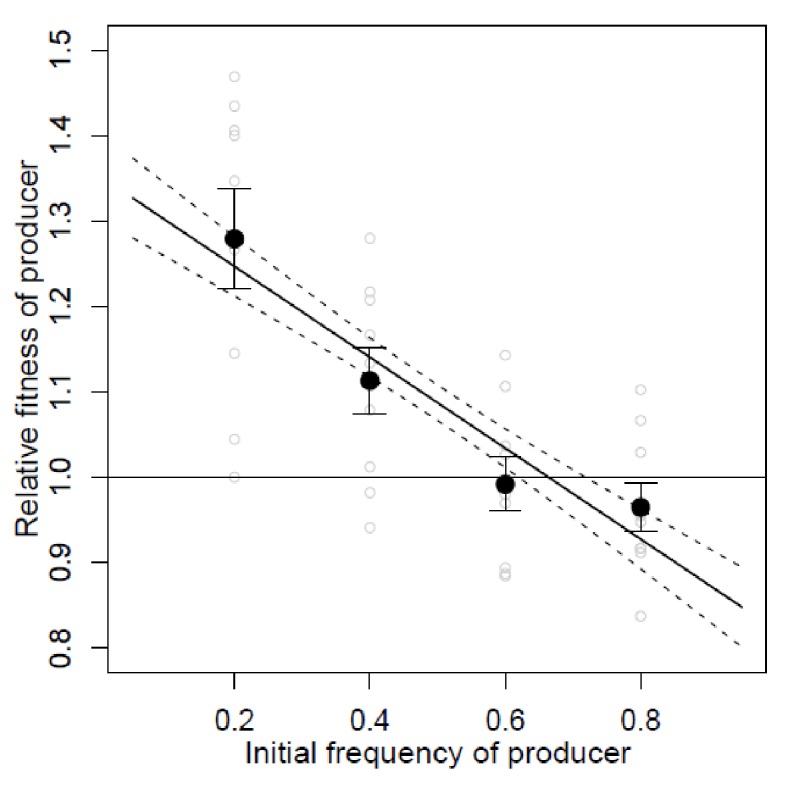
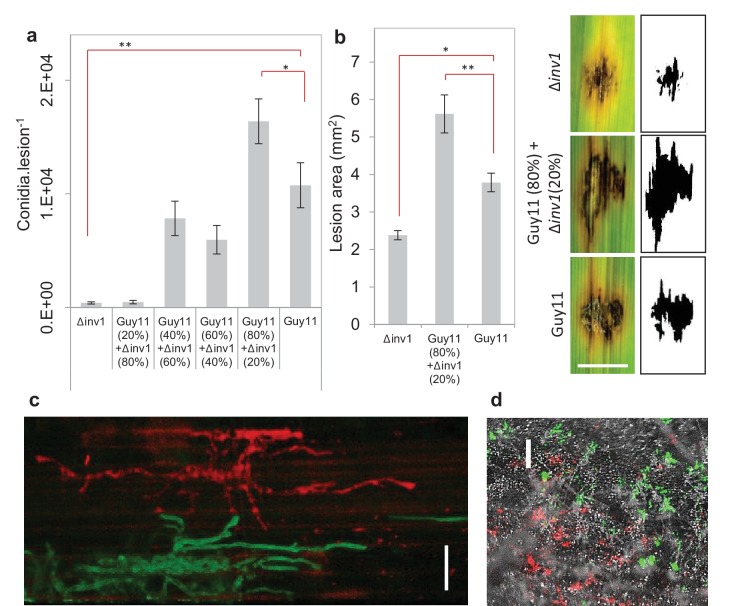
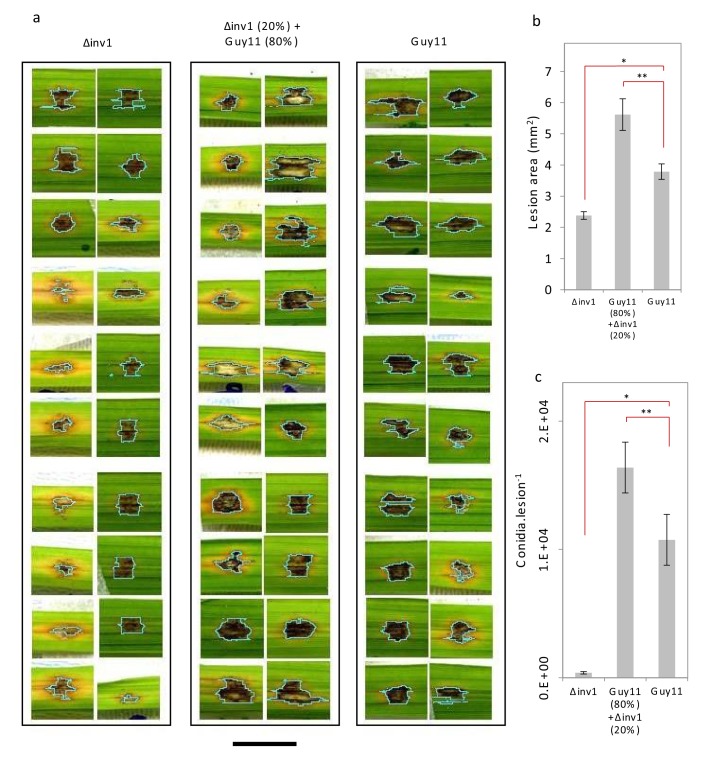
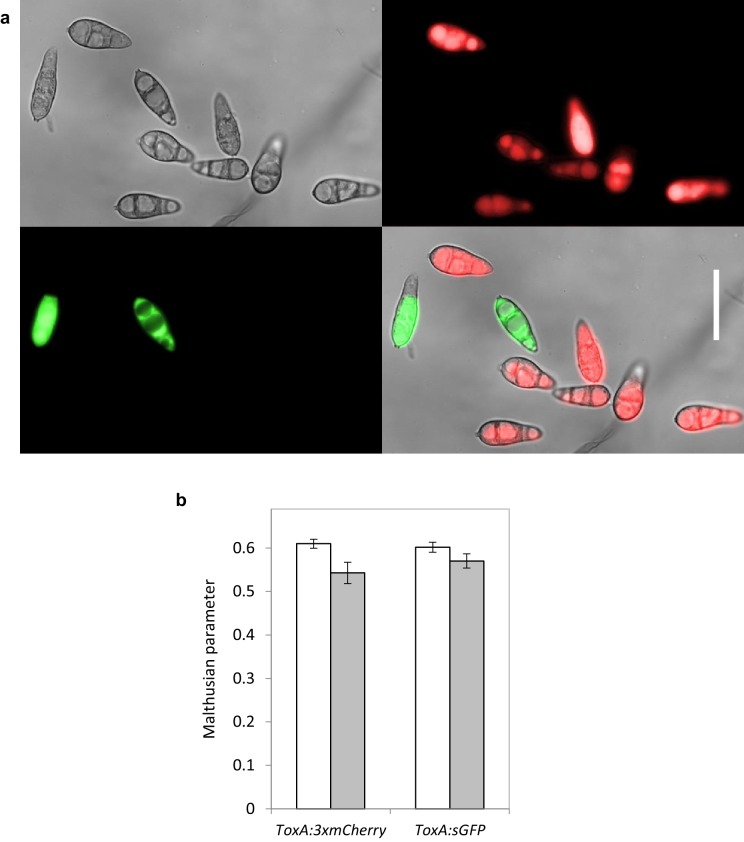
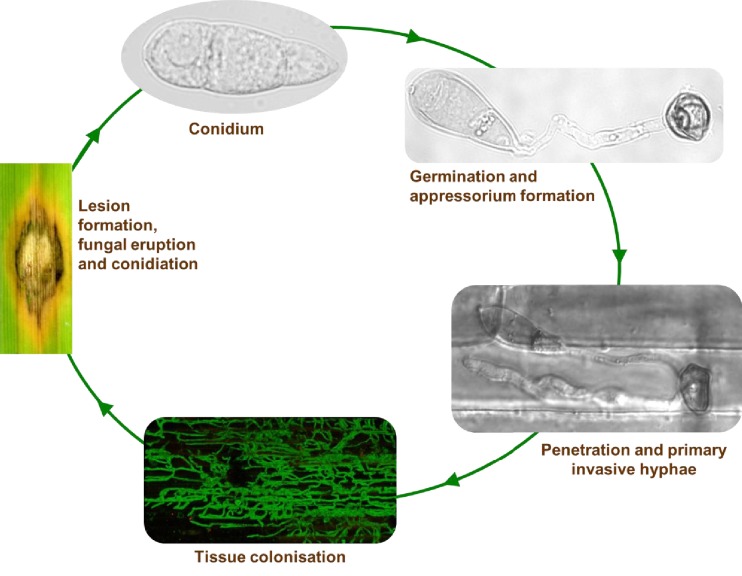
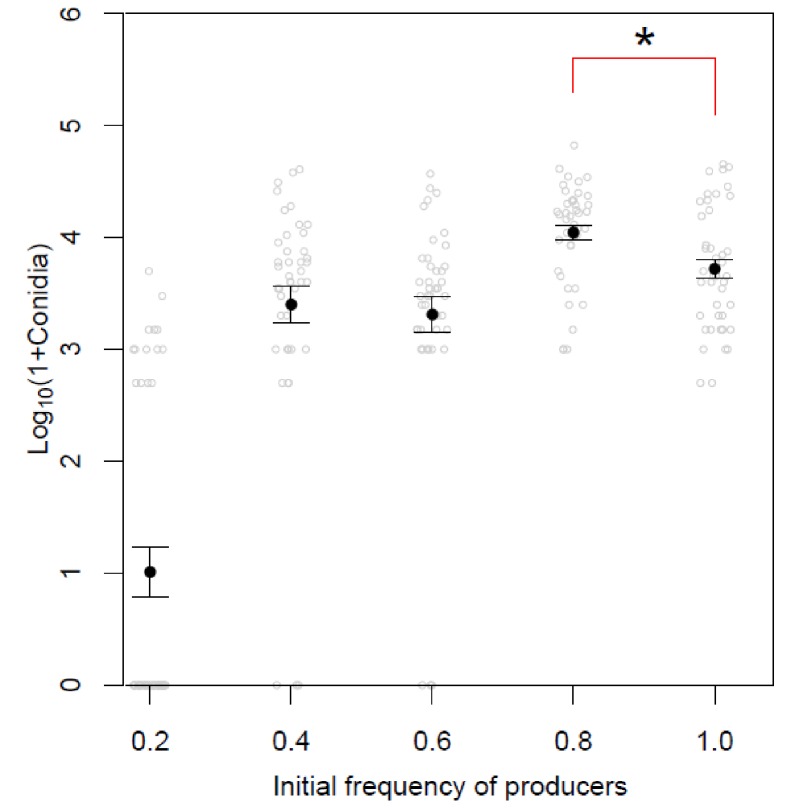
Existing theory, empirical, clinical and field research all predict that reducing the virulence of individuals within a pathogen population will reduce the overall virulence, rendering disease less severe. Here, we show that this seemingly successful disease management strategy can fail with devastating consequences for infected hosts. We deploy cooperation theory and a novel synthetic system involving the rice blast fungus . In vivo infections of rice demonstrate that virulence is enhanced, quite paradoxically, when a public good mutant is present in a population of high-virulence pathogens. We reason that during infection, the fungus engages in multiple cooperative acts to exploit host resources. We establish a multi-trait cooperation model which suggests that the observed failure of the virulence reduction strategy is caused by the interference between different social traits. Multi-trait cooperative interactions are widespread, so we caution against the indiscriminant application of anti-virulence therapy as a disease-management strategy.
现有的理论、实证、临床和实地研究均预测,降低病原体群体中个体的毒力将降低总体毒力,使疾病不那么严重。在此,我们表明,这种看似成功的疾病管理策略可能会失败,并给受感染宿主带来毁灭性后果。我们运用合作理论和一个涉及稻瘟病菌的新型合成系统。水稻的体内感染表明,非常矛盾的是,当一种公共物品突变体存在于高毒力病原体群体中时,毒力会增强。我们推断,在感染过程中,真菌会进行多种合作行为来利用宿主资源。我们建立了一个多性状合作模型,该模型表明,观察到的毒力降低策略的失败是由不同社会性状之间的干扰引起的。多性状合作相互作用广泛存在,因此我们告诫不要不加区分地将抗毒力疗法作为一种疾病管理策略。