Murakami Takashi, Igarashi Kentaro, Kawaguchi Kei, Kiyuna Tasuku, Zhang Yong, Zhao Ming, Hiroshima Yukihiko, Nelson Scott D, Dry Sarah M, Li Yunfeng, Yanagawa Jane, Russell Tara, Federman Noah, Singh Arun, Elliott Irmina, Matsuyama Ryusei, Chishima Takashi, Tanaka Kuniya, Endo Itaru, Eilber Fritz C, Hoffman Robert M
AntiCancer, Inc., San Diego, California, USA.
Department of Surgery, University of California, San Diego, California, USA.
Oncotarget. 2017 Jan 31;8(5):8035-8042. doi: 10.18632/oncotarget.14040.
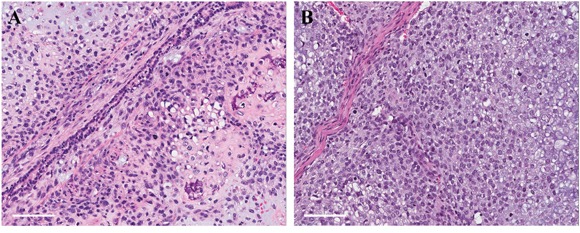
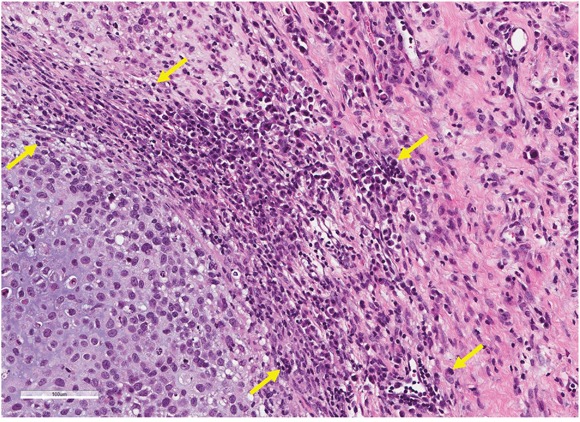
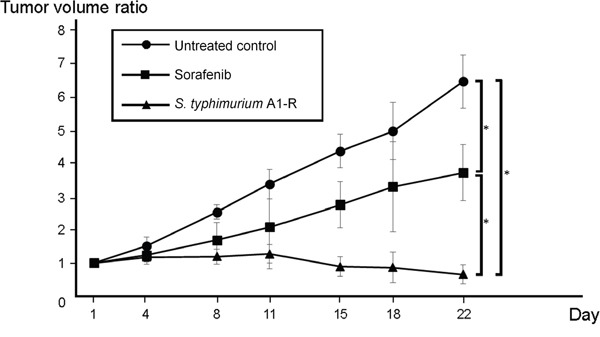
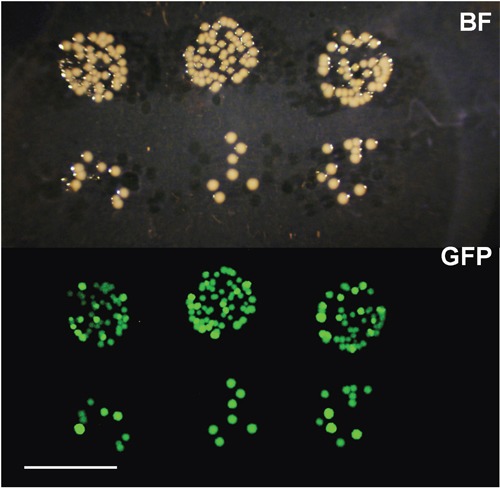
Osteosarcoma occurs mostly in children and young adults, who are treated with multiple agents in combination with limb-salvage surgery. However, the overall 5-year survival rate for patients with recurrent or metastatic osteosarcoma is 20-30% which has not improved significantly over 30 years. Refractory patients would benefit from precise individualized therapy. We report here that a patient-derived osteosarcoma growing in a subcutaneous nude-mouse model was regressed by tumor-targeting Salmonella typhimurium A1-R (S. typhimurium A1-R, p<0.001 compared to untreated control). The osteosarcoma was only partially sensitive to the molecular-targeting drug sorafenib, which did not arrest its growth. S. typhimurium A1-R was significantly more effective than sorafenib (P <0.001). S. typhimurium grew in the treated tumors and caused extensive necrosis of the tumor tissue. These data show that S. typhimurium A1-R is powerful therapy for an osteosarcoma patient-derived xenograft model.
骨肉瘤多发生于儿童和青年,治疗方法为多种药物联合保肢手术。然而,复发或转移性骨肉瘤患者的总体5年生存率为20%-30%,30多年来并无显著提高。难治性患者将从精准个体化治疗中获益。我们在此报告,在皮下裸鼠模型中生长的患者源性骨肉瘤通过靶向肿瘤的鼠伤寒沙门氏菌A1-R(鼠伤寒沙门氏菌A1-R,与未治疗的对照组相比,p<0.001)而消退。骨肉瘤对分子靶向药物索拉非尼仅部分敏感,该药物并未阻止其生长。鼠伤寒沙门氏菌A1-R比索拉非尼显著更有效(P<0.001)。鼠伤寒沙门氏菌在治疗的肿瘤中生长并导致肿瘤组织广泛坏死。这些数据表明,鼠伤寒沙门氏菌A1-R对患者源性骨肉瘤异种移植模型是一种有效的治疗方法。