Abdullah M, Kamarudin S K, Shyuan L K
Fuel Cell Institute, Universiti Kebangsaan Malaysia, 43600 UKM, Bangi, Selangor, Malaysia.
Department of Chemical and Process Engineering, Faculty of Engineering and Built Environment, Universiti Kebangsaan Malaysia, 43600 UKM, Bangi, Selangor, Malaysia.
Nanoscale Res Lett. 2016 Dec;11(1):553. doi: 10.1186/s11671-016-1587-2. Epub 2016 Dec 28.
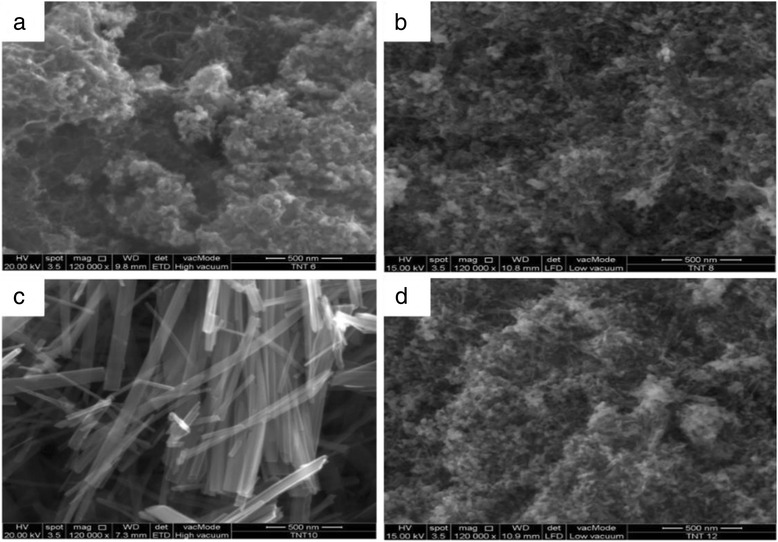
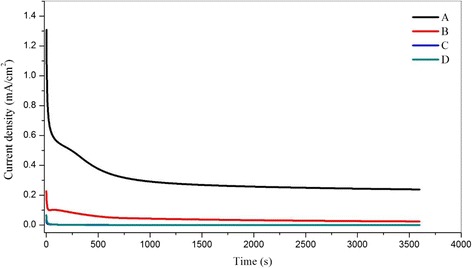
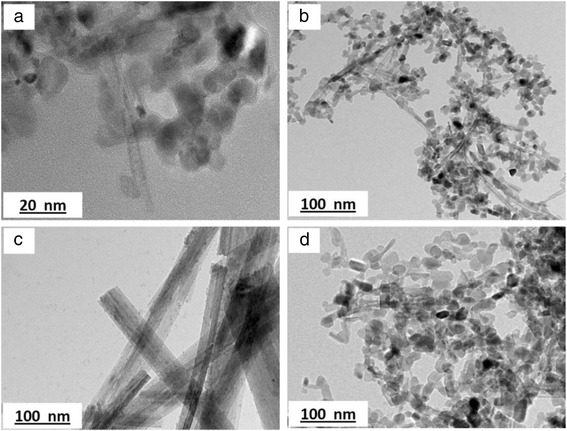
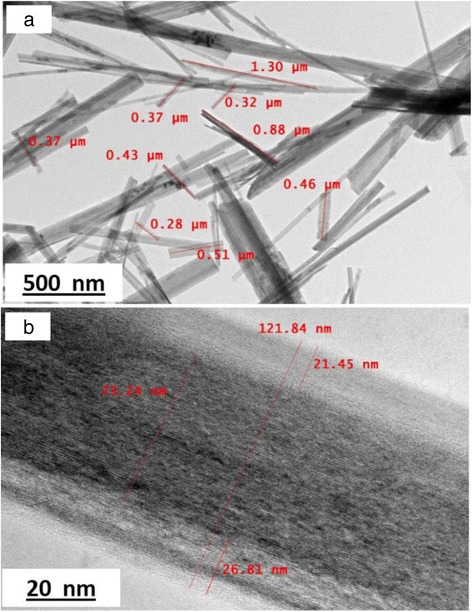
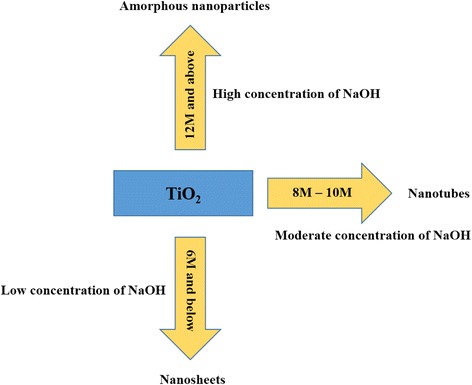
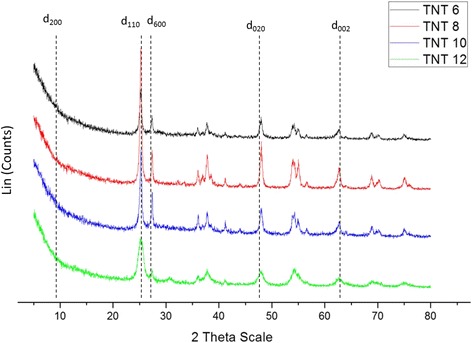
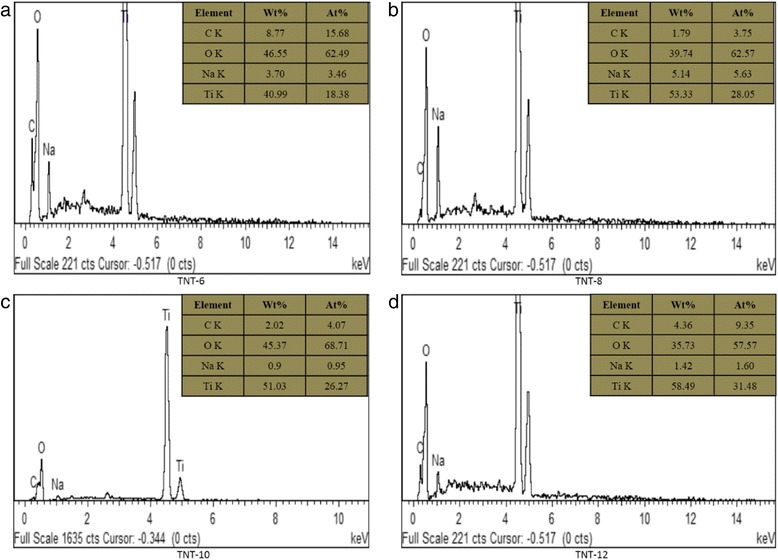
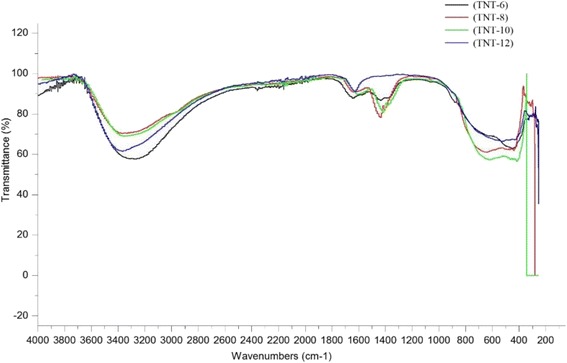
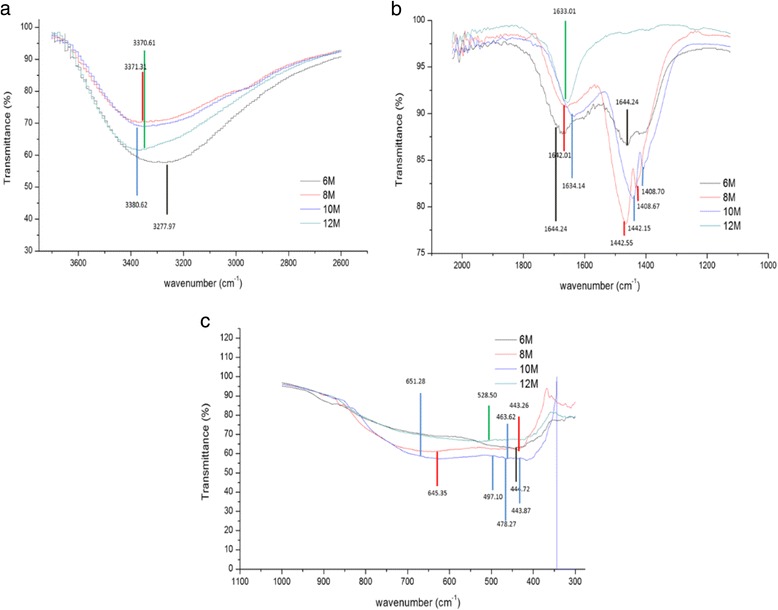
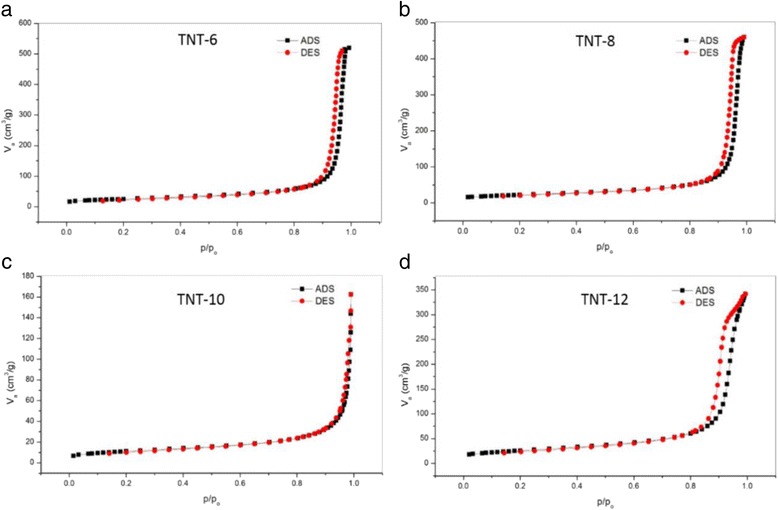
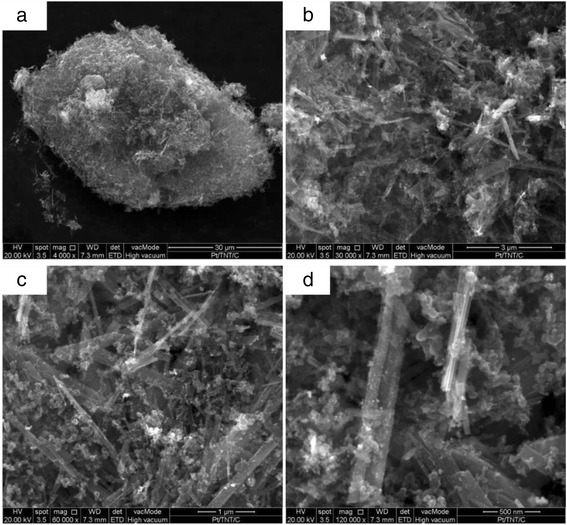
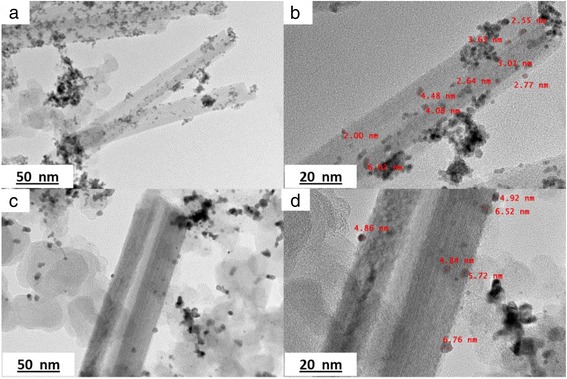
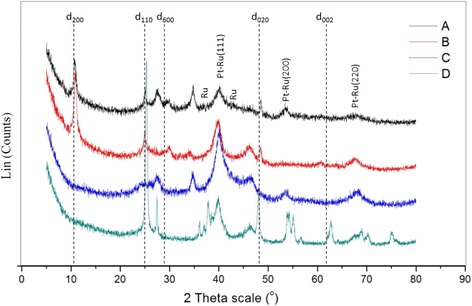
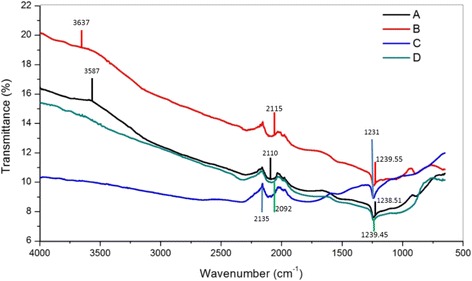
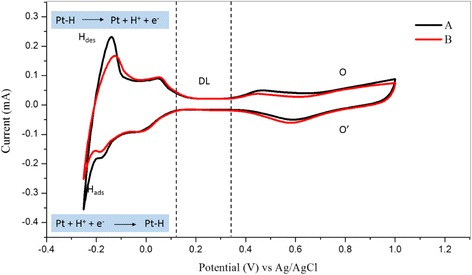
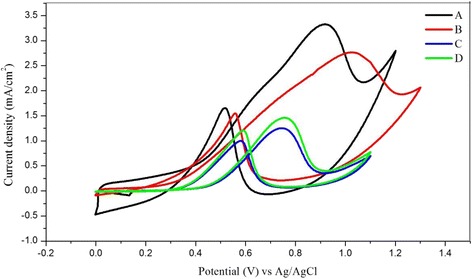
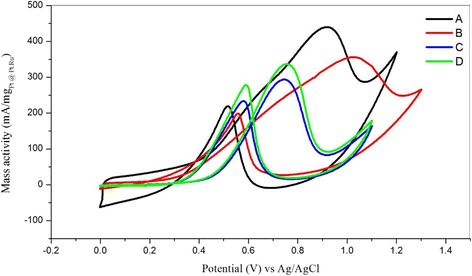
In this study, TiO nanotubes (TNTs) were synthesized via a hydrothermal method using highly concentrated NaOH solutions varying from 6 to 12 M at 180 °C for 48 h. The effects of the NaOH concentration and the TNT crystal structure on the performance for methanol oxidation were investigated to determine the best catalyst support for Pt-based catalysts. The results showed that TNTs produced with 10 M NaOH exhibited a length and a diameter of 550 and 70 nm, respectively; these TNTs showed the best nanotube structure and were further used as catalyst supports for a Pt-based catalyst in a direct methanol fuel cell. The synthesized TNT and Pt-based catalysts were analysed by FESEM, TEM, BET, EDX, XRD and FTIR. The electrochemical performance of the catalysts was investigated using cyclic voltammetry (CV) and chronoamperometric (CA) analysis to further understand the methanol oxidation in the direct methanol fuel cell (DMFC). Finally, the result proves that Pt-Ru/TNT-C catalyst shows high performance in methanol oxidation as the highest current density achieved at 3.3 mA/cm (normalised by electrochemically active surface area) and high catalyst tolerance towards poisoning species was established.
在本研究中,通过水热法在180℃下使用浓度为6至12M的高浓度NaOH溶液合成TiO纳米管(TNTs),反应48小时。研究了NaOH浓度和TNT晶体结构对甲醇氧化性能的影响,以确定用于铂基催化剂的最佳催化剂载体。结果表明,用10M NaOH制备的TNTs长度和直径分别为550和70nm;这些TNTs表现出最佳的纳米管结构,并进一步用作直接甲醇燃料电池中铂基催化剂的催化剂载体。通过场发射扫描电子显微镜(FESEM)、透射电子显微镜(TEM)、比表面积分析仪(BET)、能量散射X射线光谱仪(EDX)、X射线衍射仪(XRD)和傅里叶变换红外光谱仪(FTIR)对合成的TNT和铂基催化剂进行了分析。使用循环伏安法(CV)和计时电流法(CA)分析研究了催化剂的电化学性能,以进一步了解直接甲醇燃料电池(DMFC)中的甲醇氧化。最后,结果证明Pt-Ru/TNT-C催化剂在甲醇氧化中表现出高性能,在3.3mA/cm²(通过电化学活性表面积归一化)时实现了最高电流密度,并且建立了对中毒物质的高催化剂耐受性。