Tare Meghana, Sarkar Ankita, Bedi Shimpi, Kango-Singh Madhuri, Singh Amit
Department of Biology, University of Dayton, Dayton, OH, USA.
Premedical Program, University of Dayton, Dayton, OH, USA.
Cell Death Dis. 2016 Dec 29;7(12):e2566. doi: 10.1038/cddis.2016.338.
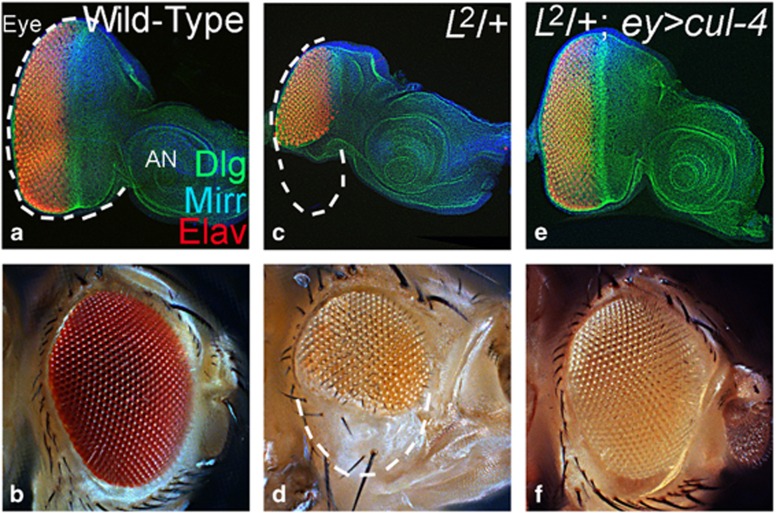
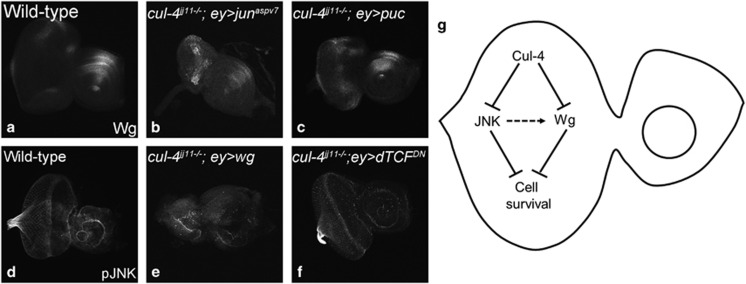
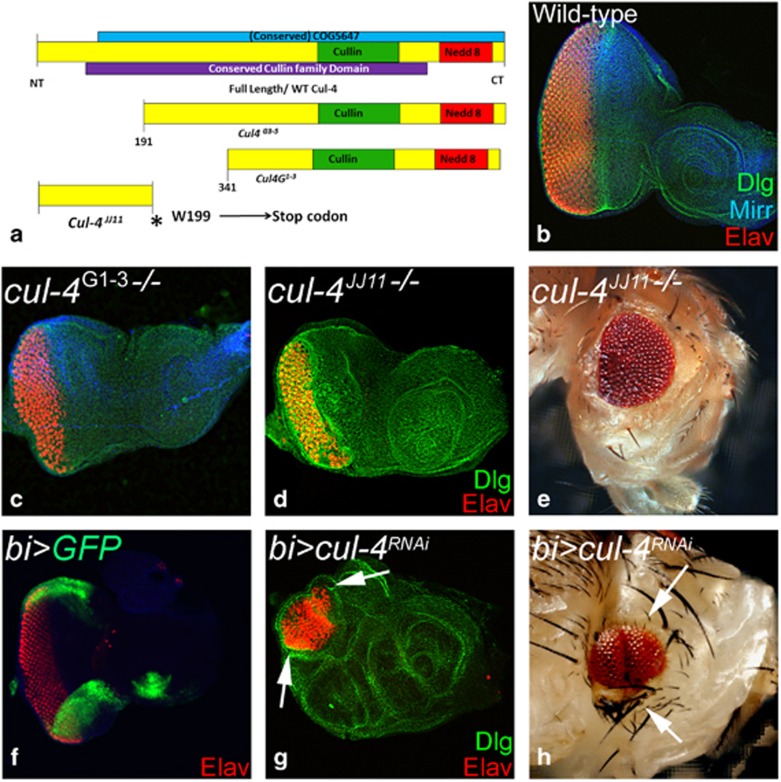
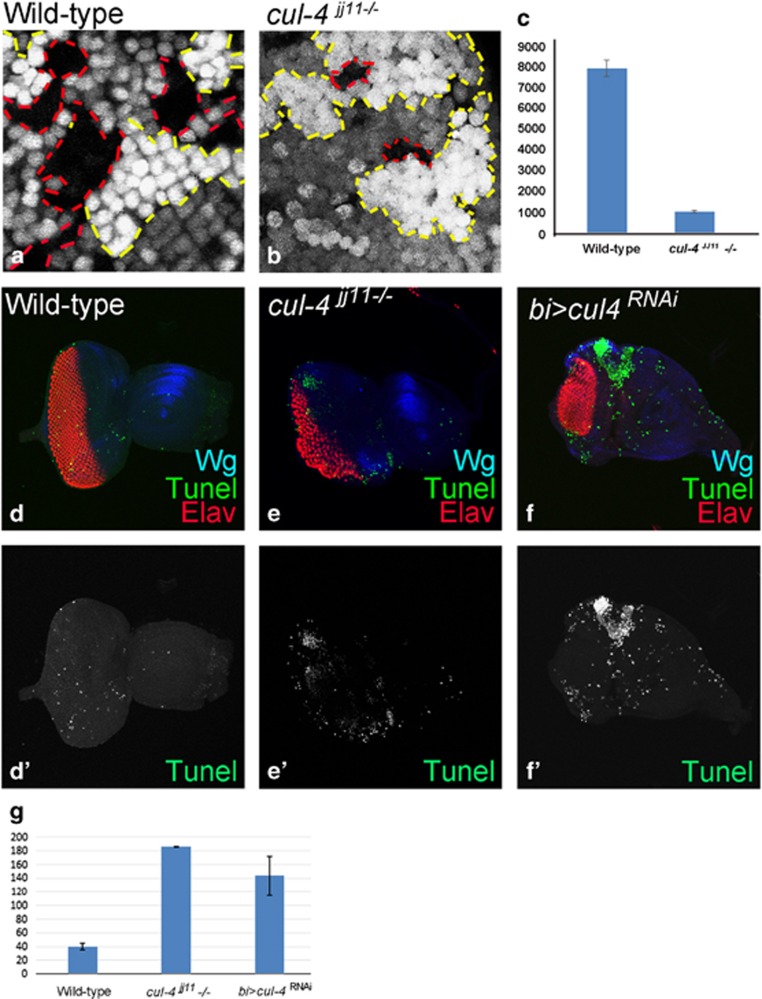
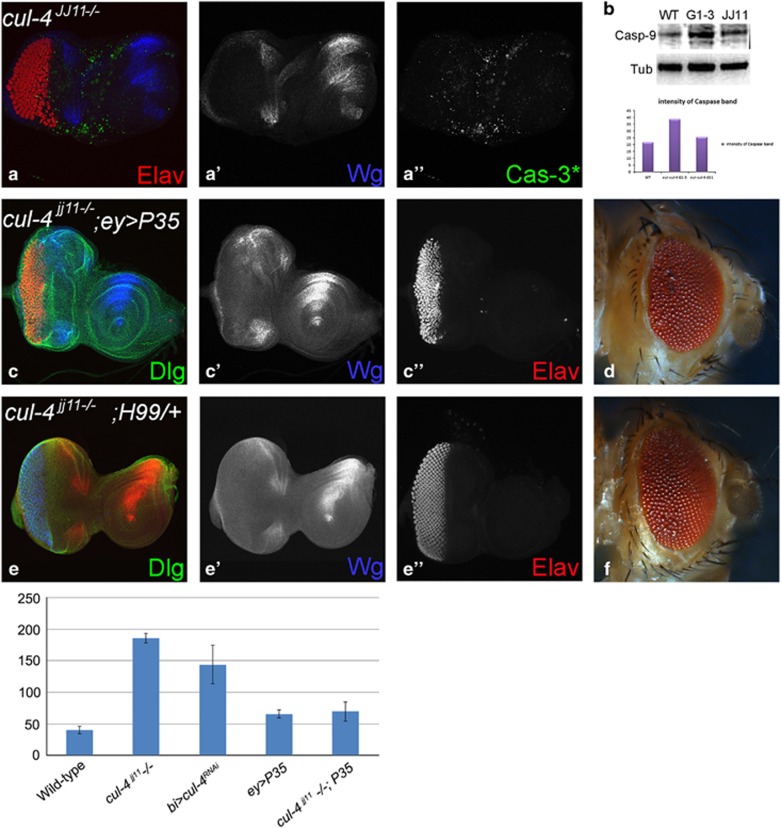
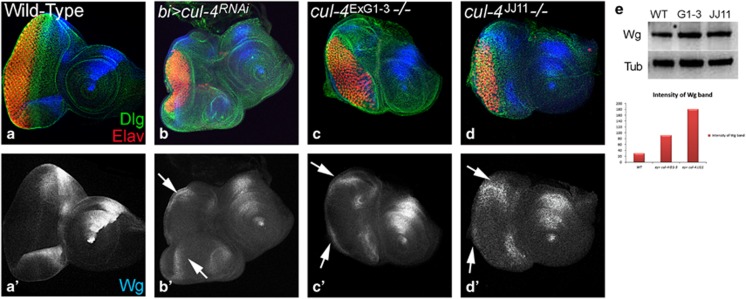
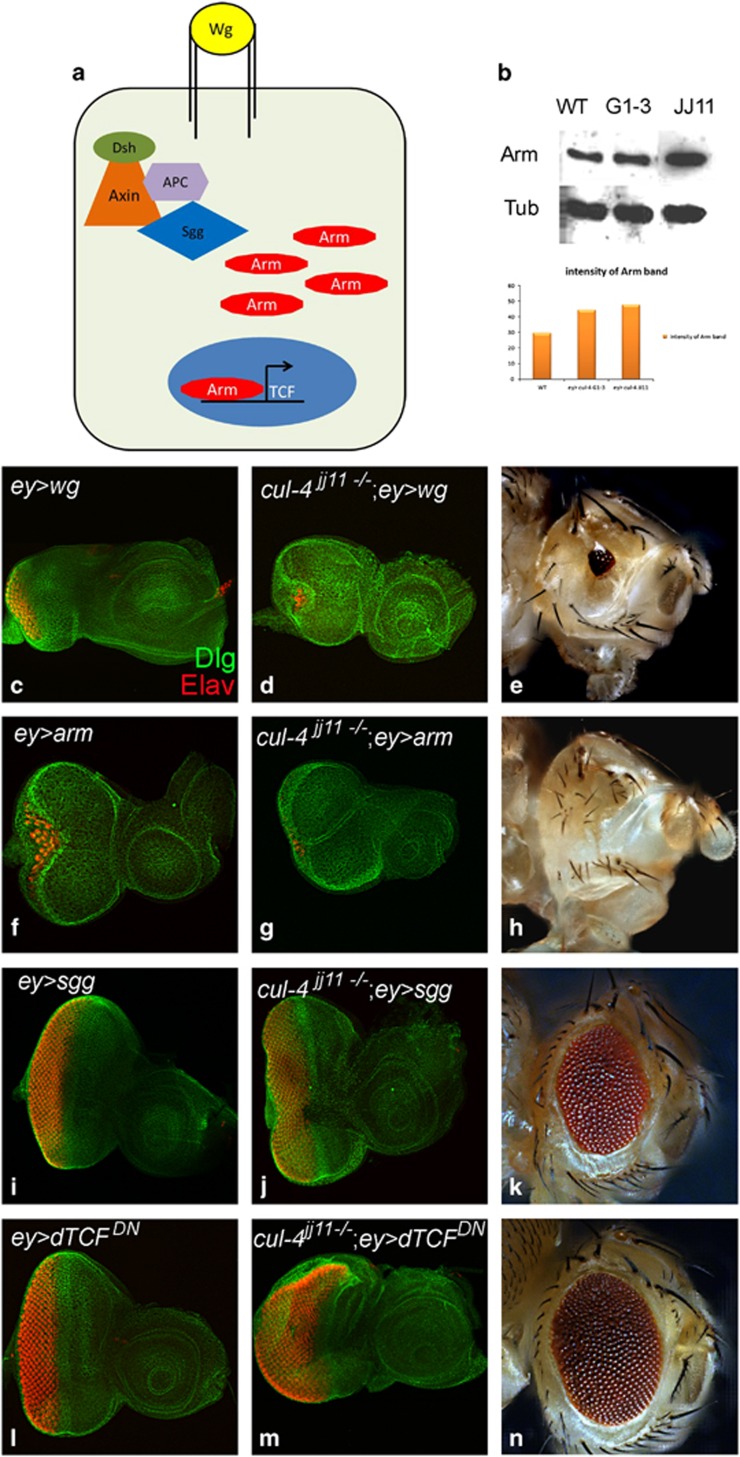
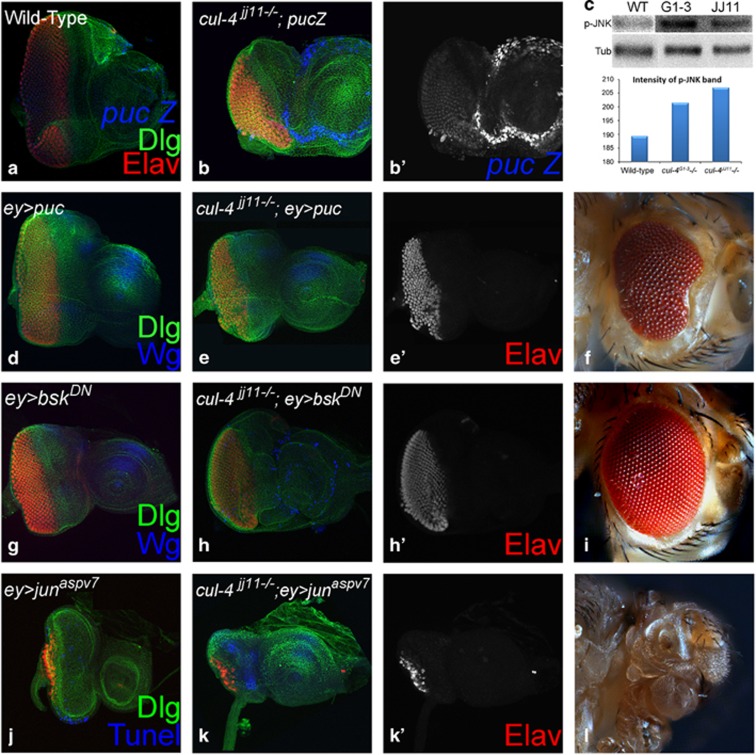
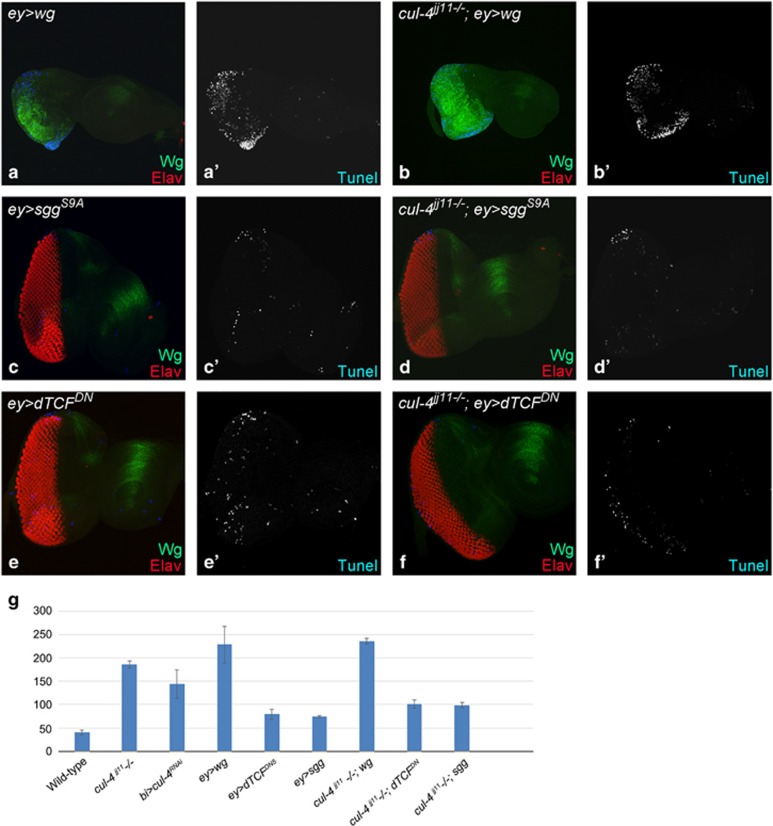
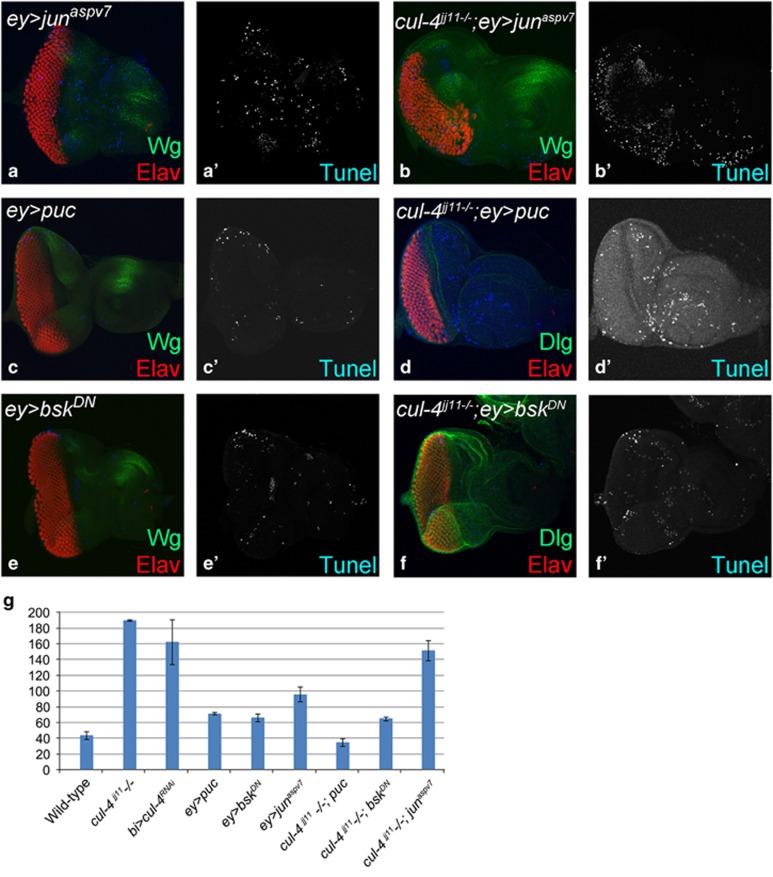
In all multicellular organisms, the fundamental processes of cell proliferation and cell death are crucial for growth regulation during organogenesis. Strict regulation of cell death is important to maintain tissue homeostasis by affecting processes like regulation of cell number, and elimination of unwanted/unfit cells. The developing Drosophila eye is a versatile model to study patterning and growth, where complex signaling pathways regulate growth and cell survival. However, the molecular mechanisms underlying regulation of these processes is not fully understood. In a gain-of-function screen, we found that misexpression of cullin-4 (cul-4), an ubiquitin ligase, can rescue reduced eye mutant phenotypes. Previously, cul-4 has been shown to regulate chromatin remodeling, cell cycle and cell division. Genetic characterization of cul-4 in the developing eye revealed that loss-of-function of cul-4 exhibits a reduced eye phenotype. Analysis of twin-spots showed that in comparison with their wild-type counterparts, the cul-4 loss-of-function clones fail to survive. Here we show that cul-4 clones are eliminated by induction of cell death due to activation of caspases. Aberrant activation of signaling pathways is known to trigger cell death in the developing eye. We found that Wingless (Wg) and c-Jun-amino-terminal-(NH)-Kinase (JNK) signaling are ectopically induced in cul-4 mutant clones, and these signals co-localize with the dying cells. Modulating levels of Wg and JNK signaling by using agonists and antagonists of these pathways demonstrated that activation of Wg and JNK signaling enhances cul-4 mutant phenotype, whereas downregulation of Wg and JNK signaling rescues the cul-4 mutant phenotypes of reduced eye. Here we present evidences to demonstrate that cul-4 is involved in restricting Wg signaling and downregulation of JNK signaling-mediated cell death during early eye development. Overall, our studies provide insights into a novel role of cul-4 in promoting cell survival in the developing Drosophila eye.
在所有多细胞生物中,细胞增殖和细胞死亡的基本过程对于器官发生过程中的生长调节至关重要。严格调控细胞死亡对于通过影响细胞数量调节和清除不需要/不合适的细胞等过程来维持组织稳态很重要。发育中的果蝇眼睛是研究图案形成和生长的通用模型,其中复杂的信号通路调节生长和细胞存活。然而,这些过程调控的分子机制尚未完全了解。在一项功能获得性筛选中,我们发现泛素连接酶cullin-4(cul-4)的错误表达可以挽救小眼突变体表型。此前,cul-4已被证明可调节染色质重塑、细胞周期和细胞分裂。cul-4在发育中的眼睛中的遗传特征表明,cul-4功能丧失表现出小眼表型。双斑分析表明,与野生型对应物相比,cul-4功能丧失克隆无法存活。我们在此表明,cul-4克隆因半胱天冬酶激活导致细胞死亡而被清除。已知信号通路的异常激活会在发育中的眼睛中触发细胞死亡。我们发现,无翅(Wg)和c-Jun氨基末端(NH)激酶(JNK)信号在cul-4突变克隆中异位诱导,并且这些信号与死亡细胞共定位。使用这些通路的激动剂和拮抗剂调节Wg和JNK信号水平表明,Wg和JNK信号激活增强cul-4突变体表型,而Wg和JNK信号下调可挽救cul-4小眼突变体表型。我们在此提供证据证明cul-4在早期眼睛发育过程中参与限制Wg信号和下调JNK信号介导的细胞死亡。总体而言,我们的研究为cul-4在促进发育中的果蝇眼睛细胞存活中的新作用提供了见解。