Celeghin Andrea, Giunco Silvia, Freguja Riccardo, Zangrossi Manuela, Nalio Silvia, Dolcetti Riccardo, De Rossi Anita
Section of Oncology and Immunology, Department of Surgery, Oncology and Gastroenterology, University of Padova, Padova, Italy.
Immunology and Molecular Oncology Unit, Istituto Oncologico Veneto (IOV)-IRCCS, Padova, Italy.
Cell Death Dis. 2016 Dec 29;7(12):e2562. doi: 10.1038/cddis.2016.425.
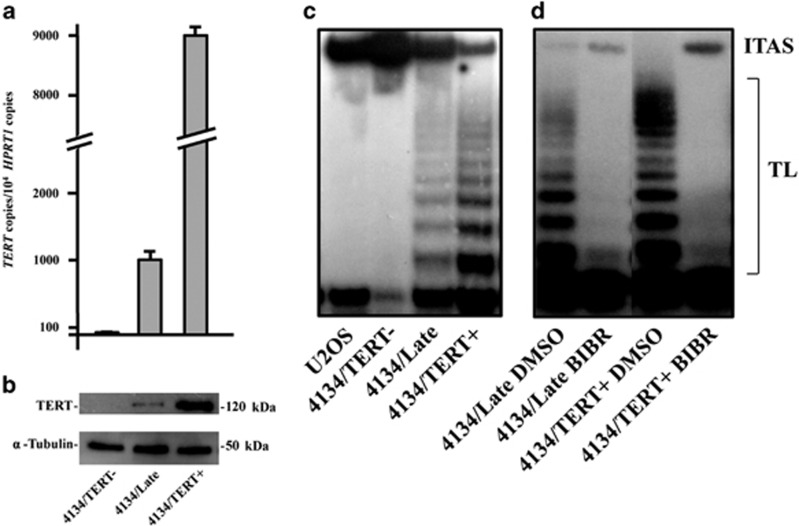
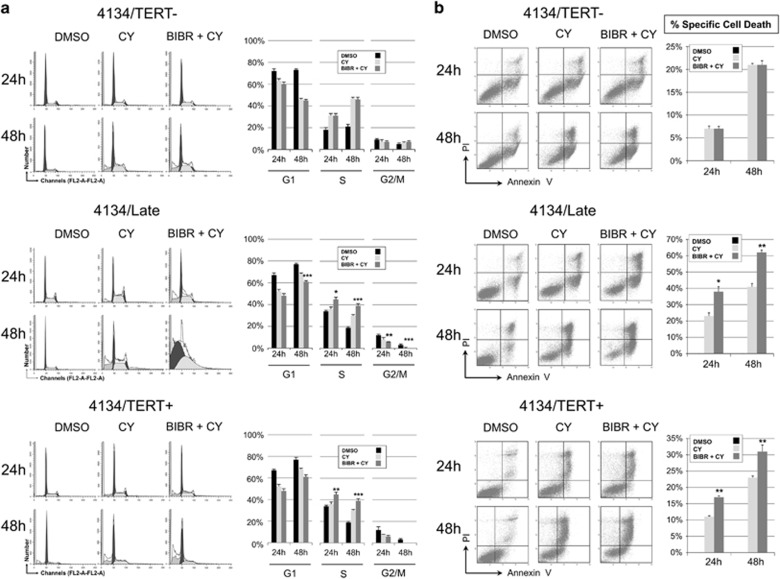
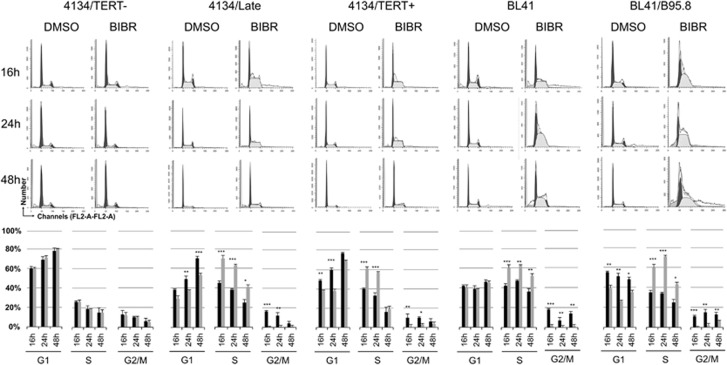
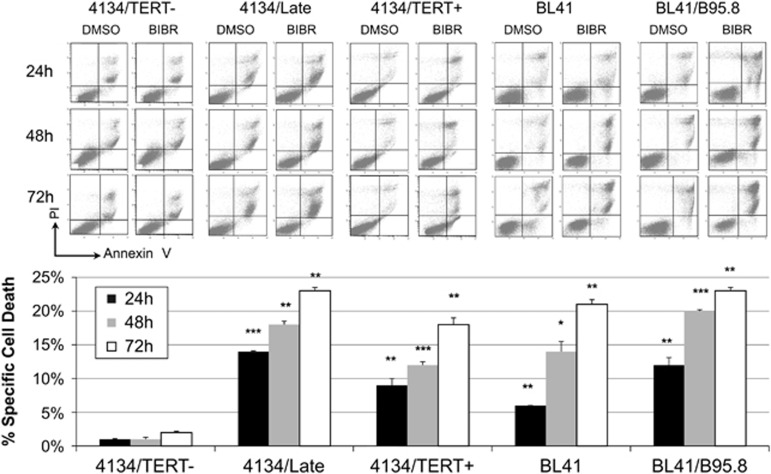
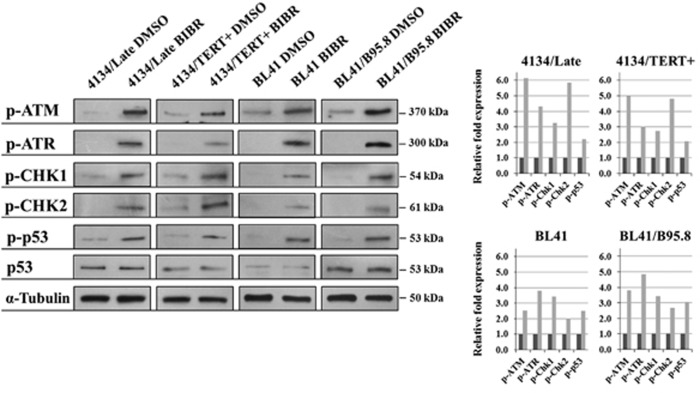
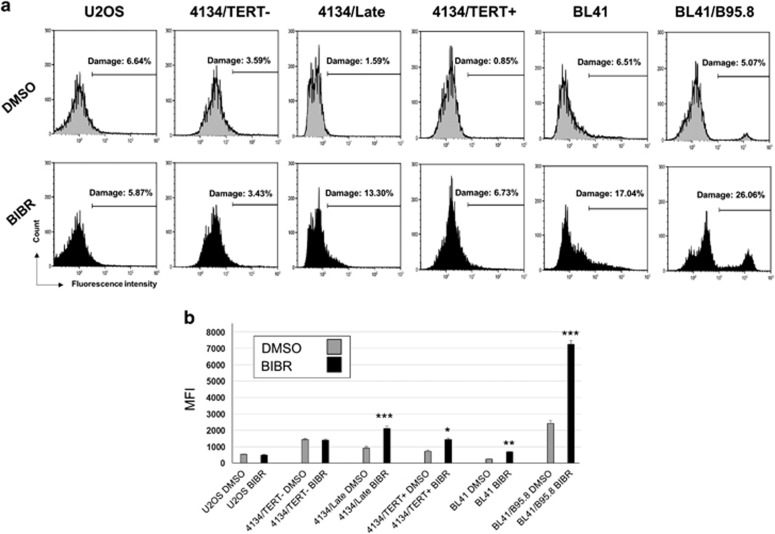
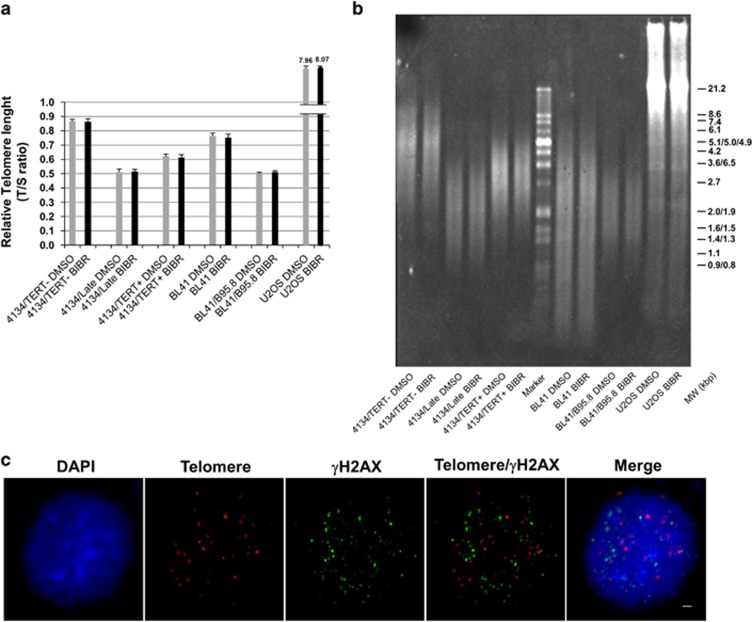
Besides its canonical role in stabilizing telomeres, telomerase reverse transcriptase (TERT) may promote tumorigenesis through extra-telomeric functions. The possible therapeutic effects of BIBR1532 (BIBR), a powerful TERT inhibitor, have been evaluated in different cellular backgrounds, but no data are currently available regarding Epstein-Barr virus (EBV)-driven B-cell malignancies. Our aim was to characterize the biological effects of TERT inhibition by BIBR on EBV-immortalized lymphoblastoid cell lines (LCLs) and fully transformed Burkitt's lymphoma (BL) cell lines. We found that BIBR selectively inhibits telomerase activity in TERT-positive 4134/Late and 4134/TERT+ LCLs and EBV-negative BL41 and EBV-positive BL41/B95.8 BL cell lines. TERT inhibition led to decreased cell proliferation, accumulation of cells in the S-phase and ultimately to increased apoptosis, compared with mock-treated control cells. All these effects occurred within 72 h and were not observed in BIBR-treated TERT-negative 4134/TERT- and U2OS cells. The cell cycle arrest and apoptosis, consequent upon short-term TERT inhibition, were associated with and likely dependent on the activation of the DNA damage response (DDR), highlighted by the increased levels of γH2AX and activation of ATM and ATR pathways. Analyses of the mean and range of telomere lengths and telomere dysfunction-induced foci indicated that DDR after short-term TERT inhibition was not related to telomere dysfunction, thus suggesting that TERT, besides stabilizing telomere, may protect DNA via telomere-independent mechanisms. Notably, TERT-positive LCLs treated with BIBR in combination with fludarabine or cyclophosphamide showed a significant increase in the number of apoptotic cells with respect to those treated with chemotherapeutic agents alone. In conclusion, TERT inhibition impairs cell cycle progression and enhances the pro-apoptotic effects of chemotherapeutic agents in TERT-positive cells. These results support new therapeutic applications of TERT inhibitors in EBV-driven B-cell malignancies.
除了在稳定端粒方面的经典作用外,端粒酶逆转录酶(TERT)可能通过端粒外功能促进肿瘤发生。强效TERT抑制剂BIBR1532(BIBR)的潜在治疗效果已在不同细胞背景中进行了评估,但目前尚无关于爱泼斯坦-巴尔病毒(EBV)驱动的B细胞恶性肿瘤的数据。我们的目的是表征BIBR抑制TERT对EBV永生化淋巴母细胞系(LCL)和完全转化的伯基特淋巴瘤(BL)细胞系的生物学效应。我们发现,BIBR可选择性抑制TERT阳性的4134/Late和4134/TERT + LCL以及EBV阴性的BL41和EBV阳性的BL41/B95.8 BL细胞系中的端粒酶活性。与模拟处理的对照细胞相比,TERT抑制导致细胞增殖减少、S期细胞积累,并最终导致细胞凋亡增加。所有这些效应均在72小时内出现,而在BIBR处理的TERT阴性的4134/TERT-和U2OS细胞中未观察到。短期TERT抑制后导致的细胞周期停滞和凋亡与DNA损伤反应(DDR)的激活相关且可能依赖于DDR,γH2AX水平升高以及ATM和ATR途径的激活突出了这一点。对端粒长度的平均值和范围以及端粒功能障碍诱导的灶的分析表明,短期TERT抑制后的DDR与端粒功能障碍无关,因此表明TERT除了稳定端粒外,还可能通过不依赖端粒的机制保护DNA。值得注意的是,用BIBR联合氟达拉滨或环磷酰胺处理的TERT阳性LCL与单独用化疗药物处理的相比,凋亡细胞数量显著增加。总之,TERT抑制会损害细胞周期进程,并增强化疗药物在TERT阳性细胞中的促凋亡作用。这些结果支持TERT抑制剂在EBV驱动型B细胞恶性肿瘤中的新治疗应用。