Massey Veronica L, Dolin Christine E, Poole Lauren G, Hudson Shanice V, Siow Deanna L, Brock Guy N, Merchant Michael L, Wilkey Daniel W, Arteel Gavin E
Department of Pharmacology and Toxicology, University of Louisville Health Sciences Center, Louisville, KY.
University of Louisville Alcohol Research Center, Louisville, KY.
Hepatology. 2017 Mar;65(3):969-982. doi: 10.1002/hep.28918. Epub 2016 Dec 30.
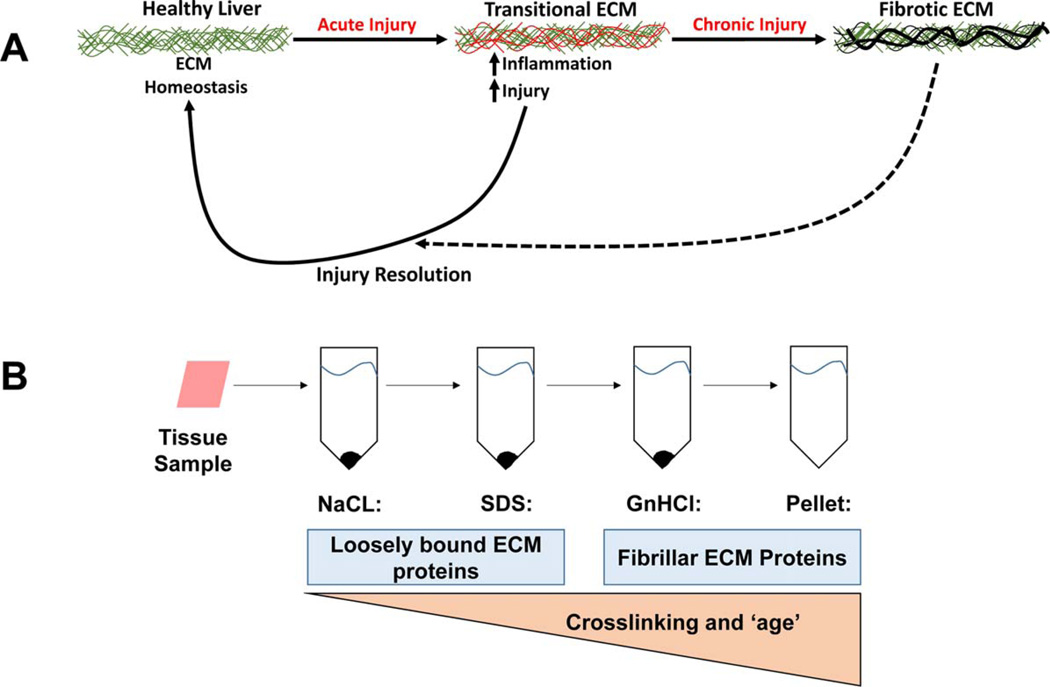
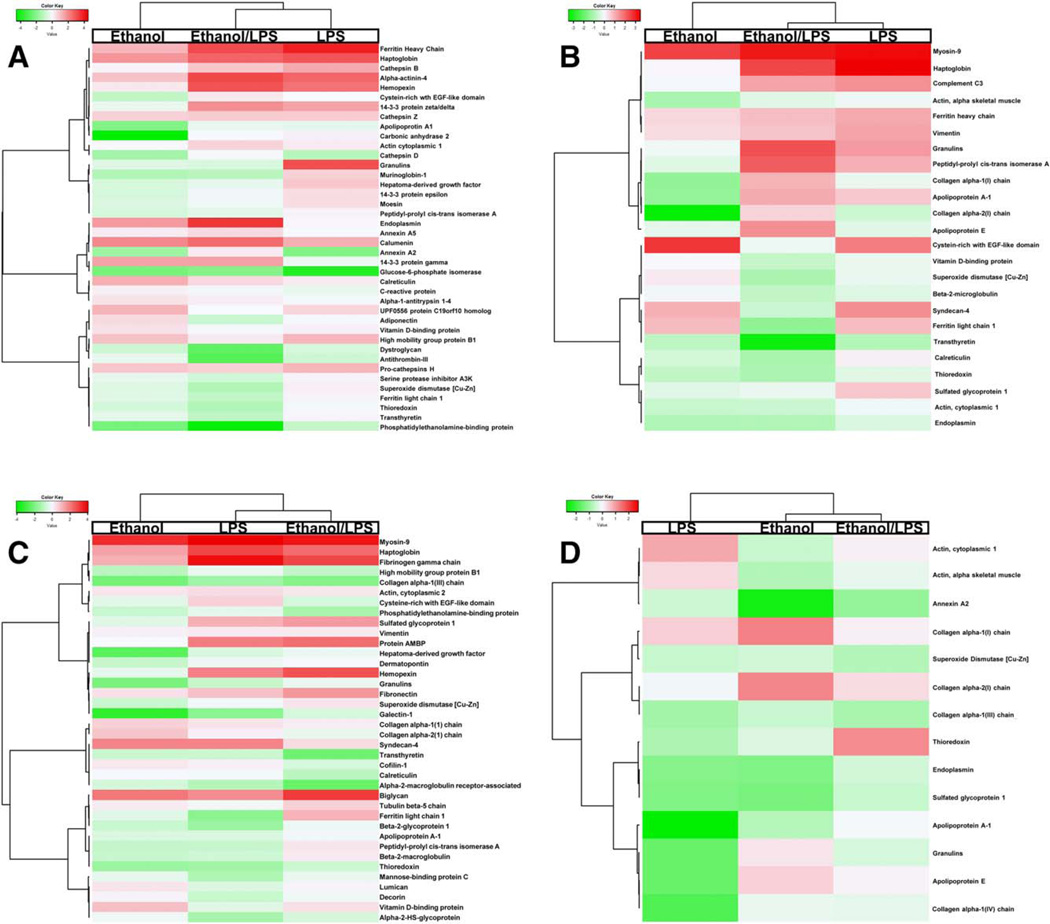
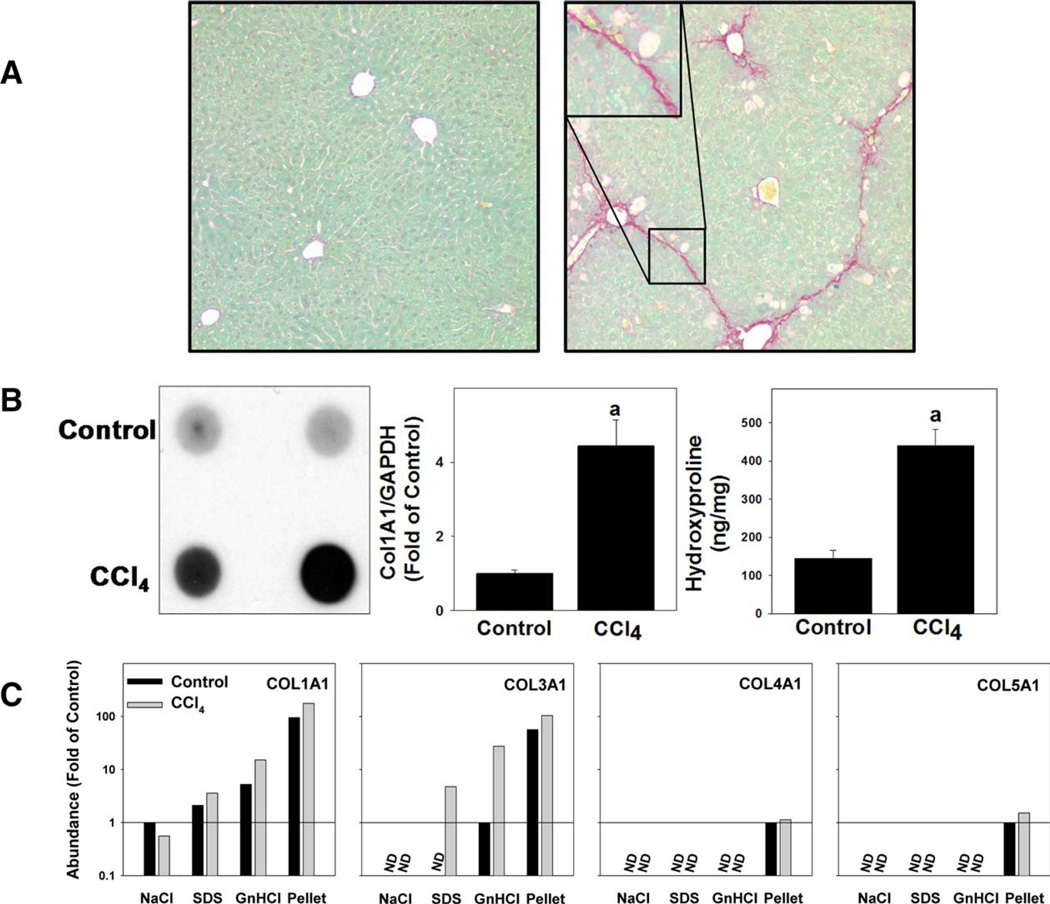
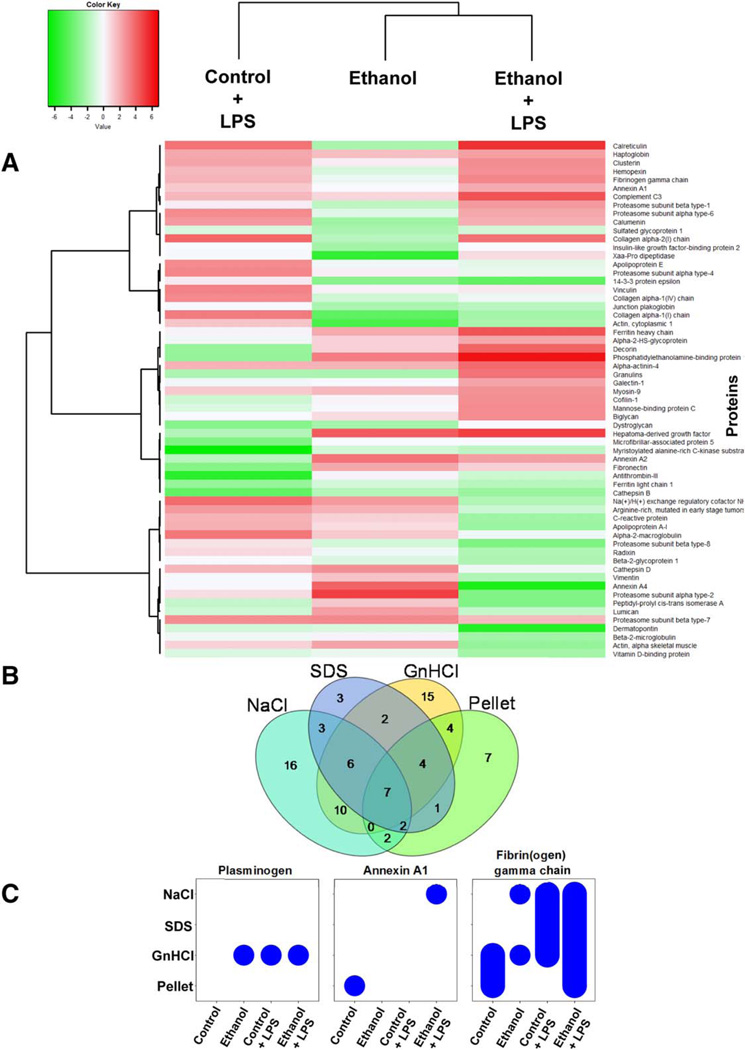
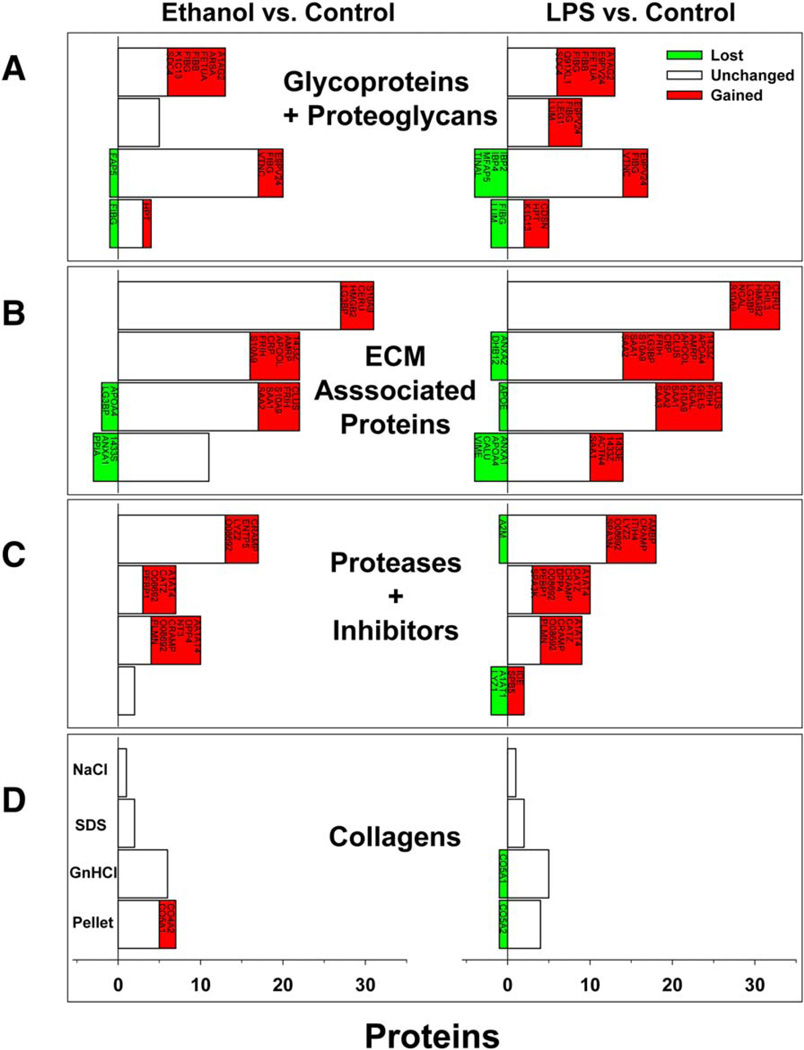
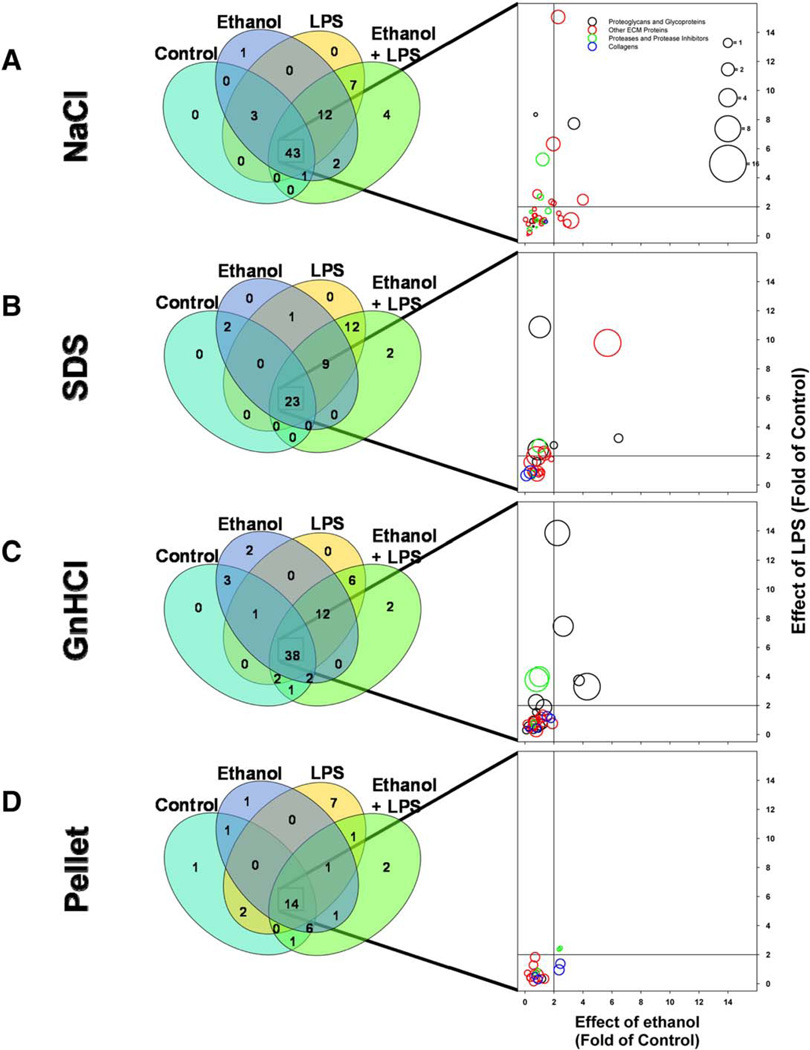
The extracellular matrix (ECM) consists of diverse components that work bidirectionally with surrounding cells to create a responsive microenvironment. In some contexts (e.g., hepatic fibrosis), changes to the ECM are well recognized and understood. However, it is becoming increasingly accepted that the hepatic ECM proteome (i.e., matrisome) responds dynamically to stress well before fibrosis. The term "transitional tissue remodeling" describes qualitative and quantitative ECM changes in response to injury that do not alter the overall architecture of the organ; these changes in ECM may contribute to early disease initiation and/or progression. The nature and magnitude of these changes to the ECM in liver injury are poorly understood. The goals of this work were to validate analysis of the ECM proteome and compare the impact of 6 weeks of ethanol diet and/or acute lipopolysaccharide (LPS). Liver sections were processed in a series of increasingly rigorous extraction buffers to separate proteins by solubility. Extracted proteins were identified using liquid chromatography/tandem mass spectrometry (LC-MS/MS). Both ethanol and LPS dramatically increased the number of matrisome proteins ∼25%. The enhancement of LPS-induced liver damage by ethanol preexposure was associated with unique protein changes.
An extraction method to enrich the hepatic ECM was characterized. The results demonstrate that the hepatic matrisome responds dynamically to both acute (LPS) and chronic (ethanol) stresses, long before more-dramatic fibrotic changes to the liver occur. The changes to the mastrisome may contribute, at least in part, to the pathological responses to these stresses. It is also interesting that several ECM proteins responded similarly to both stresses, suggesting a common mechanism in both models. Nevertheless, there were responses that were unique to the individual and combined exposures. (Hepatology 2017;65:969-982).
细胞外基质(ECM)由多种成分组成,这些成分与周围细胞双向作用,以创建一个响应性微环境。在某些情况下(例如肝纤维化),ECM的变化已得到充分认识和理解。然而,越来越多的人接受这样的观点,即肝脏ECM蛋白质组(即基质组)在纤维化之前就对压力做出动态反应。“过渡性组织重塑”一词描述了器官整体结构未改变的情况下,响应损伤时ECM发生的定性和定量变化;这些ECM变化可能有助于疾病的早期启动和/或进展。肝脏损伤时ECM这些变化的性质和程度尚不清楚。这项工作的目标是验证ECM蛋白质组的分析方法,并比较6周乙醇饮食和/或急性脂多糖(LPS)的影响。肝脏切片在一系列越来越严格的提取缓冲液中进行处理,以根据溶解度分离蛋白质。使用液相色谱/串联质谱(LC-MS/MS)鉴定提取的蛋白质。乙醇和LPS均使基质组蛋白的数量显著增加约25%。乙醇预暴露增强LPS诱导的肝损伤与独特的蛋白质变化有关。
一种富集肝脏ECM的提取方法得到了表征。结果表明,在肝脏发生更显著的纤维化变化之前,肝脏基质组就对急性(LPS)和慢性(乙醇)应激做出动态反应。基质组的变化可能至少部分地促成了对这些应激的病理反应。同样有趣的是,几种ECM蛋白对两种应激的反应相似,这表明两种模型存在共同机制。然而,也有个体暴露和联合暴露所特有的反应。(《肝脏病学》2017年;65:969 - 982)