Wu Haijing, Fu Siqi, Zhao Ming, Lu Liwei, Lu Qianjin
Department of Dermatology, Second Xiangya Hospital, Central South University, Hunan Key Laboratory of Medical Epigenomics, Changsha 410011, China.
Department of Pathology and Center for Infection and Immunology, the University of Hong Kong, Hong Kong, China.
Molecules. 2016 Dec 27;22(1):30. doi: 10.3390/molecules22010030.
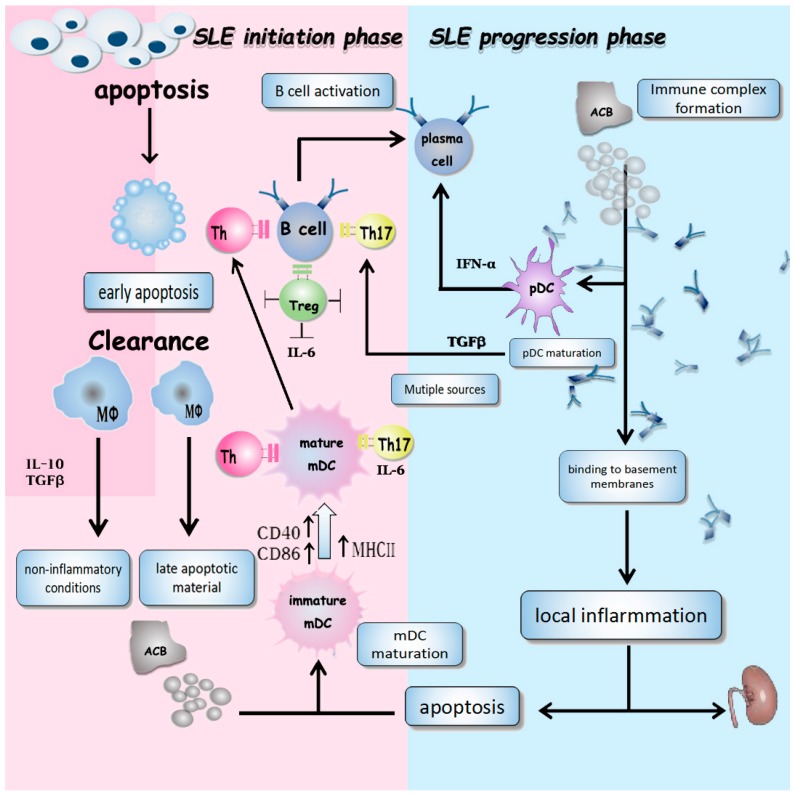
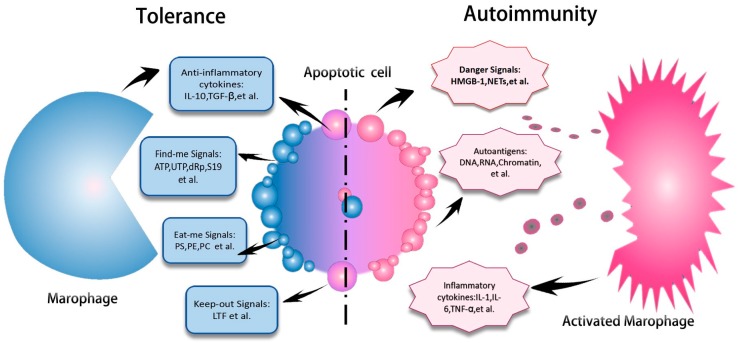
Systemic lupus erythematosus (SLE) is a systemic autoimmune disease involving multiple organs and tissues, which is characterized by the presence of excessive anti-nuclear autoantibodies. The pathogenesis of SLE has been intensively studied but remains far from clear. Increasing evidence has shown that the genetic susceptibilities and environmental factors-induced abnormalities in immune cells, dysregulation of apoptosis, and defects in the clearance of apoptotic materials contribute to the development of SLE. As the main source of auto-antigens, aberrant cell death may play a critical role in the pathogenesis of SLE. In this review, we summarize up-to-date research progress on different levels of cell death-including increasing rate of apoptosis, necrosis, autophagy and defects in clearance of dying cells-and discuss the possible underlying mechanisms, especially epigenetic modifications, which may provide new insight in the potential development of therapeutic strategies for SLE.
系统性红斑狼疮(SLE)是一种累及多个器官和组织的系统性自身免疫性疾病,其特征是存在过量的抗核自身抗体。SLE的发病机制已得到深入研究,但仍远未明确。越来越多的证据表明,遗传易感性和环境因素导致免疫细胞异常、细胞凋亡失调以及凋亡物质清除缺陷,这些都有助于SLE的发展。作为自身抗原的主要来源,异常细胞死亡可能在SLE的发病机制中起关键作用。在本综述中,我们总结了细胞死亡不同水平的最新研究进展,包括细胞凋亡增加率、坏死、自噬以及死亡细胞清除缺陷,并讨论了可能的潜在机制,特别是表观遗传修饰,这可能为SLE治疗策略的潜在发展提供新的见解。