Zhang Tianwei, Lv Lei, Huang Yun, Ren Xiaohui, Shi Qinghua
Molecular and Cell Genetics Laboratory, The CAS Key Laboratory of Innate Immunity and Chronic Diseases, Hefei National Laboratory for Physical Sciences at Microscale, School of Life Sciences, CAS Center for Excellence in Molecular Cell Science, University of Science and Technology of China, Hefei 230027, Anhui, China.
Collaborative Innovation Center of Genetics and Development, Shanghai 200438, China.
Oncotarget. 2017 Feb 14;8(7):11030-11041. doi: 10.18632/oncotarget.14212.
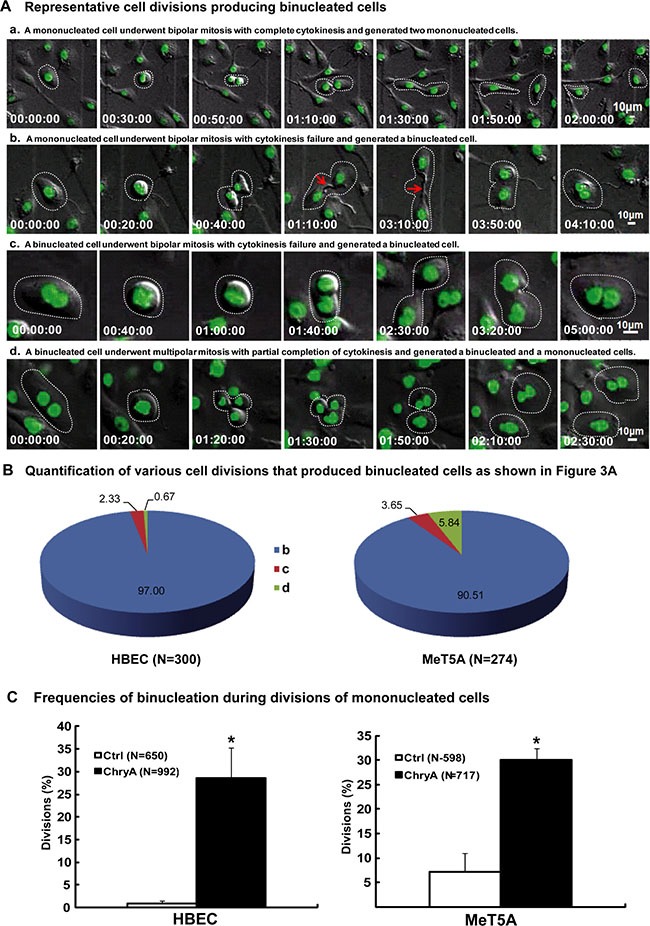
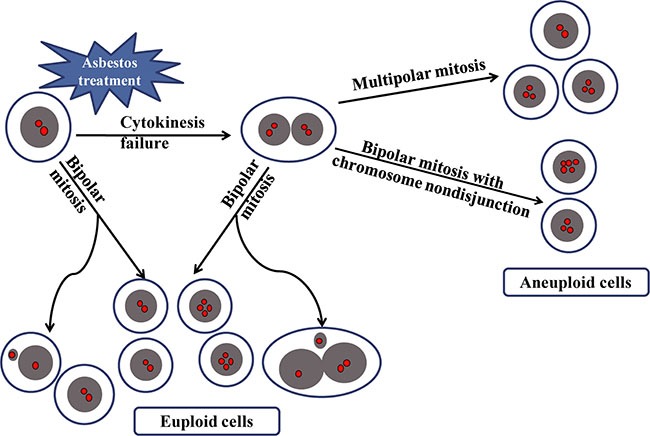
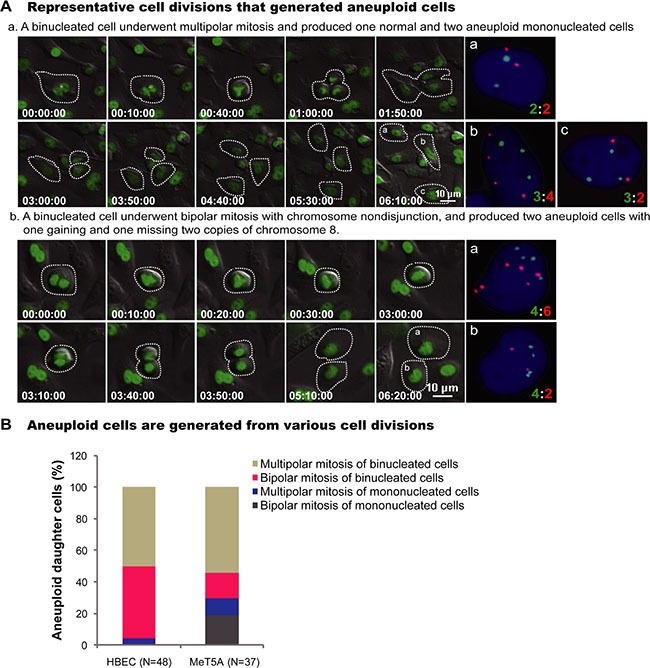
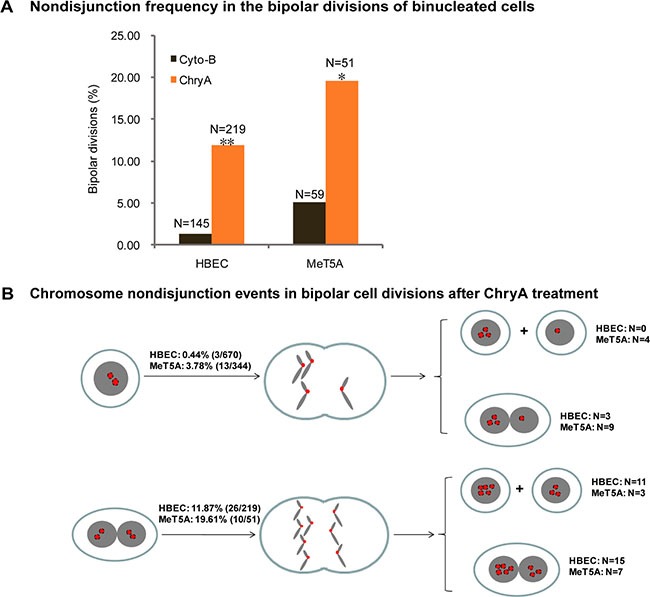
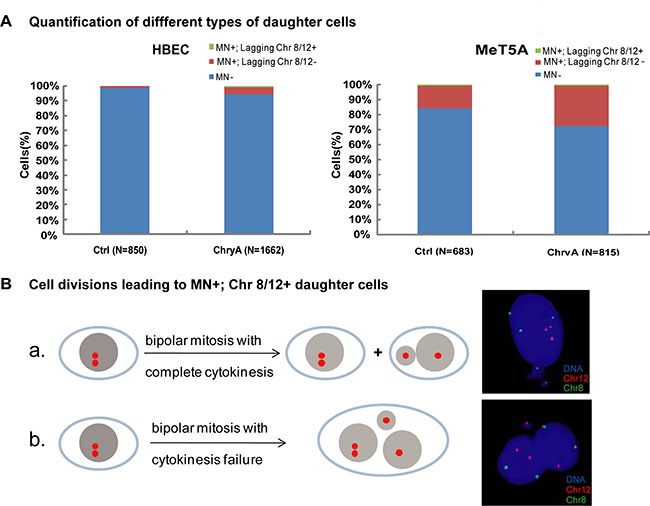
Asbestos is a well-known occupational carcinogen that can cause aneuploidy during the early stages of neoplastic development. To explore the origins of asbestos-induced aneuploidy, we performed long-term live-cell imaging followed by fluorescence in situ hybridization of chromosomes 8 and 12 in human bronchial epithelial (HBEC) and mesothelial (MeT5A) cells. We demonstrate that asbestos induces aneuploidy via binucleated intermediates resulting from cytokinesis failure. On the one hand, asbestos increases chromosome nondisjunction during bipolar divisions of binucleated intermediates and produces near-tetraploidy. On the other hand, asbestos increases multipolar divisions of binucleated intermediates to produce aneuploidy. Surprisingly, chromosomes in asbestos-induced micronucleated cells are not truly lost by the cells, and do not contribute to aneuploid cell formation in either cell type. These results clarify the cellular source of asbestos-induced aneuploidy. In particular, they show the asbestos-induced disruption of bipolar chromosomal segregation in tetraploid cells, thereby demonstrating the causality between binucleated intermediates and aneuploidy evolution, rather than chromosome loss in micronuclei.
石棉是一种著名的职业致癌物,在肿瘤发生发展的早期阶段可导致非整倍体。为了探究石棉诱导非整倍体的起源,我们对人支气管上皮(HBEC)细胞和间皮(MeT5A)细胞进行了长期活细胞成像,随后对8号和12号染色体进行荧光原位杂交。我们证明,石棉通过胞质分裂失败产生的双核中间体诱导非整倍体。一方面,石棉在双核中间体的双极分裂过程中增加染色体不分离,并产生近四倍体。另一方面,石棉增加双核中间体的多极分裂以产生非整倍体。令人惊讶的是,石棉诱导的微核细胞中的染色体并未被细胞真正丢失,并且在这两种细胞类型中均未导致非整倍体细胞形成。这些结果阐明了石棉诱导非整倍体的细胞来源。特别是,它们显示了石棉诱导的四倍体细胞中双极染色体分离的破坏,从而证明了双核中间体与非整倍体进化之间的因果关系,而非微核中的染色体丢失。