Bhatt Michelle, Ivan Cristina, Xie Xiaolei, Siddik Zahid H
Department of Experimental Therapeutics, The University of Texas MD Anderson Cancer Center, Houston, Texas, USA.
Center for RNA Interference and Non-Coding RNAs, The University of Texas MD Anderson Cancer Center, Houston, Texas, USA.
Oncotarget. 2017 Feb 14;8(7):10905-10918. doi: 10.18632/oncotarget.14228.
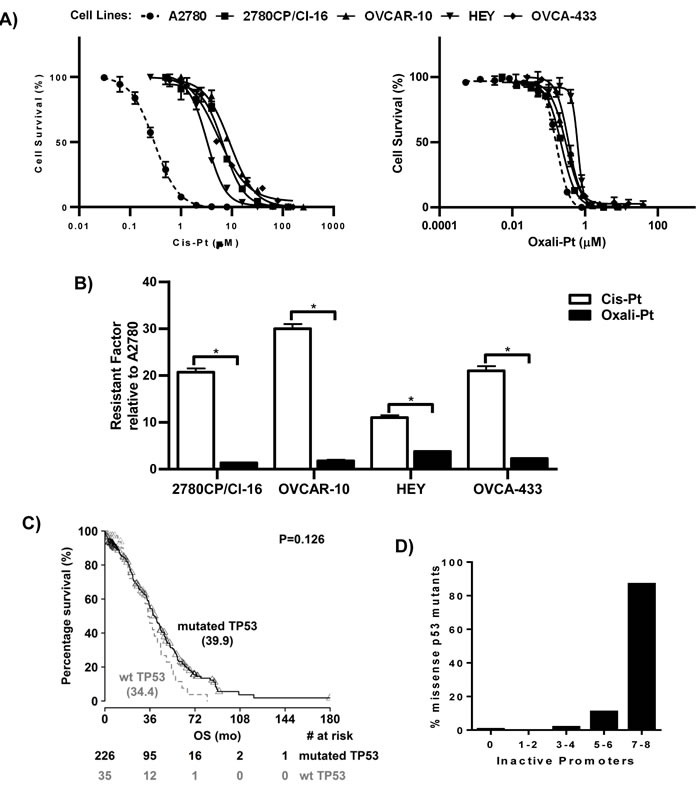
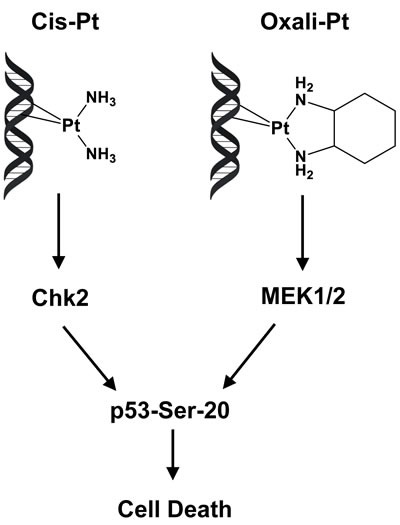
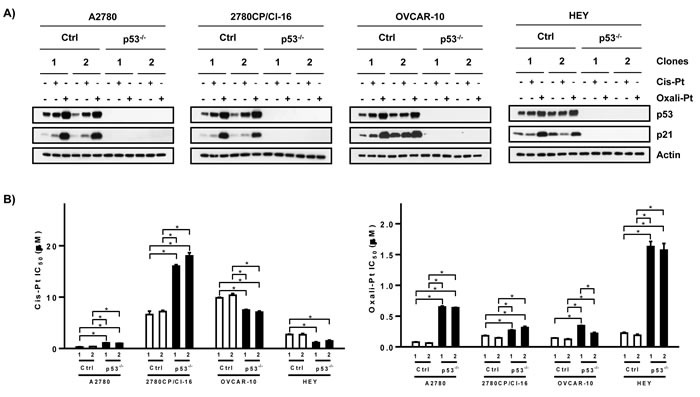
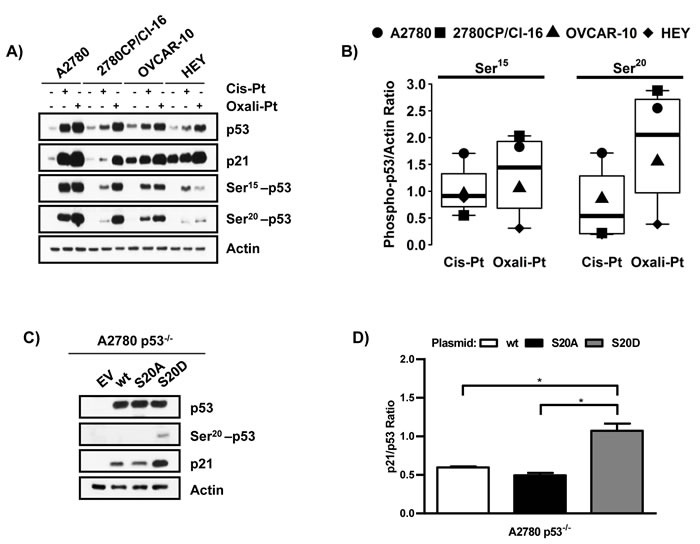
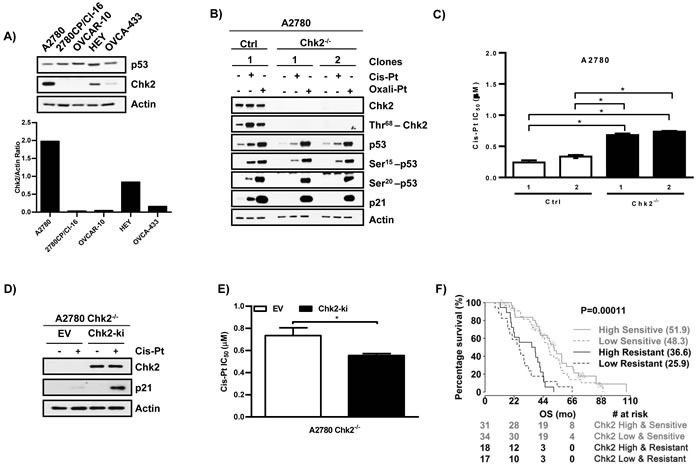
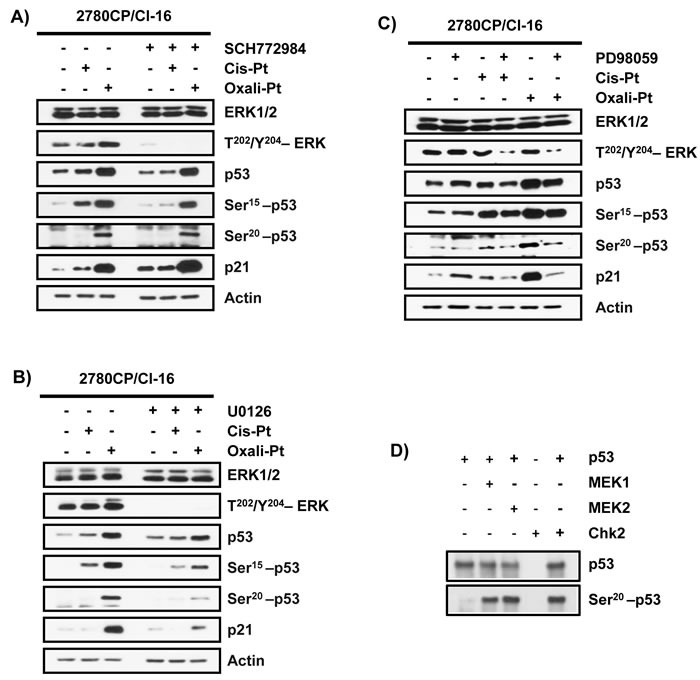
Cisplatin (cis-Pt) resistance in tumor cells from p53 dysfunction is a significant clinical problem. Although mutation can inhibit p53 function, >60% of p53 mutants retain normal function according to literature reports. Therefore, we examined the status of p53 in cisplatin-resistant ovarian tumor models and its functional response to cis-Pt and the mechanistically-distinct non-cross-resistant oxaliplatin (oxali-Pt). Relative to sensitive A2780 cells harboring wild-type p53, the 2780CP/Cl-16, OVCAR-10, Hey and OVCA-433 cell lines were 10- to 30-fold resistant to cis-Pt, but was substantially circumvented by oxali-Pt. Mutant p53 in 2780CP/Cl-16 (p53V172F) and OVCAR-10 (p53V172F and p53G266R) cells, predicted as non-functional in p53 database, displayed attenuated response to cis-Pt, as did the polymorphic p53P72R (functionally equivalent to wild-type p53) in HEY and OVCA-433 cell lines. However, p53 was robustly activated by oxali-Pt in all cell lines, with resultant drug potency confirmed as p53-dependent by p53 knockout using CRISPR/Cas9 system. This p53 activation by oxali-Pt was associated with phosphorylation at Ser20 by MEK1/2 based on inhibitor and kinase studies. Cis-Pt, however, failed to phosphorylate Ser20 due to downregulated Chk2, and its clinical impact validated by reduced overall survival of ovarian cancer patients according to TCGA database. In conclusion, cis-Pt resistance occurs in both wild-type and mutant p53 ovarian cancer cells, but is associated with loss of Ser20 phosphorylation. However, these mutant p53, like polymorphic p53, are functional and activated by oxali-Pt-induced Ser20 phosphorylation. Thus, the potential exists for repurposing oxali-Pt or similar drugs against refractory cancers harboring wild-type or specific mutant p53.
p53功能障碍的肿瘤细胞中顺铂(cis-Pt)耐药是一个重大临床问题。虽然突变可抑制p53功能,但据文献报道,超过60%的p53突变体仍保留正常功能。因此,我们检测了顺铂耐药卵巢肿瘤模型中p53的状态及其对顺铂和机制不同的非交叉耐药奥沙利铂(oxali-Pt)的功能反应。相对于携带野生型p53的敏感A2780细胞,2780CP/Cl-16、OVCAR-10、Hey和OVCA-433细胞系对顺铂耐药10至30倍,但奥沙利铂可显著克服这种耐药性。2780CP/Cl-16(p53V172F)和OVCAR-10(p53V172F和p53G266R)细胞中的突变型p53在p53数据库中预测为无功能,对顺铂的反应减弱,HEY和OVCA-433细胞系中的多态性p53P72R(功能等同于野生型p53)也是如此。然而,奥沙利铂在所有细胞系中均能强烈激活p53,使用CRISPR/Cas9系统敲除p53证实由此产生的药物效力依赖于p53。基于抑制剂和激酶研究,奥沙利铂对p53的这种激活与MEK1/2介导的Ser20磷酸化有关。然而,由于Chk2下调,顺铂未能使Ser20磷酸化,根据TCGA数据库,卵巢癌患者总生存期缩短验证了其临床影响。总之,野生型和突变型p53的卵巢癌细胞中均会出现顺铂耐药,但与Ser20磷酸化缺失有关。然而,这些突变型p53与多态性p53一样,具有功能,并可被奥沙利铂诱导的Ser20磷酸化激活。因此,存在将奥沙利铂或类似药物重新用于治疗携带野生型或特定突变型p53的难治性癌症的可能性。