Günaltay Sezin, Ghiboub Mohammed, Hultgren Olof, Hörnquist Elisabeth Hultgren
School of Medical Sciences, Faculty of Medicine and Health, Örebro University, 70182, Örebro, Sweden.
Academic Medical Center, Tytgat Institute for Liver and Intestinal Research, Amsterdam University, 1105 BK, Amsterdam, The Netherlands.
Dig Dis Sci. 2017 May;62(5):1204-1215. doi: 10.1007/s10620-016-4422-9. Epub 2017 Jan 2.
Microscopic colitis, comprising collagenous colitis and lymphocytic colitis, is a common cause of chronic diarrhea. Previously, we showed enhanced chemokine productions in microscopic colitis patients, indicating dysregulated immune cell chemotaxis in the immunopathogenesis. We also showed decreased mRNA of IL-37, mainly regarded as an anti-inflammatory cytokine, in the colonic mucosa of these patients, potentially an important factor for the chronicity of the colitis. Our aim in this study was to understand the possible role of IL-37 in chemokine production using a cell line model.
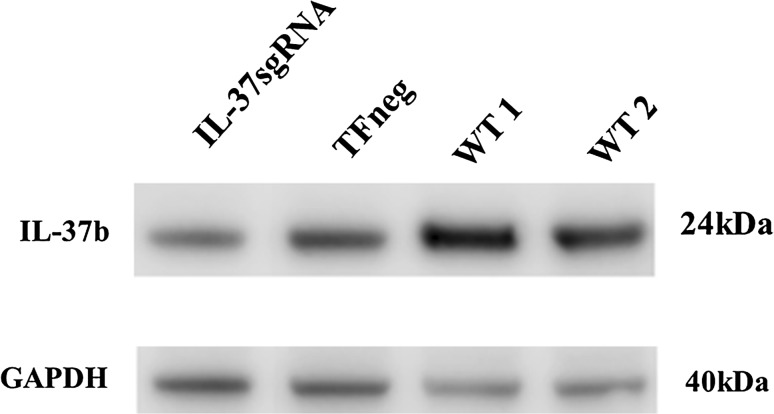
A colon epithelial cell line, T84, was stimulated with the TLR5 ligand flagellin. IL-37 protein production was reduced 20% using the CRISPR/Cas9 system, and the changes in chemokine mRNA and protein expressions were compared to cells transfected with empty plasmid.
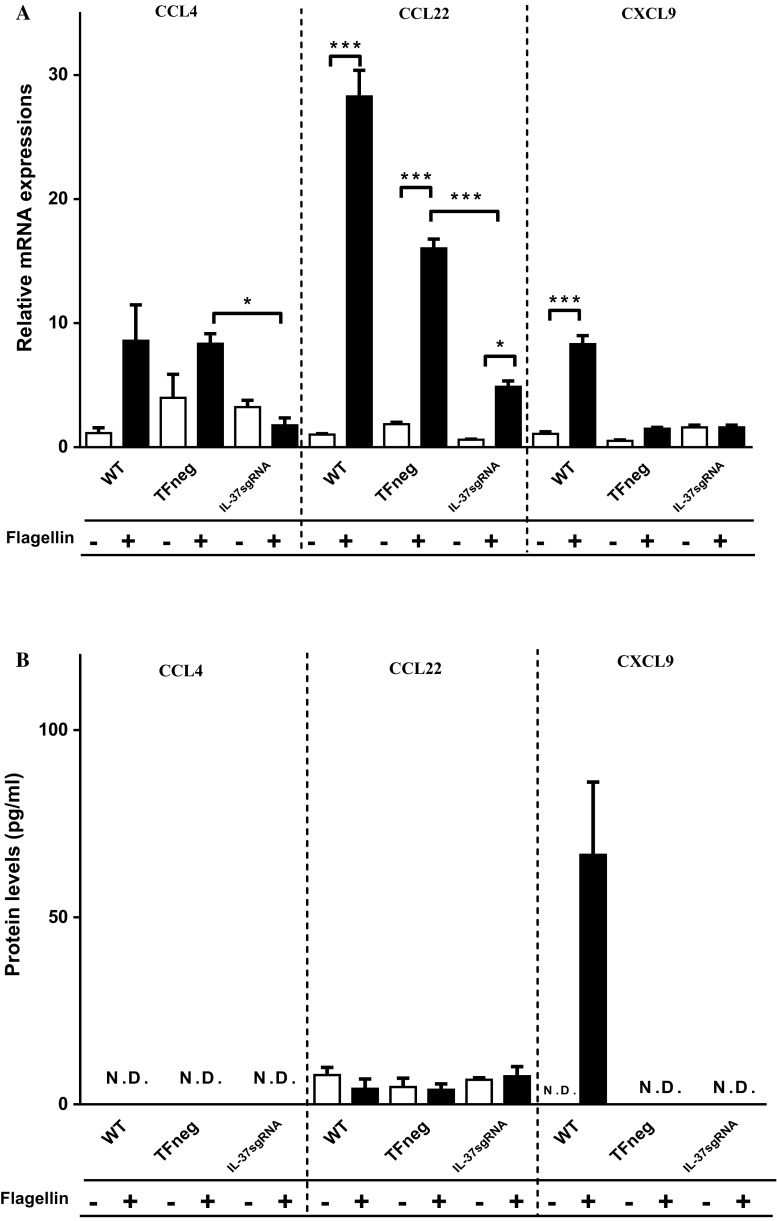
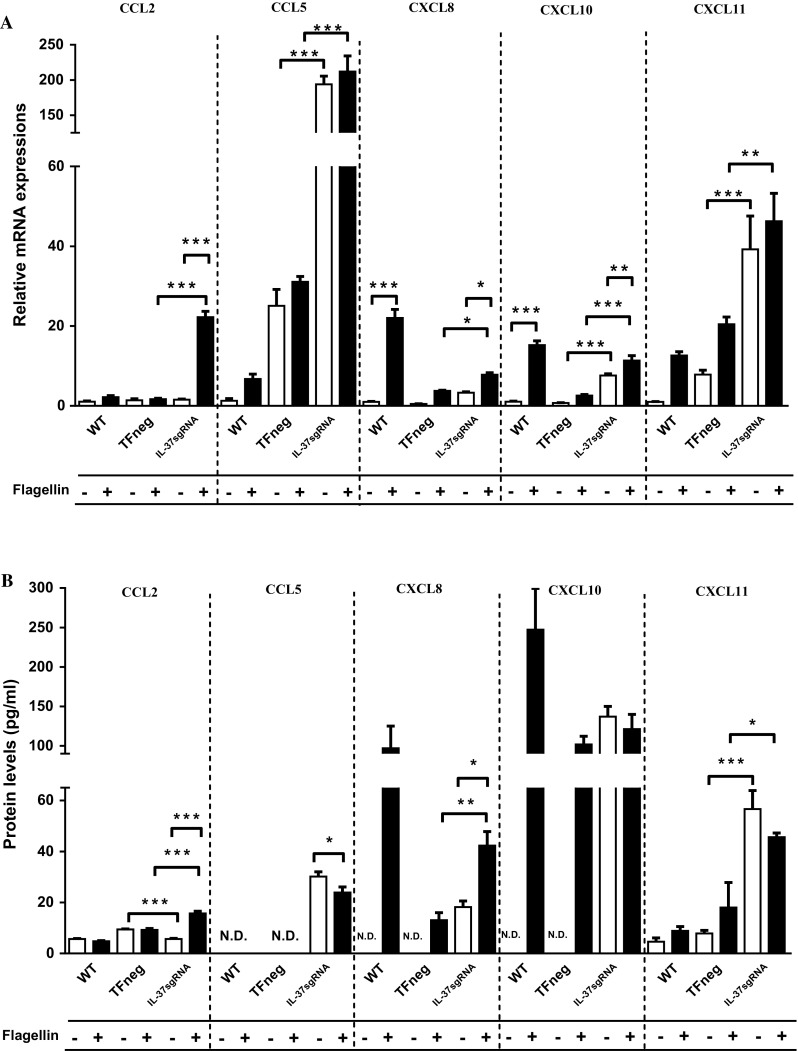
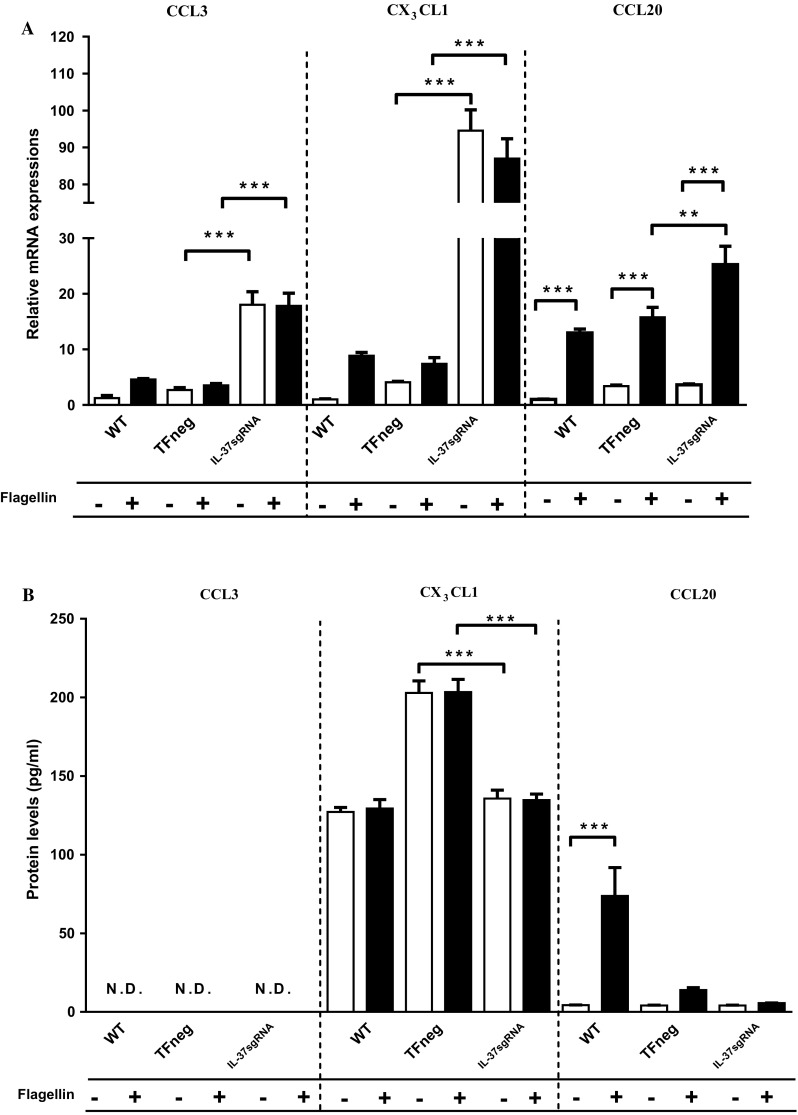
The 20% reduction in IL-37 protein levels spontaneously increased CCL5, CXCL8, CXCL10, and CXCL11 mRNA and protein expressions. CCL2 mRNA and protein levels were enhanced upon TLR5 stimulation. CCL3, CCL20, and CXCL1 mRNA expressions were increased either spontaneously or following TLR5 stimulation, whereas CCL4 and CCL22 mRNA expressions were significantly decreased.
Even a minor decrease in the ability of colon epithelial cells to produce IL-37 results in altered chemokine expression, mainly an increase in the production of several chemokines. Our results indicate that a decreased IL-37 expression by colon epithelial cells may be an important factor for increasing the recruitment of immune cells and subsequently developing microscopic colitis.
显微镜下结肠炎,包括胶原性结肠炎和淋巴细胞性结肠炎,是慢性腹泻的常见病因。此前,我们发现显微镜下结肠炎患者体内趋化因子生成增加,这表明免疫发病机制中免疫细胞趋化作用失调。我们还发现这些患者结肠黏膜中白细胞介素-37(IL-37)的信使核糖核酸(mRNA)水平降低,IL-37主要被视为一种抗炎细胞因子,这可能是结肠炎慢性化的一个重要因素。本研究的目的是使用细胞系模型了解IL-37在趋化因子生成中的可能作用。
用Toll样受体5(TLR5)配体鞭毛蛋白刺激结肠上皮细胞系T84。使用CRISPR/Cas9系统使IL-37蛋白生成减少20%,并将趋化因子mRNA和蛋白表达的变化与转染空质粒的细胞进行比较。
IL-37蛋白水平降低20%会自发增加趋化因子配体5(CCL5)、趋化因子CXCL8、趋化因子CXCL10和趋化因子CXCL11的mRNA及蛋白表达。TLR5刺激后趋化因子CCL2的mRNA和蛋白水平升高。趋化因子CCL3、趋化因子CCL20和趋化因子CXCL1的mRNA表达在自发状态下或TLR5刺激后增加,而趋化因子CCL4和趋化因子CCL22 的mRNA表达显著降低。
即使结肠上皮细胞产生IL-37 的能力出现轻微下降,也会导致趋化因子表达改变,主要是几种趋化因子生成增加。我们的结果表明,结肠上皮细胞IL-37表达降低可能是增加免疫细胞募集并随后发展为显微镜下结肠炎的一个重要因素。