Maes Synthia, Props Ruben, Fitts Jeffrey P, De Smet Rebecca, Vanhaecke Frank, Boon Nico, Hennebel Tom
Center for Microbial Ecology and Technology (CMET), Department of Biochemical and Microbial Technology, Ghent University, Ghent, Belgium.
Department of Civil and Environmental Engineering, Princeton University, Princeton, NY, United States of America.
PLoS One. 2017 Jan 3;12(1):e0169093. doi: 10.1371/journal.pone.0169093. eCollection 2017.
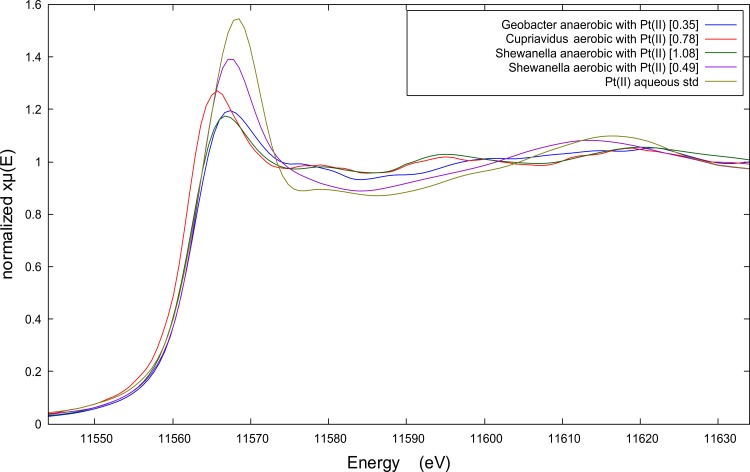
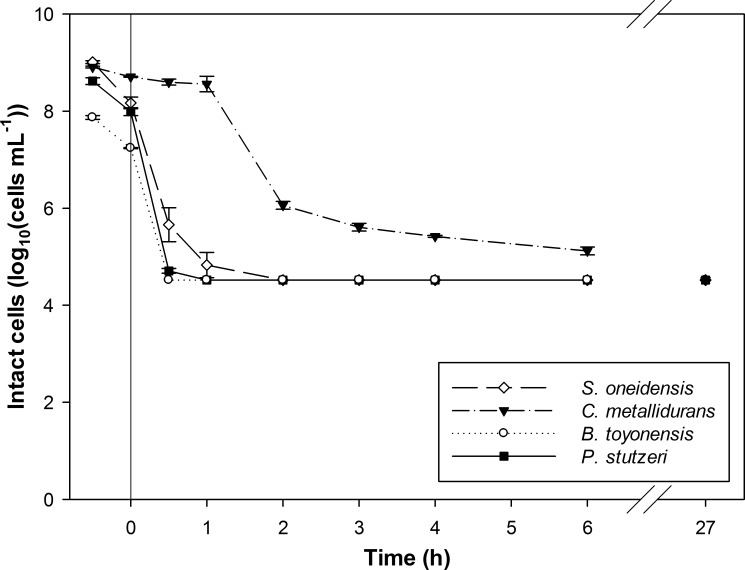
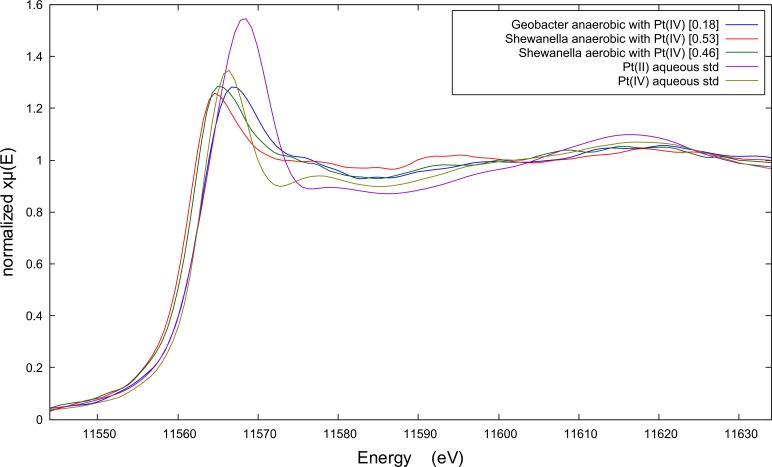
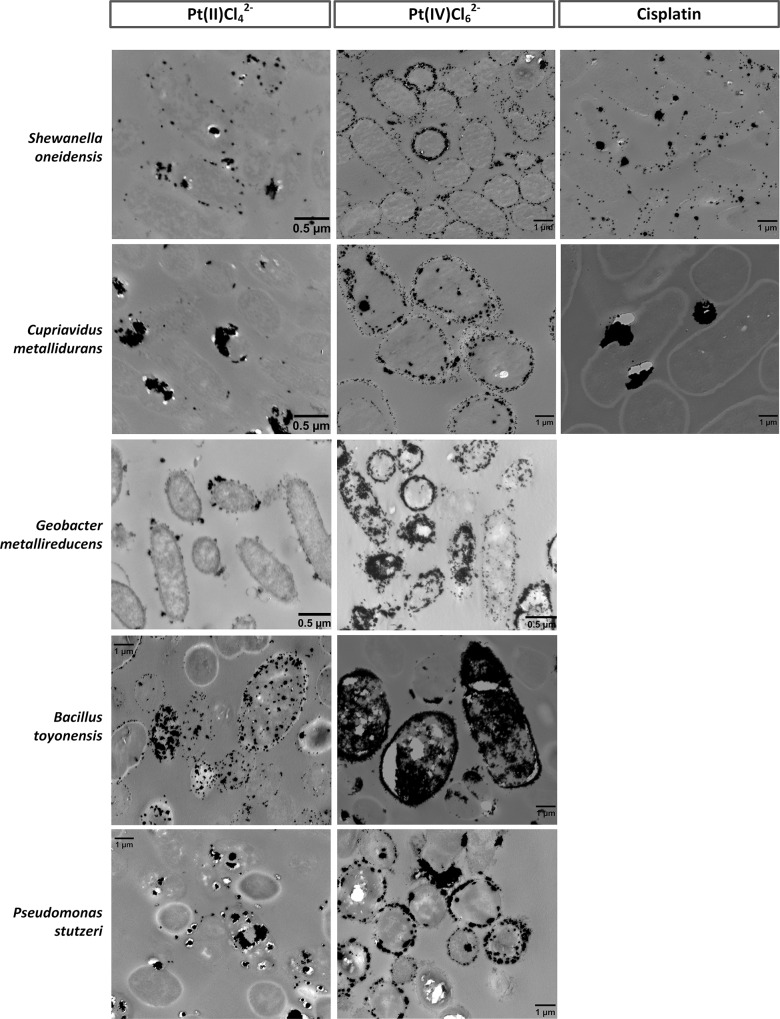
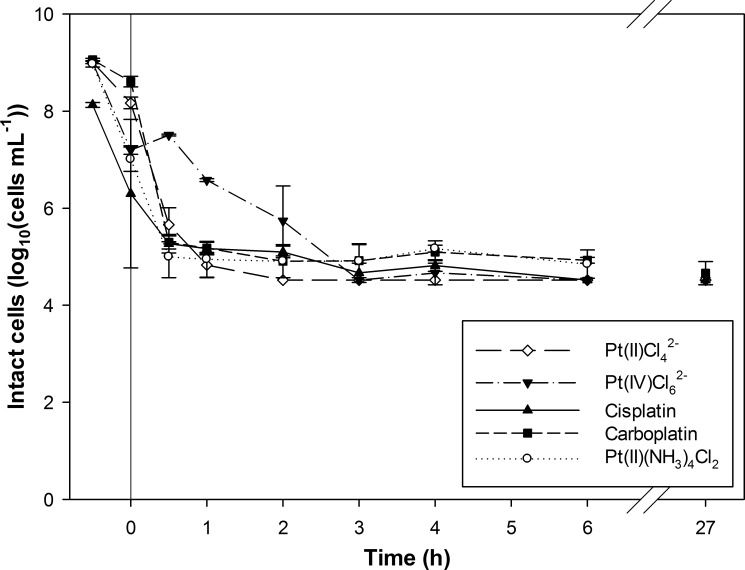
The widespread use of platinum in high-tech and catalytic applications has led to the production of diverse Pt loaded wastewaters. Effective recovery strategies are needed for the treatment of low concentrated waste streams to prevent pollution and to stimulate recovery of this precious resource. The biological recovery of five common environmental Pt-complexes was studied under acidic conditions; the chloro-complexes PtCl42- and PtCl62-, the amine-complex Pt(NH3)4Cl2 and the pharmaceutical complexes cisplatin and carboplatin. Five bacterial species were screened on their platinum recovery potential; the Gram-negative species Shewanella oneidensis MR-1, Cupriavidus metallidurans CH34, Geobacter metallireducens, and Pseudomonas stutzeri, and the Gram-positive species Bacillus toyonensis. Overall, PtCl42- and PtCl62- were completely recovered by all bacterial species while only S. oneidensis and C. metallidurans were able to recover cisplatin quantitatively (99%), all in the presence of H2 as electron donor at pH 2. Carboplatin was only partly recovered (max. 25% at pH 7), whereas no recovery was observed in the case of the Pt-tetraamine complex. Transmission electron microscopy (TEM) revealed the presence of both intra- and extracellular platinum particles. Flow cytometry based microbial viability assessment demonstrated the decrease in number of intact bacterial cells during platinum reduction and indicated C. metallidurans to be the most resistant species. This study showed the effective and complete biological recovery of three common Pt-complexes, and estimated the fate and transport of the Pt-complexes in wastewater treatment plants and the natural environment.
铂在高科技和催化应用中的广泛使用导致了多种含铂废水的产生。需要有效的回收策略来处理低浓度废物流,以防止污染并促进这种珍贵资源的回收。研究了在酸性条件下五种常见环境铂配合物的生物回收情况;氯配合物PtCl42-和PtCl62-、胺配合物Pt(NH3)4Cl2以及药物配合物顺铂和卡铂。筛选了五种细菌对铂的回收潜力;革兰氏阴性菌希瓦氏菌MR-1、嗜金属贪铜菌CH34、金属还原地杆菌和施氏假单胞菌,以及革兰氏阳性菌东洋芽孢杆菌。总体而言,所有细菌物种都能完全回收PtCl42-和PtCl62-,而只有希瓦氏菌和嗜金属贪铜菌能够定量回收顺铂(99%),所有这些都是在pH为2时以H2作为电子供体的情况下。卡铂仅部分回收(在pH为7时最高25%),而对于铂四胺配合物则未观察到回收。透射电子显微镜(TEM)显示细胞内和细胞外均存在铂颗粒。基于流式细胞术的微生物活力评估表明,在铂还原过程中完整细菌细胞数量减少,表明嗜金属贪铜菌是最具抗性的物种。这项研究表明三种常见铂配合物能够有效且完全地进行生物回收,并估计了铂配合物在废水处理厂和自然环境中的归宿和迁移。