Roberts Robyn, Mayberry Laura K, Browning Karen S, Rakotondrafara Aurélie M
Department of Plant Pathology, University of Wisconsin-Madison, Madison, Wisconsin, United States of America.
Department of Molecular Biosciences, University of Texas Austin, Austin, Texas, United States of America.
PLoS One. 2017 Jan 3;12(1):e0169602. doi: 10.1371/journal.pone.0169602. eCollection 2017.
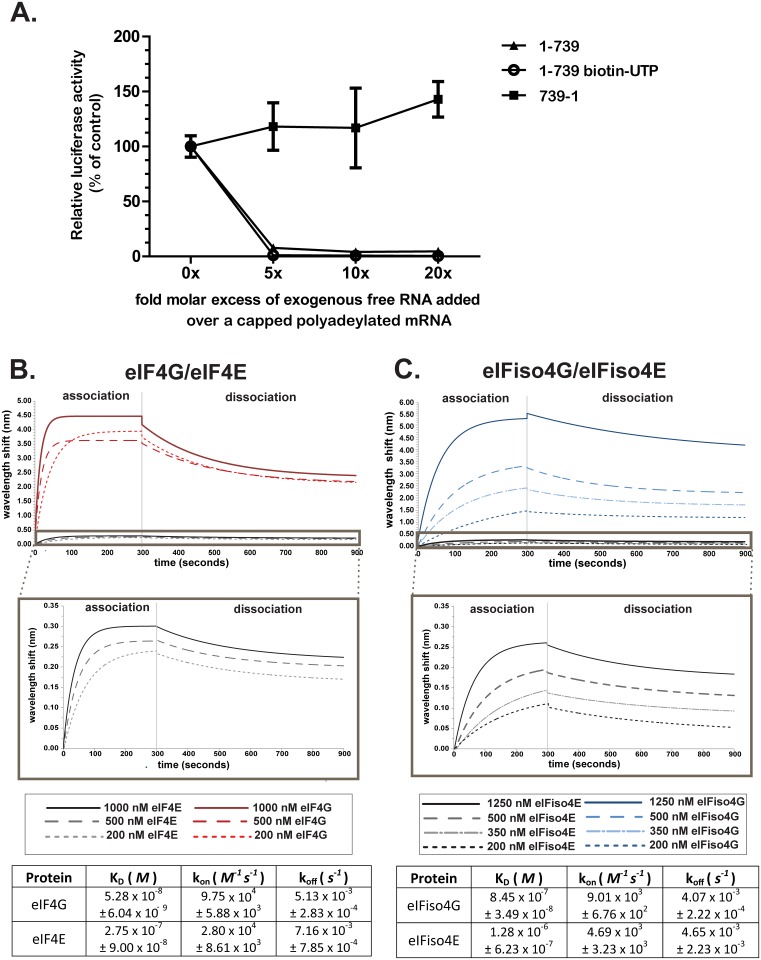
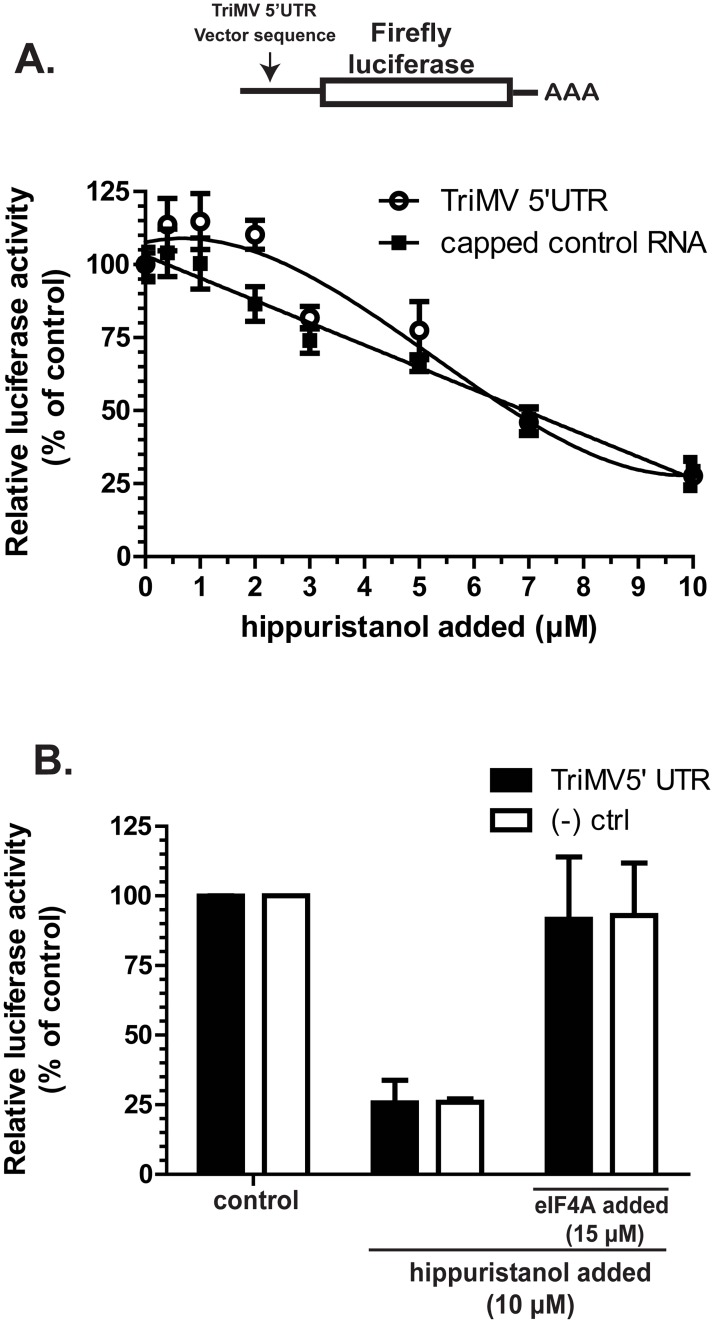
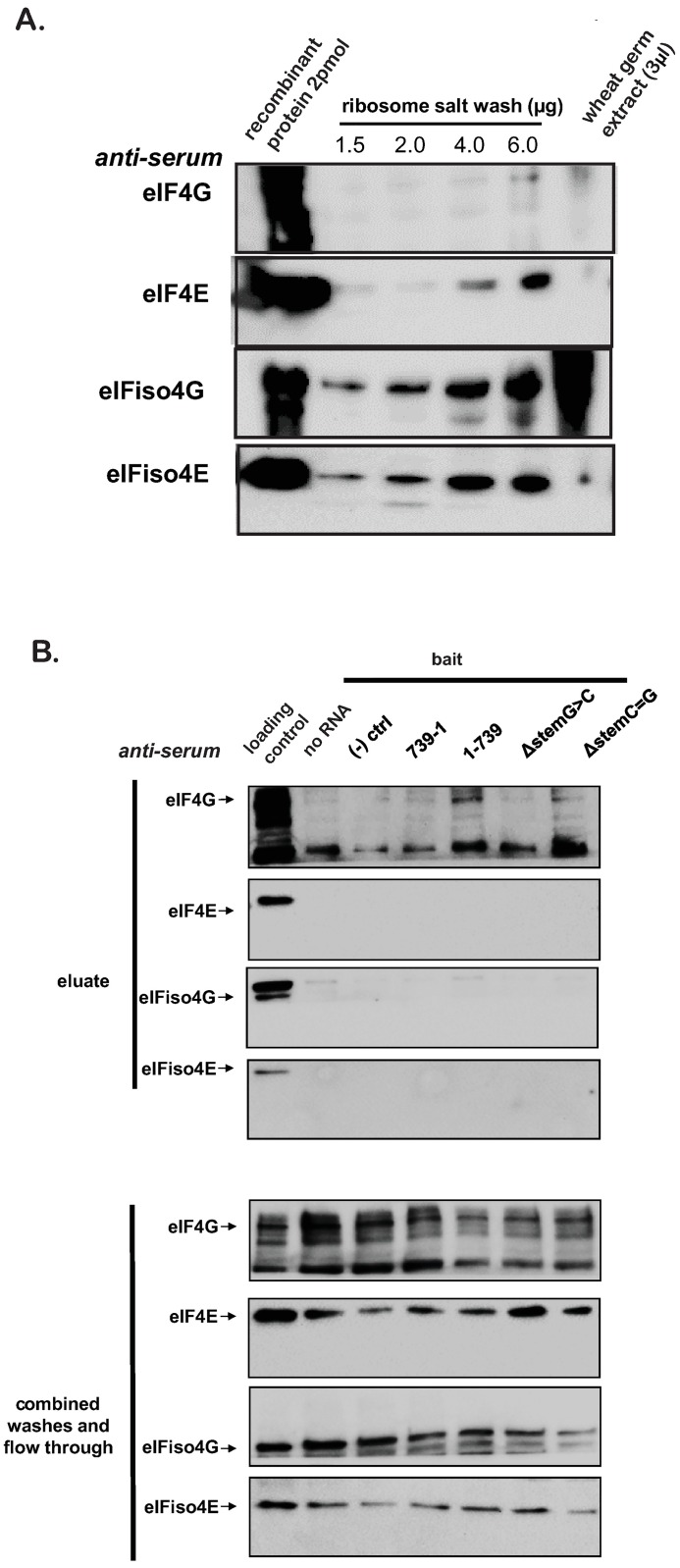
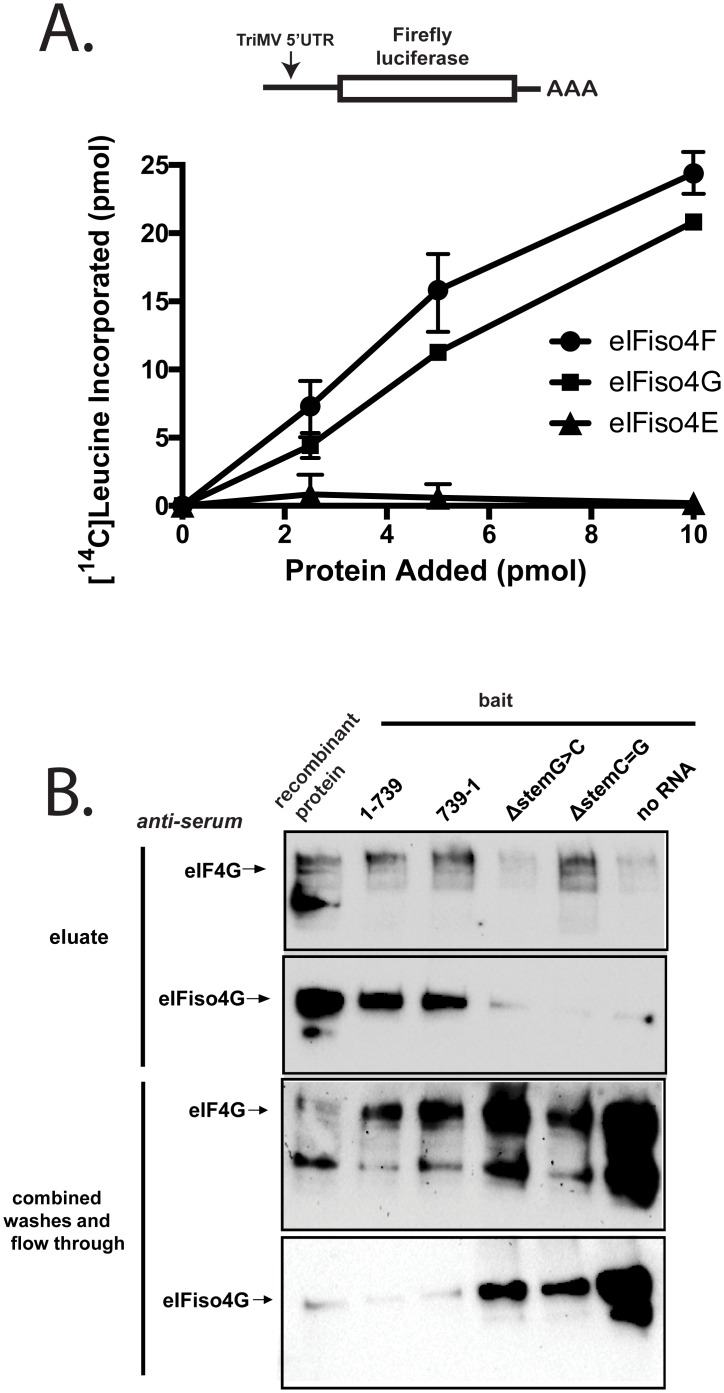
We recently identified a remarkably strong (739 nt-long) IRES-like element in the 5' untranslated region (UTR) of Triticum mosaic virus (TriMV, Potyviridae). Here, we define the components of the cap-binding translation initiation complex that are required for TriMV translation. Using bio-layer interferometry and affinity capture of the native translation apparatus, we reveal that the viral translation element has a ten-fold greater affinity for the large subunit eIF4G/eIFiso4G than to the cap binding protein eIF4E/eIFiso4E. This data supports a translation mechanism that is largely dependent on eIF4G and its isoform. The binding of both scaffold isoforms requires an eight base-pair-long hairpin structure located 270 nucleotides upstream of the translation initiation site, which we have previously shown to be crucial for IRES activity. Despite a weak binding affinity to the mRNA, eIFiso4G alone or in combination with eIFiso4E supports TriMV translation in a cap-binding factor-depleted wheat germ extract. Notably, TriMV 5' UTR-mediated translation is dependent upon eIF4A helicase activity, as the addition of the eIF4A inhibitor hippuristanol inhibits 5' UTR-mediated translation. This inhibition is reversible with the addition of recombinant wheat eIF4A. These results and previous observations demonstrate a key role of eIF4G and eIF4A in this unique mechanism of cap-independent-translation. This work provides new insights into the lesser studied translation mechanisms of plant virus-mediated internal translation initiation.
我们最近在小麦花叶病毒(TriMV,马铃薯Y病毒科)的5'非翻译区(UTR)中鉴定出一个非常强的(739个核苷酸长)类似内部核糖体进入位点(IRES)的元件。在此,我们确定了TriMV翻译所需的帽结合翻译起始复合物的组成成分。利用生物层干涉术和天然翻译装置的亲和捕获,我们发现病毒翻译元件对大亚基eIF4G/eIFiso4G的亲和力比对帽结合蛋白eIF4E/eIFiso4E的亲和力高十倍。该数据支持一种很大程度上依赖于eIF4G及其异构体的翻译机制。两种支架异构体的结合都需要位于翻译起始位点上游270个核苷酸处的一个八碱基对长的发夹结构,我们之前已证明该结构对IRES活性至关重要。尽管对mRNA的结合亲和力较弱,但单独的eIFiso4G或与eIFiso4E组合时,能在帽结合因子缺失的小麦胚芽提取物中支持TriMV翻译。值得注意的是,TriMV 5'UTR介导的翻译依赖于eIF4A解旋酶活性,因为添加eIF4A抑制剂马桑毒素会抑制5'UTR介导的翻译。添加重组小麦eIF4A后,这种抑制作用是可逆的。这些结果和之前的观察结果证明了eIF4G和eIF4A在这种独特的不依赖帽的翻译机制中的关键作用。这项工作为植物病毒介导的内部翻译起始这一研究较少的翻译机制提供了新的见解。