Psychology, Faculty of Social and Human Sciences, University of Southampton, Building 44 Highfield Campus, Southampton, SO17 1BJ, UK.
MRC Lifecourse Epidemiology Unit, University of Southampton, Southampton General Hospital, Tremona Road, Southampton, SO16 6YD, UK.
BMC Complement Altern Med. 2017 Jan 3;17(1):5. doi: 10.1186/s12906-016-1499-9.
Acupuncture is a popular form of complementary and alternative medicine (CAM), but it is not clear why patients do (or do not) follow acupuncturists' treatment recommendations. This study aimed to investigate theoretically-derived predictors of adherence to acupuncture.
In a prospective study, adults receiving acupuncture for low back pain completed validated questionnaires at baseline, 2 weeks, 3 months, and 6 months. Patients and acupuncturists reported attendance. Logistic regression tested whether illness perceptions, treatment beliefs, and treatment appraisals measured at 2 weeks predicted attendance at all recommended acupuncture appointments.
Three hundred twenty-four people participated (aged 18-89 years, M = 55.9, SD = 14.4; 70% female). 165 (51%) attended all recommended acupuncture appointments. Adherence was predicted by appraising acupuncture as credible, appraising the acupuncturist positively, appraising practicalities of treatment positively, and holding pro-acupuncture treatment beliefs. A multivariable logistic regression model including demographic, clinical, and psychological predictors, fit the data well (χ (21) = 52.723, p < .001), explained 20% of the variance, and correctly classified 65.4% of participants as adherent/non-adherent.
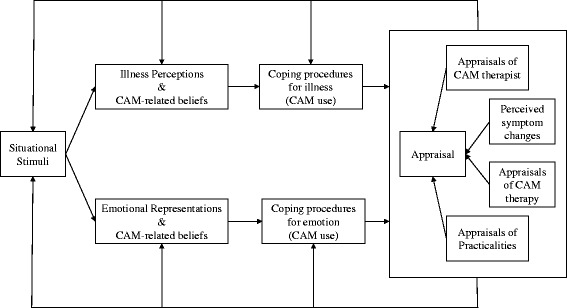
The results partially support the dynamic extended common-sense model for CAM use. As hypothesised, attending all recommended acupuncture appointments was predicted by illness perceptions, treatment beliefs, and treatment appraisals. However, experiencing early changes in symptoms did not predict attendance. Acupuncturists could make small changes to consultations and service organisation to encourage attendance at recommended appointments and thus potentially improve patient outcomes.
针灸是一种流行的补充和替代医学(CAM)形式,但不清楚为什么患者会(或不会)遵循针灸师的治疗建议。本研究旨在调查对针灸依从性的理论预测因子。
在一项前瞻性研究中,接受腰痛针灸治疗的成年人在基线、2 周、3 个月和 6 个月时完成了经过验证的问卷。患者和针灸师报告了就诊情况。逻辑回归检验了在 2 周时测量的疾病认知、治疗信念和治疗评估是否可以预测所有推荐的针灸预约就诊情况。
共有 324 人参与(年龄 18-89 岁,M=55.9,SD=14.4;70%为女性)。165 人(51%)按要求接受了所有推荐的针灸治疗。对针灸的可信度评估、对针灸师的积极评价、对治疗实际情况的积极评价以及对针灸治疗的积极信念都可以预测治疗的依从性。一个包含人口统计学、临床和心理预测因子的多变量逻辑回归模型很好地拟合了数据(χ (21)=52.723,p<0.001),解释了 20%的方差,正确分类了 65.4%的参与者为依从性/非依从性。
结果部分支持了用于 CAM 使用的动态扩展常识模型。如假设所预测的那样,按要求接受所有推荐的针灸治疗与疾病认知、治疗信念和治疗评估有关。然而,早期症状的变化并不能预测就诊情况。针灸师可以对咨询和服务组织进行微小的改变,以鼓励患者按要求就诊,从而可能改善患者的治疗效果。