Kim Min Soo, Yeom Dong Woo, Kim Sung Rae, Yoon Ho Yub, Kim Chang Hyun, Son Ho Yong, Kim Jin Han, Lee Sangkil, Choi Young Wook
College of Pharmacy, Chung-Ang University, Seoul.
College of Pharmacy, Keimyung University, Daegu, South Korea.
Drug Des Devel Ther. 2016 Dec 21;11:45-57. doi: 10.2147/DDDT.S123412. eCollection 2017.
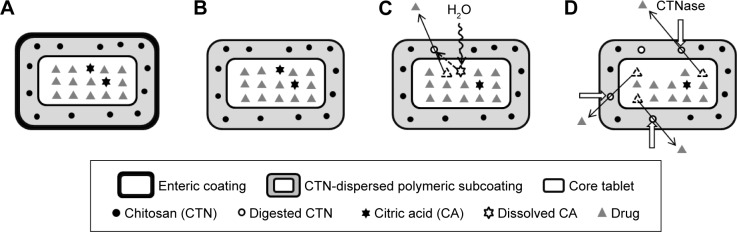
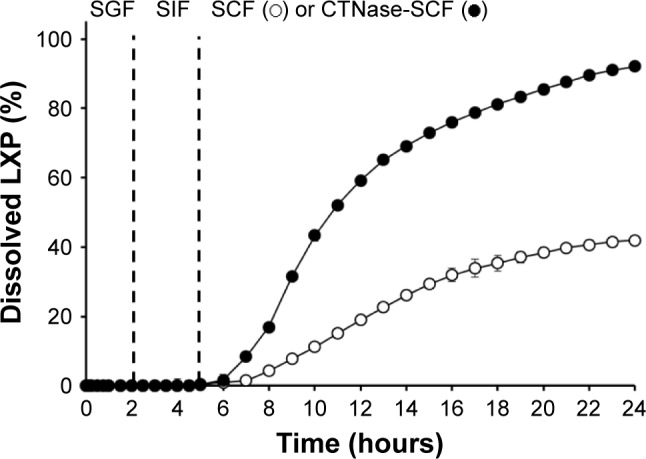
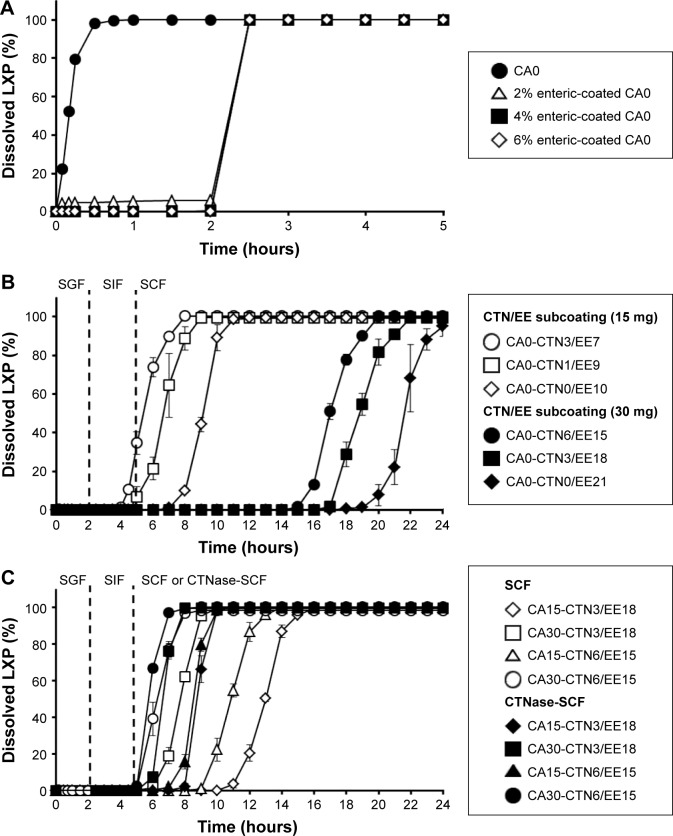
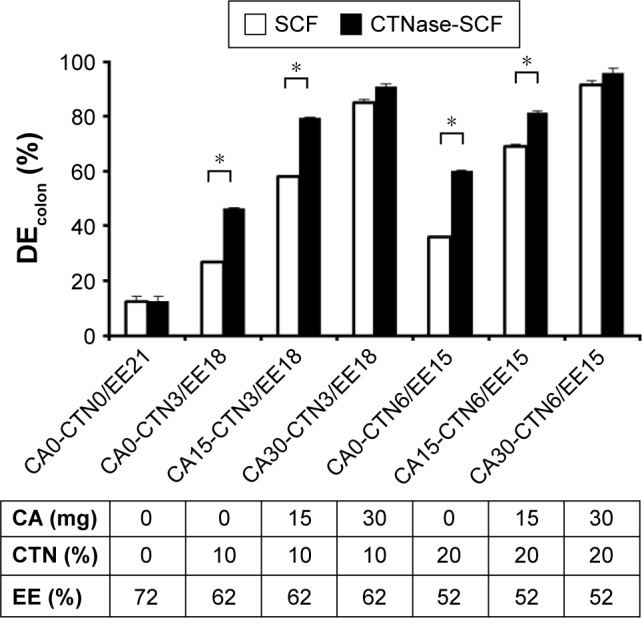
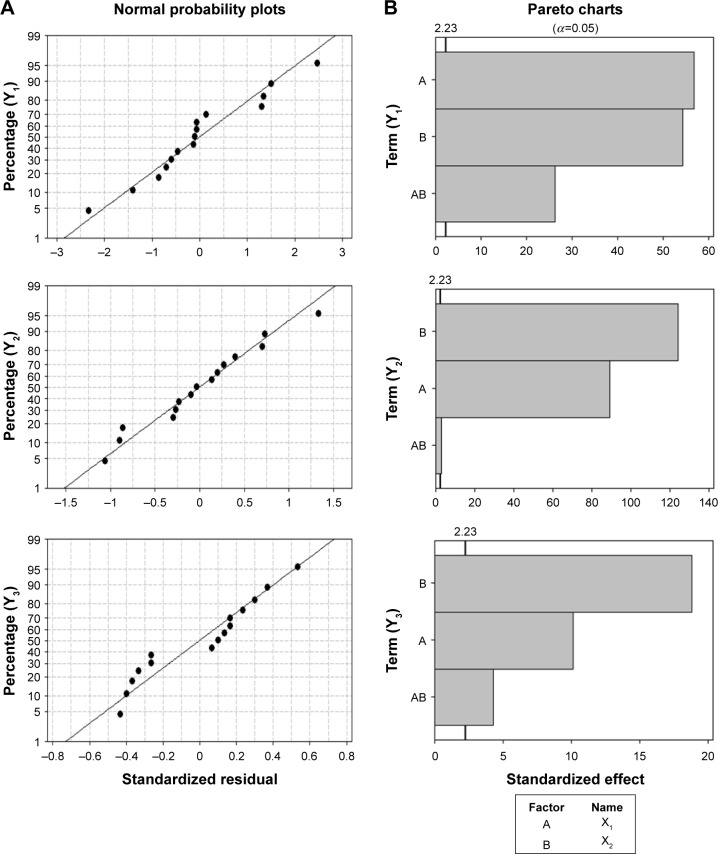
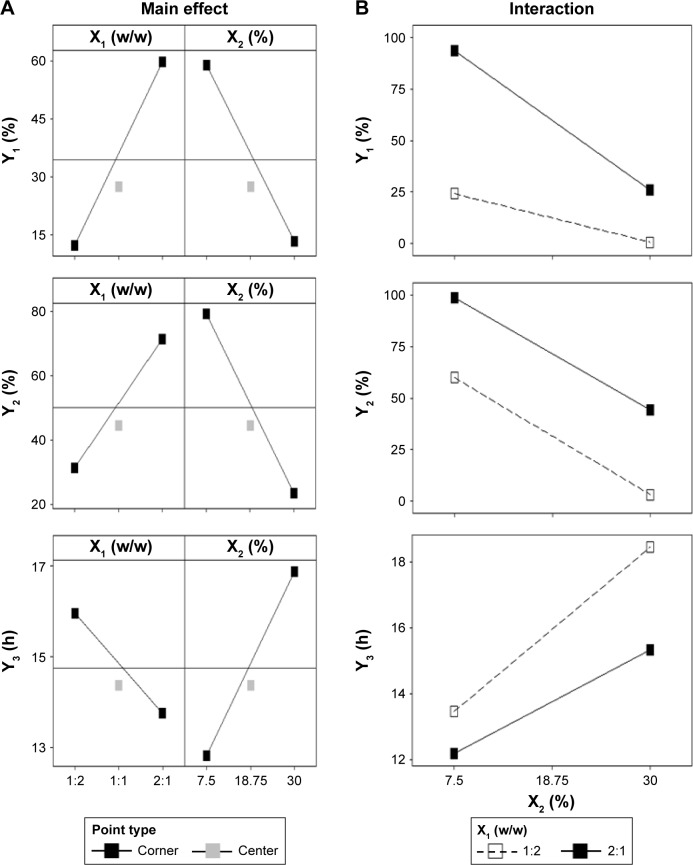
A double layer-coated colon-specific drug delivery system (DL-CDDS) was developed, which consisted of chitosan (CTN) based polymeric subcoating of the core tablet containing citric acid for microclimate acidification, followed by an enteric coating. The polymeric composition ratio of Eudragit E100 and ethyl cellulose and amount of subcoating were optimized using a two-level factorial design method. Drug-release characteristics in terms of dissolution efficiency and controlled-release duration were evaluated in various dissolution media, such as simulated colonic fluid in the presence or absence of CTNase. Microflora activation and a stepwise mechanism for drug release were postulated. Consequently, the optimized DL-CDDS showed drug release in a controlled manner by inhibiting drug release in the stomach and intestine, but releasing the drug gradually in the colon (approximately 40% at 10 hours and 92% at 24 hours in CTNase-supplemented simulated colonic fluid), indicating its feasibility as a novel platform for CDD.
开发了一种双层包衣结肠特异性药物递送系统(DL-CDDS),它由基于壳聚糖(CTN)的聚合物底衣层和肠溶衣层组成,底衣层包裹着含有柠檬酸的核心片剂以实现微环境酸化。使用二级因子设计方法优化了Eudragit E100和乙基纤维素的聚合物组成比例以及底衣层的用量。在各种溶出介质中,如存在或不存在CTNase的模拟结肠液中,评估了溶出效率和控释持续时间方面的药物释放特性。推测了微生物激活和药物释放的逐步机制。因此,优化后的DL-CDDS通过抑制药物在胃和小肠中的释放,以可控方式释放药物,但在结肠中逐渐释放药物(在添加CTNase的模拟结肠液中,10小时时约为40%,24小时时约为92%),表明其作为一种新型结肠靶向递送平台的可行性。